



Note: This article is based on a blog post by Christina Chwylis, a PhD student in psychiatry at the University of Philadelphia, in which she tells us about her experience and what research has revealed regarding self-compassion.
I thought she was one of the nicest people in the school. It shocked me to hear how hard she was on herself when she thought she was alone.
Since we were young, we were taught how to be friends with others. In kindergarten, we learned to share and cooperate in play. Any child who called another child stupid or a failure was gently rebuked or even lightly punished, so we grew up learning to follow the golden rule: “Treat others as you would have them treat you.” Yet, no one has ever taught us how to be friends with ourselves.
We learned the opposite. We think of being kind to ourselves as self-corruption, laziness, or weakness. As a psychologist in training, I have found that self-flagellation is very common. For example, people often judge their looks, performance at work, or parenting abilities based on criteria they don't apply to others. Many people give themselves names that they wouldn't dare say to friends, family members, or even people they don't like.
Not surprisingly, controversy surrounds the psychological concept of "self-compassion." Essentially, it is treating yourself with the same kindness and consideration you would treat a family member.
| Self-compassion is a healthy response to suffering. |
Just as empathy begins with recognizing the suffering of another, it also begins with recognizing that you ‘yourself’ are suffering. According to leading self-compassion researcher Kirstin Neff at the University of Texas, the self-compassion response requires three essential components:
- Kindness to oneself: It is to offer yourself compassion and understanding rather than judging it.
- Shared humanity: It is to remember that everyone makes mistakes and suffers rather than feeling isolated in your suffering.
- Awareness: Being aware of your thoughts and emotions in a balanced way, without being drained by those thoughts and emotions.
I have seen that the idea of self-compassion evokes reactions that range from accepting to skeptical or even fearful. When self-compassion is mentioned, a range of thoughts can arise: “I don't like the idea of self-compassion,” “Are people too self-indulgent these days?” or “I need self-criticism to encourage myself to achieve my goals,” or “If I were self-compassionate, wouldn’t I be lazy all day?” Without the disappointment that self-criticism brings, it will be easy for people to improve and move forward.
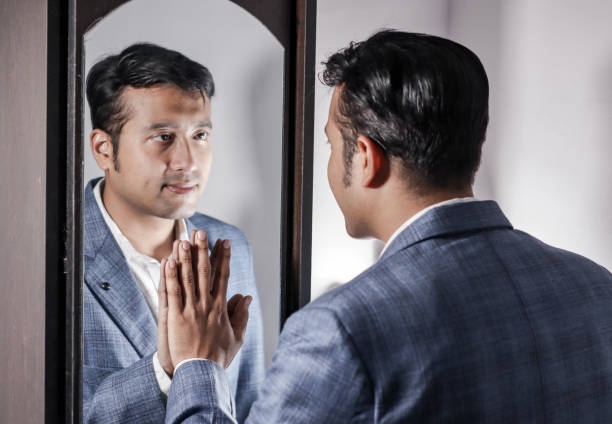
These beliefs have consequences, influencing how people respond to life's challenges. For example, in my study with my colleagues Patricia Chen and Jamil Zaki, we looked at the coping strategies people use when frustrated and upset with the outcome of the US presidential election.
Those who viewed self-compassion in positive terms were more likely to use self-compassion in a way that helped them get through difficult times. For example, they said they used practical methods to deal with their emotions, such as seeking support from others and relying less on unhelpful strategies, such as distractions and self-blame.
It didn't help them feel better. Instead, the participants who experienced self-compassion reported that they intended to improve themselves and their situation, such as commitment to participate in political life more.
Our work reflects what research reveals time and time again. It is that self-compassion is a healthy response to suffering. It is not only essential to our general well-being but also to help us overcome challenges. For example, other research has found that self-compassion helps people to be personally responsible for their actions and to resist the obstacles that follow, such as getting a lousy exam mark.
On the contrary to the assumption that self-compassion is a form of selfishness, it helps us to be kinder to others. It surprises you how something as simple as self-compassion can help us be better and more resilient.
Interesting things happen when you are self-compassionate; it becomes easy to admit your own wrongdoings. Think about it this way: Would you rather admit an embarrassing mistake you made in front of someone you know will respond with sympathy or in front of someone you know will criticize you harshly?
In this way, when slips or mistakes appear, self-compassionate people will be able to admit that every human being is a sinner. So, in the absence of the heavy burden of self-criticism and embarrassment, it is easy for self-compassionate people to grow, improve, and move forward with courage.
In one of her TED talks in 2013, Neff offered an analogy that helps understand why self-compassion is so helpful. Imagine a kid who comes home upset from school because he failed in mathematics. His parents may respond with a harsh rebuke or express disappointment or anger, they can scream and question the child's intelligence. Thus, the child can study more diligently for a short period, but with time, he may give up and give up on mathematics because the consequences of failing again will be dire.

On the other hand, the parents who respond with compassion notice the child's disappointment, remind him that everyone faces difficulties from time to time, and help him to take a balanced point of view. The sympathetic response did not turn a blind eye to the test mark, nor did it break the child's pride. Rather, it involved creating an inclusive and safe environment where it is okay for the child to go through mistakes.
Let's make another analogy. Your words to yourself are the fuel; you can fill your tank with either criticism or empathy. Both will get you moving forward, but the results of self-compassion are long-lasting and harmless. When you are kind to yourself, you will find it easier to face life's difficulties.
Whether it's studying after receiving a bad exam mark, apologizing to someone you've wronged, or exercising after a period of inactivity, the important thing is that self-compassion enables us to face these obstacles without feeling consumed by feelings of inadequacy.
| When you are kind to yourself, you will find it easier to face life's difficulties. |
Self-compassion is not a deceptive trait that some people can acquire but not others. There are certain ways in which everyone can develop that empathy, whether for others or for ourselves. Researchers have created programs such as the Mindful Self-Compassion Program, books, and resources to help people build greater self-compassion.
We can train the elements of self-compassion in different ways, for example, through writing (writing a letter to yourself from the perspective of a friend who cares unconditionally), pictures, or meditations. These exercises train us to respond to our own pain or inadequacy, just as we would respond to the pain of a friend, that is, with encouragement and interest.
Self-compassion is about referring to yourself in a more constructive, productive way, not about always being complacent. However, if, like most people, you find it hard to start with self-compassion or you doubt whether it will do any good, at least don't bother trying. On an encouraging note, in our study, we found that changing participants' beliefs about the importance of self-compassion helped them cope with difficulties better.
When we told participants that self-compassion helped people improve their motivations rather than hurt them, they were more likely to participate in self-compassion training during adversity, and this, in turn, helped them to cope better and to strive towards self-development.
Hence, our work underscores the importance of taking the time to understand and correct your assumptions about self-compassion. Doing so can help you respond more effectively to the obstacles bound to come your way.
First, pay attention to your beliefs about self-compassion, and ask yourself: What have others said or done to you about self-compassion? Did your parents use empathy in your life? And if they did, did they apply their compassion to themselves? What do you think would change if you were self-compassionate? And what do you think would happen if you stopped self-flagellation?
The next step is to notice how you talk to yourself. If you're like most people, your mind is filled with a constant stream of chatter, like when you thoughtlessly finish eating popcorn while watching a movie without noticing its flavor, you may not stop thinking about your own self-talk.
Is it more negative? Do you hold yourself to impossible standards? You will spend the rest of your life with that voice. So, take the time to get to know it, and consider making conscious adjustments if necessary.

Finally, check your assumptions about self-compassion, and remember, researchers say repeatedly that self-compassion doesn't help us feel better, as it carries practical results and positive ones as well. Self-compassion is a powerful motivational tool that can help you persevere, even in the face of challenges.
At first, self-compassion may seem unfamiliar, scary, or difficult. Be patient with yourself, and remember that self-compassion is about communicating with yourself in a more caring and constructive way, and it can take time to develop. It's not about complacency about yourself all the time. Just like starting a new physical exercise regimen, connecting with yourself with empathy can be difficult, even painful, at first.
For many people, self-compassion is an entirely different approach than they are used to. It means that you have unconditional sympathy for yourself, regardless of the circumstances you are going through and the achievements you have achieved, and this goes against our culture, which often rewards us for achievements. However, the “ego” within us whispers like an alarm: “Do more, do better, and you will deserve it.”
Self-compassion is a reliable friend, and we all deserve it. It says, "I believe in you, and I am there for you no matter what."
When I think of my classmate in high school berating herself in front of the bathroom mirror, I wish she knew she didn't have to bully herself. If she believed in the power of self-compassion instead, I would have heard self-compassionate pep talk along the lines of, "It hurts to get a bad test result, but it doesn't mean I'm bad, I know other people in the class are struggling too, and I'm not the only one who struggles. I will ask for help studying more effectively, and I will get the support I need and deserve.”
Through my work in the clinic and research, I found that self-compassion is a resilience motivator. And if my classmate could be friends with herself, I bet she would find her doing at school better and her life on the road a lot more interesting.
This applies to all of us, while the journey to developing greater self-compassion may seem daunting, it is worthwhile. With you by your side, you will be unbeatable.


Add comment