



Note: This article is based on the work of the writer (Ingrid Fetell Lee), in which she tells us about her experience in ridding her home of everything that causes her negative feelings.
I had grand plans for taking notes on everything he did for the first time as a way of preserving those moments that slipped like water from our hands.
But, because I became a mother during the pandemic, it was difficult for me to keep up, and the notebook was left unattended in its place for several months. What began as a source of joy for me became a source of guilt, which I face every time I go to bed and wake up.
Along with clutter, we sometimes store items of sentimental value in our homes and frequently display them, despite the fact that removing them from our homes can help us feel more positive and comfortable.
Distress, guilt, shame, exhaustion, anxiety, and regret can creep into our homes without our knowledge. Although all feelings serve a purpose, focusing on them without properly processing them can be taxing. For example, if we look at something once a day, it means that we experience this feeling 30 times a month. We don't act on it or learn from it; therefore, it drains our energy and happiness.
The most common negative emotions and how to get rid of them
In this article, I'll introduce you to some of the most common negative emotions that lurk in our homes and share techniques for detecting them so you can get rid of them. It's not easy, but hopefully it will help you feel liberated:
1. Feeling helpless
There's a feeling that doesn't have a name, but it's one that many people have experienced as a result of the pandemic, and I'm going to call it "helplessness," for lack of a better term. It's basically the feeling that life is on hold and that you're not making the progress you want in some aspect of your life.
It frequently occurs when we are waiting for something to change in our lives, such as when we are ready to find a partner but are having difficulty finding the right person, when we have reached a career plateau, or when there is a global pandemic and we are waiting for cases to finally drop so we can get back to traveling, socializing, working, and enjoying life.
Feeling helpless can sometimes cause us to be hesitant to invest energy in our homes, resulting in unfinished or undecorated homes, and we may be hesitant to decorate the rented apartment, assuming that we will wait until we buy a house.
When I was pregnant, I stopped decorating my bedroom because I didn't want to bother with it if we had to move when I had the baby.
The problem is that living in temporary housing is a constant reminder of our pause, and we never know how long it will last. Three years of waking up in a room with empty walls exacerbated my sluggishness, and I didn't just feel like my dream of having a baby was on hold; I felt like my entire life was on hold.
| When we commit to our current homes, we also commit to our current lives. |
We can be gentler with our hopes for the future, knowing that they do not determine our ultimate happiness. We can also be confident that joy will show up in the future, as long as there is room for it in the present.

In your home, where do you look for triggers?
- Spaces that are unfinished or undecorated.
- A painting on the walls that has not been framed or hung.
- Items you were saving for a future life but can now enjoy, such as fancy dishes or family heirlooms.
- Clothes or items that no longer fit you.
2. Feeling guilty
Guilt arises from things we feel we should have done but did not for one reason or another. I have a habit of keeping things in front of me to remind myself that I need to do something about them. For example, I may leave a thank-you note card on my desk, which I will see every time I sit there. This takes my attention away from the task at hand and turns it into an obligation.
Guilt can also result from self-betrayal, that is, when you violate your obligations to yourself. For example, if you bought exercise equipment because you decided to get in shape but struggled to achieve it or didn't feel like doing it, looking at it every day could kill your happiness.
Maybe you need to find a different way of moving your body that's more pleasurable to you, or just relax and put your exercise equipment out of sight until you feel ready to recommit to it.
Where do you look in your home for guilt triggers?
- Projects that have not been completed.
- Items associated with hobbies or habits that you did not devote time to.
- Items purchased but never used.
- The stack of books to read in which you've lost interest.
- Gifts that you feel obligated to keep but do not enjoy.
3. Feeling self-conscious
Self-consciousness lurks in the vulnerable places of our homes and in our weaknesses. Any place that makes us aware of the opinions of others, whether they come from our family or society, can be a gaping hole through which self-consciousness can enter. Areas that are related to the body, such as the closet, bathroom, or kitchen, are particularly prone to being sources of self-consciousness.
One of the sneakiest emotions that lurks in our homes is self-consciousness, which frequently passes for happiness. Is the skincare product tray in your bathroom a lovely act of self-care or an effort to remove the wrinkles that make us feel unattractive or unworthy? Do you use the diet recipe book on your kitchen counter to try to live a healthier life or to try to get a more aesthetically pleasing body?
The truth is, it's a combination of both, but if seeing self-consciousness makes you feel "less than perfect," ask yourself if you might feel free to push it out of your home and life.
The same is true for opera collections, documentaries, and magazine backlogs. It's great to enjoy those things, but if you'd rather read a romance novel than an autobiography or listen to the latest Top 40 hits than an opera, getting rid of those supposedly-liked things can help you overcome self-consciousness and make more room for joy.

Where do you look in your home for causes of self-consciousness?
- Tight clothes that you haven't been able to get rid of for a long time.
- Clothes that you dislike but feel you must wear in order to appear nice in front of others.
- Books, music, or other media that you think you should like but don't.
- Skincare or cosmetics purchased to treat the alleged blemish on your body.
- Diet or exercise equipment that you dislike using.
- Magnifying glasses and scales.
4. Feeling exhausted
If you look around your house and feel exhausted, it could be due to the number of things that need your attention. Coach Anese Cavanaugh, a friend of mine, describes these as things you can handle, but they drain your energy in the process.
Each of these items, such as a broken chair, a smashed lamp, a picture that needs to be framed, or a jacket with a missing button, is a reminder of what you need to do. When you have a lot of these items, your house effectively becomes a giant to-do list to live in, making relaxation impossible.
Fatigue can also come from disorganization. When your closet is overcrowded, your entryway is a mess, or your bookshelves are overcrowded with books, these are signs that your organizational methods are not keeping up with your life.
Maybe you cook a lot and need a better way to keep spices handy. Perhaps now that your children are older, you require a method to assist them in arranging their coats and shoes. Being organized can make you feel as if you have a solid foundation on which to build your life.
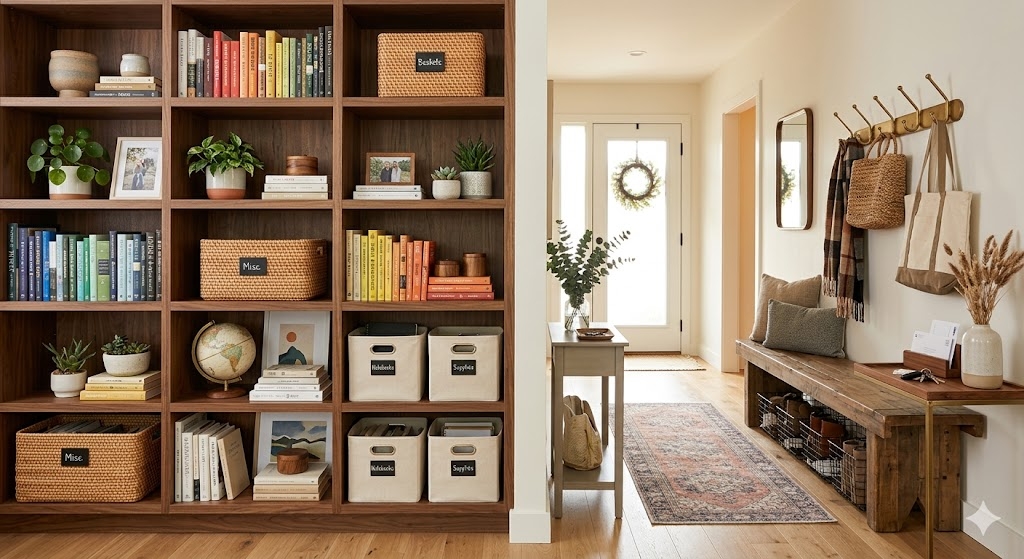
Where do you look in your home for fatigue triggers?
- A plethora of items that require sorting.
- Broken things.
- Items that require maintenance, such as wood that must be oiled and batteries that must be replaced.
- Places where you frequently feel frustrated or upset.
- Organizational methods that are ineffective.
5. Feeling anxious
Anything that makes you feel anxious can aggravate anxiety, whether it's a home that's so well organized that you can't relax in it or a space full of sharp-edged furniture that you're constantly bumping into.
For instance, I recently replaced my thin water glasses with thicker ones, and I was surprised at how much peace this produced. This is because I no longer have to worry about them breaking when I take them out of the dishwasher.

Where do you look in your home for anxiety triggers?
- Uneven or shaky objects.
- Difficult-to-use items that don't fit well or make you feel uncomfortable when using them, such as a chair that is too long in relation to the table, causing it to bump into the table.
- Things that disturb you with irritating sounds or unappealing appearances.
- Sharp edges to be careful of.
- Fragile things you always worry about breaking.
- Formal decor that you're concerned about ruining, such as a couch that doesn't allow anyone to drink red wine near it.
6. Feeling regret
Noticing regrets in our homes reminds us to live in the present moment, and looking around and seeing remnants of failed relationships or other disappointments can set us back and make it difficult to move forward.
Spending is the leading cause of regret. If you overspend or spend money on something you don't use, the object may serve as a reminder of your lack of restraint or foolishness. Selling it for a portion of its value could be an option. It is also important to recognize that it will lose value.
| Living with something you despise will not put money back in your pocket, so if you can afford to give it up, do so and learn the lesson the next time. |
In your home, where do you look for regret triggers?
- Objects that bring back memories of failed relationships.
- Items you overspend on but no longer enjoy.
- Things that remind you of decisions you've made or pains you're trying to overcome.




Add comment