



Others don’t catch anything unless the mother points it out directly. This difference isn’t random; it’s rooted in a core skill called “Sensory Attunement”—the ability to intentionally notice subtle cues in communication: eye contact, posture, micro-movements, and emotional undercurrents.
These cues help us understand what others are feeling without their saying a word. This skill is not merely a talent—it’s a vital part of Emotional Intelligence, and the foundation for raising an empathetic child who reads social situations wisely.
In early childhood, your little one is like a high-sensitivity receiver, absorbing signals from every direction. But every receiver needs a conscious, intentional sender—and that sender is you, the mother. When you notice a friend’s hidden sadness or your partner’s quiet frustration, you teach your child that silence is never empty; it carries messages too.
Let’s explore how to nurture this “sensitive eye” that will give your child a priceless social and emotional advantage.
Why Mothers Need to Start by Truly Looking?
“Children can read faces. They understand how adults feel from the very first look.” — Jesper Juul, Danish psychologist.
A young child is always searching for behavioral rules, and naturally, they model what they see at home. When it comes to reading nonverbal cues, your child is studying your reactions:
- How do you respond to your partner’s silence?
- What do you do when the cashier’s expression suddenly shifts?
- Do you look closer, pause, or simply push through?
Why Emotional Awareness Starts with the Mother?
1. A Real-Time Lesson in Listening
When a mother notices the softer details—her child’s shaky voice when he’s frustrated or the slight slump in his shoulders when he’s afraid—she offers a living master class in mindful listening. She teaches them that these subtle cues matter.
2. Decoding Emotions
An attuned mother helps her child understand that emotions are rarely random; they often show up in the body first. When she says, “I see the corners of your mouth turned down—are you feeling upset?” she’s not just naming a feeling; she’s teaching emotional literacy.
3. Building a Mirror of Empathy
A mother who reads beyond words doesn’t wait for a meltdown to show care. She models responsiveness, compassion, and presence. This becomes the mirror through which the child learns how to care—both for themselves and for others.
Your attention to the smallest cues becomes the blueprint for a child with an emotionally intelligent eye—one that reads what truly matters.

5 Emotional “Superpowers” Sensory Awareness Gives Your Child
“The best way to raise happy, healthy children is to teach them to recognize emotions and name them.” — Brené Brown, American researcher and author on vulnerability and courage.
When your child learns to read beyond words, you’re not simply raising a cooperative child—you’re raising a socially confident human being equipped for every environment. Here are five powerful benefits:
1. Heightened Sensitivity to Others’ Emotions
Your child picks up on the tiny shifts—the quiet sadness in a friend, the tension in a sibling. They instinctively know when someone needs comfort or space. That’s empathy in action.
2. Warmer Communication at Home
When a child notices your stress before you reach your limit, misunderstandings shrink, and harmony grows. Household communication becomes warmer and more intuitive.
3. Social Confidence
A child who can “read the room” blends into social settings with ease. They know when to join in, when to step back, and how to adapt—skills that boost confidence and connection.
4. Self-Protection From Bullying
A child who understands cues of anger, provocation, or hidden irritation can avoid escalation and protect themselves from negative interactions—an essential social defense skill.
5. A Foundation for Empathy
Your child comes to understand that every person has an inner world, and that emotions aren’t always reflected in words. This deep insight becomes the foundation of healthy and successful relationships in the future.
Sensitive awareness is your child’s compass toward healthy relationships and human success.
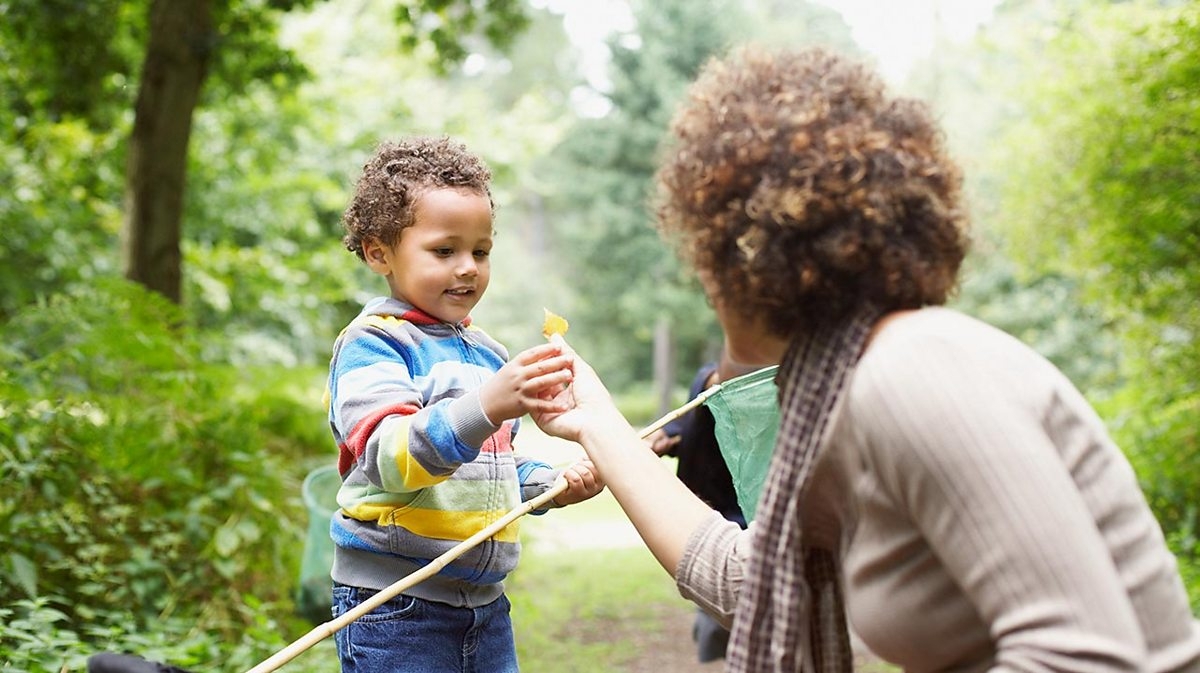
5 Playful Strategies to Build This Skill Every Day
“Play is the child’s work.” — Maria Montessori, physician and educator.
You don’t need complicated programs. Just turn everyday moments into opportunities for tuning in.
1. Labeling Physical Cues
Don’t wait for words. When you notice your child’s sad tone or a change in their movements, label the cue:
- “Your voice sounds softer—are you feeling upset?”
- “You’re rubbing your hands. Are you nervous?”
This teaches the child to connect inner feelings with physical signals—giving them a key to reading others.
2. Guided Questions in Daily Situations
Turn your child into a little analyst. When witnessing a situation, ask open-ended questions:
- “Why do you think your friend didn’t laugh today? Did you notice her face?”
- “Why do you think the shopkeeper smiled at you?”
This directs their attention to details instead of surface assumptions.
3. Role-Play and Emotion Guessing
Use play as a tool.
Take turns acting out silent emotions (joy, anger, surprise, confusion) using only facial expressions. The other has to guess them. This strengthens the link between silent expressions and emotional meaning.
4. Analyzing Stories and Cartoons
After a cartoon or story, pause and ask:
- “How did you know the character was scared before running away?"
- "Did you see their eyes?”
Stories offer a safe example for analyzing human behavior.
5. Celebrate the Skill—Not Just the Behavior
When your child accurately identifies a cue, praise the skill itself:
“Great job noticing your brother’s silence. That’s really smart.”
This positive reinforcement strengthens the skill and encourages further practice.
By using these strategies, you teach your child to see the world with deeper, more sensitive eyes.

Breaking Free from the Trap of Modern Distraction
“A distracted mind can never be an empathetic one.” - A well-known saying in the science of mindfulness and conscious communication.
Children today face major challenges in developing refined sensory awareness—challenges that have become a global phenomenon, especially in advanced societies that rely heavily on technology. We must recognize this trap to protect our children from falling into it:
Challenge 1: Digital Distraction and Lost Social Cues
In countries where screen usage among children is high, studies have shown that constant exposure to direct digital content—content stripped of human interaction—reduces a child’s ability to detect subtle social cues in real life.
- Negative outcome: The child does not pick up on body language or changes in tone because they are accustomed to one-dimensional communication.
- Solution: Dedicate daily “eye time” with no devices at all. Sit with your child and engage in mutual eye contact for at least 10 minutes. This helps rebuild the neural circuits responsible for reading emotions.
Challenge 2: Emotional Misjudgment (Labeling)
Some children—especially those in competitive school environments—tend to jump to conclusions when interpreting facial expressions. A child may assume that anyone with a serious face is “angry at them.”
- Negative outcome: Repeated misunderstandings and a tendency to avoid empathy.
- Solution: Teach your child to “pause before judging.” Tell them: “A serious face sometimes means someone is tired or worried—not necessarily angry at you.” Encourage them to look for additional information (e.g., Was the person on the phone?) before forming a conclusion.
Challenge 3: Excessive Shyness and Social Withdrawal
Some children are highly sensitive and perceive cues clearly, but they don’t act on them due to shyness or a fear of rejection. This is common in cultures where strict boundaries exist between generations or peers.
- Negative outcome: Observation becomes a silent, unused skill.
- Solution: Give your child a simple, ready-to-use phrase to help them engage without fear. For example:
- “Are you okay?”
- “Can I help?”
Practicing these gentle, non-threatening phrases helps break the barrier of shyness.
Freeing your child from these challenges gives them clarity, empathy, and the courage to connect with others.
The Heart Behind the Eyes
Here’s the real message: A mother who pays attention to life’s quieter details doesn’t just raise a successful student—she raises a deeply human child.
Reading cues and understanding what lies behind the eyes becomes a lifelong compass, guiding your child through friendships, conflicts, heartbreaks, and every complex situation life brings.
Dear mother,
- Every time you name your child’s emotions, you hand them a map for understanding the world.
- A child who knows how to read the eyes can protect their own heart—and honor the hearts of others.
So today, look a little deeper. Be the eyes that perceive, the ears that listen, and the heart that understands. This skill begins with a mother’s awareness—and grows in her child into a tool for human and social success in every situation.
“A mother who awakens her child’s senses gives them eyes that see beyond words.”
Start today—and share with us in the comments: What nonverbal cue does your child easily pick up from you?




Add comment