



Sweeney had already suffered from chronic depression and bipolar disorder. Still, with so many of her loved ones dying in such a short period, she fell into a new mental and physical abyss. She says, “I was emotionally troubled, started gaining a lot of weight, and was in such a bad physical state that walking around the house was causing me fatigue.”
Sweeney finally came out of her despair with caution. From 2007 to 2017, she went from being barely able to get out of bed to walking several kilometers a week every day. She walked alone or with her husband whenever or wherever she found an opportunity. She confirms that walking heals her.
Sweeney carried that feeling with her through three full marathons and more than 60 short sprints that she was slow but not driven by speed, medals, or even fitness. For her, it's “a journey to improve her mental health.”
In her book Depression Hates A Moving Target, Sweeney describes how she achieves emotional balance step by step.
She says, “I know there are physical benefits. When I stop walking, I gain weight, and when I return, I lose it. It's easy, but for me, it's more emotional than physical. There's something about slowing down the pace of walking, which makes things deteriorate out of proportion to other exercises.”
There is evidence to validate Sweeney's experiment. Studies have shown that walking can relieve depression, reduce anxiety, and enhance our creative and cognitive function.
When we talk about the proven physical benefits we get from walking, it's hard to believe. A 2015 Harvard Medical School report discusses the well-established science that shows walking can lower blood pressure, fight heart disease, reduce the risk of type 2 diabetes, and help with weight loss.
Walking for peace of mind
Obviously, we don't go as far as we used to. In the past, we had no other choice. Walking was the only way to get around unless you had a horse or a canoe, and with the proliferation of cars and the increasing distances between home and work, walking more than a short distance was almost obsolete and no longer a sensible option.

Modern transportation allows us to reach much longer distances in less time, but while walking may not be suitable for daily travel, it can help us cope better with our daily schedules.
One of the reasons why walking is a priority for Sweeney is because it helps her get rid of anxiety. She says, “It's a way to help me feel calm. I just need a little movement to feel better.”
Psychologist Dr. Carla Marie Manly says: "Walking is amazing" refers to research that proves that walking for 12 minutes can lift your mood for several hours.
“When we walk, we are actually able to leave our problems behind,” says Manly, “the psychological freedom that comes with walking can create inner spaciousness and unparalleled healing.”
Manly noticed the healing power of walking when she worked with supervised teens, often treating them with “walking while talking,” and they thrive on the sense of freedom that walking provides. She says, “They felt their problems and issues were less pressing when they were out walking with me,” and adults could benefit similarly.
Manly takes her medications, and her mornings always start with a walk in a nearby park. If she finds time on her schedule, she walks for another 5 to 10 minutes around the house to clear her head and move her body.
Best Exercise
We all know we must move more, but we may refuse to walk because it seems too easy to be a useful or effective fitness option that doesn't seem challenging enough to make a difference.
Dr. Eugene Charles, a chiropractor in Manhattan and director of the Center for Applied Kinesiology in New York, said his patients are usually more interested in Zumba, gymnastics, pilates, yoga, or other exercises right now than walking.
“Walking should be the primary exercise for everyone,” he says, recommending 45 minutes a day for those who want to lose weight, 30 minutes for those who are trying to maintain their weight, and walking anytime you're feeling down. Walking will improve your other bodily pursuits, even if you're already very active.
I think that all exercise is good, but walking is the best because it really suits the human body, and it is a neurotransmitter; it is the closest thing to a medicine for all diseases, as we have noticed.
Suppose the goal of the exercise is a healthy mind and body. In that case, Charles confirms that walking achieves this better than any other exercise and describes walking as a way to adjust your mind and body, make you stand up more upright, and help to stimulate blood circulation in the body and improve balance and coordination.
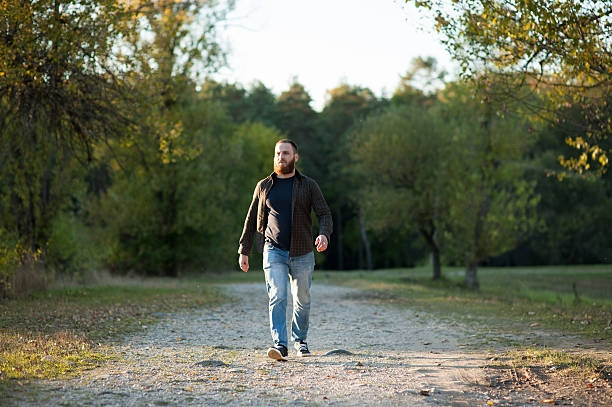
Walking achieves all of this through what is known as a cross-crawl mechanism, moving your right arm and left leg forward and back side by side. This cross-crawl pattern is what children develop when they learn to crawl and is essential for their physical and cognitive development.
Whether it's running, walking, or jogging, Charles says that this movement helps bring together both the structure of your body and mind by connecting the right and left hemispheres of the brain.
“My opinion is that walking stimulates the cerebellum; this improves memory and cognition and can prevent Alzheimer's disease and Parkinson's. I tell the patient, "If you walk, you will be in good shape after walking.” In short, regular walking makes you better prepared to cope with life.
Motivation for the movement
One of the best things about walking is that it's easy -all you need to do is get out of the house and walk or use a treadmill at home and a proper pair of shoes. The hardest part is just the beginning, says Sweeney, that her depression and disorder control her, but if she can find some motivation to walk, she knows things will get better.
Of course, there are also benefits of strenuous exercise that make you tired and in pain the next day, but it doesn't have to be part of your walking routine. Charles advises that you should take things easy, especially if you are in pain or weak or just starting to walk, and says: "You can make walking as beautiful and quiet as you want. It is up to you, even if you walk slowly, as it will be useful."
Experienced walkers are often advised to take advantage of walking; let your arms swing, your mind in a state of serenity, and you will notice the details in the world around you and enjoy the moment.
Caleb Backe, a personal coach and safety expert, said: “The benefits of walking are better when we take the opportunity and stop talking, so I prefer to walk in silence. Walking silently with yourself, ideally in a natural environment, allows for real meditation. You'll know the benefits of walking when you come home and feel like a better version of yourself.”
Sweeney believes that going out for walks with friends helps her maintain her motivation and sense of community, but she maintains that these group walks are not a substitute for her quiet walks alone, which she considers sacred. "It's a special time to myself," she says. "I love walking with my husband, but there is something about just walking alone, which is a break from the hustle and bustle of life.”




Add comment