



Definition of imagination, linguistically and idiomatically
Fiction by language
As stated in the Dictionary of Contemporary Arabic: Fantasy: singular. Plural: fantasies, imaginations; It is one of the powers of the mind with which things are imagined during their absence, and it is an inner power capable of creation and innovation, through which we imagine things and imitate them.
As stated in the "Alraed" dictionary: What a person resembles while awake or in a dream is an image, which is one of the powers of the mind with which to imagine things.
Imagination, by terms
- It is a mental activity through which certain ideas and images are imagined that do not exist in reality.
- It is a mental ability to create thoughts and scenes in the mind without involving the senses.
- "Ward Forged" defines it as "a talent that enables the poet to compose imaginary images and the ability to mix them together, even if they are different and unrelated, as he can link them."
- Boulder defines it as "that miraculous power, which enables the poet to analyze and link and also has a major role in human learning."
- Arthur Reber defines it as "the process of uniting memories, past experiences, and images that were previously formed and employing them within a new structure. It is an activity that a person performs creatively, and it is based on human desires, the reality in which they live, future stories, or revisions of their past; it is thus the expectations of the present, the revision of the past, and the innovation of the future."
- Kate Egan defines it as: "Exercise the mind and activate its various functions."
- Shaker Abdel-Hamid defines it as: "A process that a person performs at will and with all flexibility, through which they can roam in their own world by means of their minds, forming images and moving them until they reach what they want."
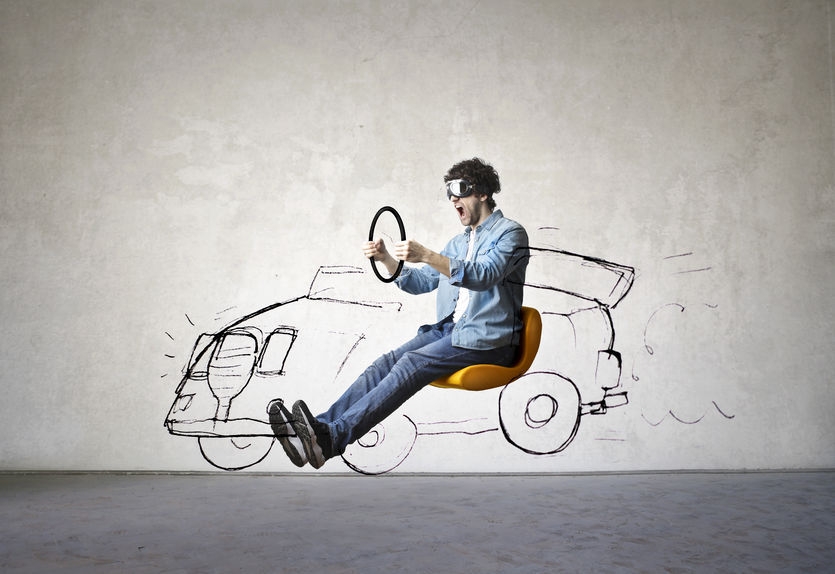
What is the difference between fiction and Imagination?
Fiction, or fantasy, is a process that differs from imagination. Fantasy, as we mentioned, is the scenario that consists of images, scenes, and events, but imagination is the process of imagining this scenario, interacting with it, and sensing it in all its details as if it were a reality.
What is the Difference Between Fantasy and Daydreaming?
Fantasy or imagination is considered a conscious, healthy state of the human being, is based on reality, and often leads them to innovation and creativity, while daydreaming is a state of involuntary absent-mindedness, thinking of exaggerated wishes and dreams, is not based on reality. It often affects the lives of humans negatively because it distracts them from their work and separates them from their reality for hours and hours.
It abounds among young adolescents. A teenager dreams of becoming a sports champion or a world-famous actor.
When Does Fantasy Become a Disease?
Imagination becomes pathological when it exceeds its normal limits. An example of this is when a person suffers from a state of wide imagination, wandering, and escaping from reality all the time, which separates them from their reality completely and impedes their pursuit of their professional and social lives.
The Effect of Imagination on Man
As we said, imagination is a healthy, necessary, and beneficial state for man, provided that it remains within its natural limits and does not turn into a state in which a person lives throughout the day, completely detached from his reality. At that time, the state of imagination becomes a pathological condition that needs psychological treatment.
The person who lives in fantasy
The person who lives in fantasy suffers from many difficulties in his life, the first of which is their isolation from the people around them, the disruption of their work and achievements, and their separation from reality.
When does imagination begin in children?
According to many studies and research studies, fiction and imagination begin in children at the age of two, and this process develops in a great way between the ages of three and five. The imagination is one of the most important and useful things for a child to develop his intelligence and abilities.

Types of fantasy
Fantasy is divided into several types, namely:
1. Inactive imagination
It is the thoughts and images that come to mind automatically, without awareness of the mind.
2. Active imagination
which is the opposite case of the previous type, occurs voluntarily by the person, and the mind makes an effort to collect ideas, images, and memories, merge them, and form new fantasies.
3. Cognitive imagination
Cognitive imagination is related to learning and knowledge. We all know the story of the fall of the apple and Newton's discovery of the law of gravity. This is the most famous example of cognitive imagination.
4. Appreciative imagination
It is the imagination that arises when reading a novel, studying history, or listening to the radio. The mind visualizes the events described.
5. Imagination related to memories
when a person revises memories he has experienced in the past and imagines them.
6. Daydreaming
It is the imagination that a person imagines in their mind, far from reality, and often takes the form of wishes and hopes that they dream of realizing. They often get sad and frustrated when this situation ends and they return to reality.
7. Spectrum imagination
It is the imagination through which a person can recall certain precise scenes that they have previously seen and recall them fully as if they were actually in front of them. It is the imagination that students use in their tests. To retrieve the required information by retrieving the image of the page and its format that contains this information.
8. Hallucinations
It is the imagination that results from deprivation. A person who is deprived of something tries to compensate for this deficiency and deprivation through their imagination and hallucinations.
9. Creative Imagination
It is authorial and creative imagination, and it is considered useful, as it is what writers and authors use to produce ideas, novels, and stories, and engineers use to create designs.
10. Delusional imagination
one of the unpopular types, as it makes a person live in a world of illusion and stay away from their reality all the time.
Imagination and its relationship to intelligence and creativity
The famous Irish author George Bernard Shaw said: "Imagination is the beginning of creativity. You imagine what you want, then you do what you imagine, and in the end, you create what you want."
There is a strong relationship between imagination, intelligence, and creativity. If we look at literary works, international paintings, musical scores, cinematic works, and many inventions and discoveries, we find that imagination is what prompted their owners to accomplish them. When it is said, “Someone has a wide imagination,” it is evidence of his intelligence and creativity. This is because imagination liberates a person from the environment in which they live, so they do not remain confined to their place and time, and they imagines unfamiliar and non-existent ideas and things and turns them into reality. And how many inventions and achievements today were in the past just an idea in someone's imagination?
This is what is known in psychology as "creative imagination," and psychologists have divided it into two phases:
- It is divergent thinking: it is thinking of a group of ideas related to a specific topic, which is intuitive (natural) thinking.
- It is convergent thinking, in which a person evaluates these ideas and their usefulness. That is, until they choose the right idea.

Importance and Benefits of Imagination
Imagination has many benefits for humans, such as:
- Studies and research have proven the benefits of imagination for mental health and recovery from mental illness by encouraging mentally ill people to imagine things and experiences that make them happy. For example, a patient suffering from anxiety and fear is asked to imagine himself in a beautiful and comfortable place when they feel anxious, so they feel relaxed.
- Imagination develops human abilities and talents, as proven by the story of the war pilot George Hall, who was captured in the Vietnam War and kept in a dark box for more than 7 years. But what did George do to maintain his sanity during this harsh experience? George continued to use his imagination throughout his captivity, imagining himself playing golf, for example, and living the fantasy in all its details as if it were real. The surprise was that one week after his release, he was able to participate in an international golf competition, and he got an advanced position in it.
- Imagination motivates a person to achieve their goals and dreams by imagining them and feeling the joy of achieving them. This motivates them to work and strive to make them a reality, and this is what the Law of Attraction focuses on.
- Imagination activates memory by recalling memories and past events.
- Imagination gives optimism, gives hope, and calms the human soul by imagining their lives to come in a better way.
- Imagination gives a person strength by reminding them of harsh events and experiences they went through previously and being able to overcome them.
- Imagination improves a person's life by increasing their creative ability to solve problems facing them.
- Imagination is pre-training to face a situation. So, imagining the person themselves standing in front of the audience, confident of themselves, makes their performance better when the matter occurs in reality.
- Imagination improves human social relations. They become more sympathetic and understanding of them; they imagine themselves in their place, feel their feelings, and live their condition.
- Imagination opens the way for man to innovate, create, and design.
Damages of Wide Imagination
When a person's state of imagination exceeds the normal limit, it turns into a pathological condition known as "schizoid imagination." It is the separation of a person from their reality and living within a world that they draw in their imagination. It is a defensive method that a person resorts to to escape from reality. The damages of this condition are represented in the isolation of the person and their immersion in a fictional world that has nothing to do with reality.
In conclusion: What was said in Fiction
- “Imagination will carry us to worlds that did not exist, and without it we will not go anywhere.” - Carl Sagan.
- “What is constant today was once just a fantasy” - William Blake.
- “The man who has no imagination has no wings” - Muhammad Ali Clay.
- “Imagination is more important than knowledge. Knowledge is limited, but imagination surrounds the world.” - Albert Einstein.
- “Imagination is dreaming of something better than reality, and those who do not think of anything other than their reality see nothing but their feet and usually fall.” - Farouk Juwaida.
- “Your imagination is everything. It is your preview of your next life.” - Albert Einstein.
- “Limitations live only in our minds, but if we use our imagination, our potential becomes limitless.” - Jimmy Paolinetti.


Add comment