



Balance can be elusive, and this is true in many areas, including finding balance in work and personal life. The danger for most professionals lies in continuous work.
According to the Cambridge dictionary, work-life balance can be defined as the amount of time you spend doing your job compared to the time you spend with your family doing the things you enjoy. With the right balance between work and personal life, you will be healthy and productive. Without balance, it can be very easy to feel overwhelmed.
Finding a balance between work and personal life is important. This is because most of us are on the brink of danger, and an imbalance can have serious negative consequences. For example, an imbalance can lead to feelings of stress that can negatively affect your physical health and important relationships, and of course, personal and professional productivity suffer when there is no balance between work and personal life.
Feeling overwhelmed due to a lack of balance between work and personal life
“I've always wanted a job that supports my life, not a life that supports my business,” says Paul Jarvis, bestselling author of The Company of One.
People and things regularly compete for your time. The goal of work-life balance is to find time in your days for everything important to your personal and professional lives. In this article, we'll talk about how to find balance, make the most of your time, and win in work and personal life.
What causes burnout?
1. Overthinking
According to research published in the Harvard Business Review, overthinking for an extended period of time can lead to cognitive fatigue and a diminished brain's ability to focus. When your mind tries to manage too many responsibilities at the same time, overload causes you to feel overwhelmed. What you need is clarity and focus to create a balance between work and personal life.
2. Clarification of the most important priorities
When a plane lands at night, there are lights on the runway that direct the plane toward a safe landing, and those lights determine the path for the plane to land successfully. Priorities do the same for busy professionals. Clear priorities set the right course for making the best use of your time and provide you with two critical pieces of information that maximize your effectiveness and provide relief from burnout:
- Priorities tell you what to do first. Author and businessman Stephen Covey says, "If the ladder doesn't rest against the right wall, every step you take will get you to the wrong place quickly." Knowing your priorities will help you invest your time to move in the right direction and reach your goals.
- Priorities tell you what not to do at all. When you feel overwhelmed, it's most likely because you're doing too much, and one way to find work-life balance is to cut out the non-essential things.
When the pilot sees the lights on the runway, he will use special controls to direct the plane to a safe landing. So use your priorities as a guide, master task management, and review your current responsibilities. Is it better to identify the source of your burnout? If possible, delegate or eliminate those tasks.
3. Finding your true self in your professional life
It's hard not to overwork if you find your true self in the work you do. It is enough to realize that your work does not reflect your personality until you are free. An article in Psychology Today states that it is important to separate the idea of meaningful work from a meaningful life.
The rationale is that if one works more hours with a relentless commitment to their job above all else, they will achieve success. However, research shows that when you are exhausted, you are actually less productive. Meaningful work is only one part of an overall life; Therefore, work-life balance includes important relationships, appropriate self-care, and participation in activities outside of work.

Finding balance
1. Identify the reasons for the imbalance between professional and personal lives
First, you need to know what you are trying to balance—what is important to you in work and personal life? It's worth the time and effort to get clear about what you really want, and the only way you can make time for what's important is to know what's most important.
James Clear, author of the bestselling Atomic Habits, writes about how he spent a few weeks working to make sure he knew his true purpose. He would get up every day and write, starting with a blank page, every morning, answering an easy question in writing, "What do I really want?"
Knowing who you want to be and what you want to do with your life makes it possible to assess your progress and determine if today was a good or bad day. The answer is based on your personal values, vision, and goals.
For example, if you are a writer and your career goal is to write 3 hours a day, if you do that, you can consider yourself successful in that area of your life. If, for some reason, you spend a whole week without a dedicated writing session, then know that something is wrong. She has strayed from the path of work-life balance.
2. Areas of life
Author, speaker, and entrepreneur Michael Hyatt often talks about what he calls the double win: winning at work and succeeding in personal life. It's a powerful supporter of work-life balance.
One of the ways he recommends achieving this is by assessing your health in 10 different areas of life: physical, occupational, exercise, emotional, financial, spiritual, educational, marital, social, and intellectual. When you know what you want in each area of life, you can chart the path towards a balanced professional and personal life.
3. Wheel of Life exercise
Another useful framework for assessing work-life balance is called the Wheel of Life exercise. The Wheel of Life in its current form was popularized by famous author and motivational speaker Zig Ziglar and Dave Ramsey in Entre Leadership.
It's a visual representation of all the areas of your life in which you need to set goals. Zig Ziglar chose seven areas to focus on, and his categories have become the gold standard that many people and companies still use today.
The Seven Classes of the Wheel of Life:
- Professional: Advance your professional or business goals.
- Finance: Take control of or improve your finances.
- Spirituality: Develop your spirituality.
- Physical: Improve your health and safety.
- Intellectual: Develop your mind.
- Family: Strengthen your family.
- Social: Strengthen personal and professional relationships.
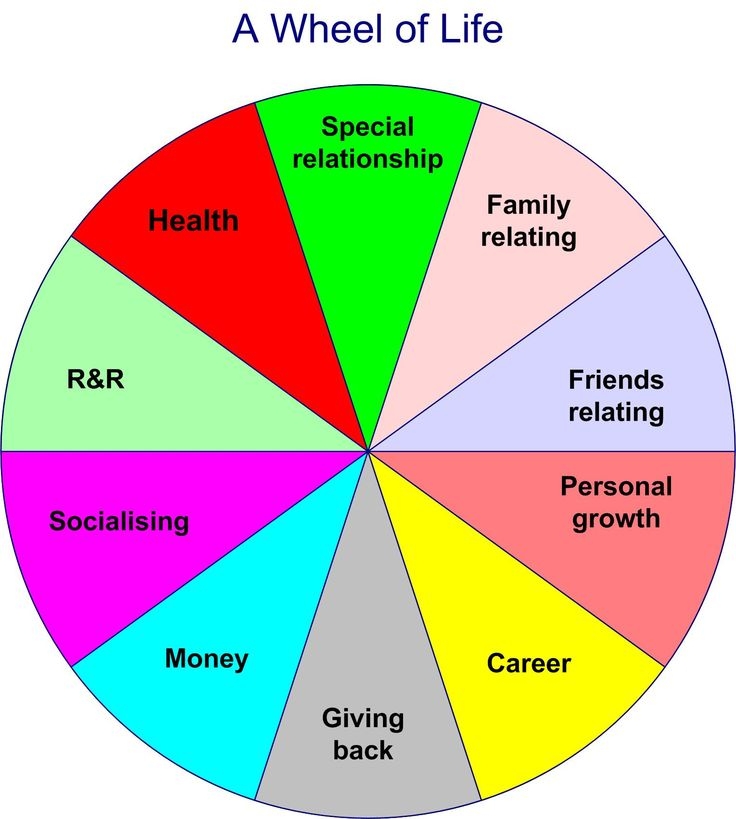
4. Better time management
In the case of work-life balance, it depends on the optimal use of your time during work and how you manage your time outside of work.
Finding balance at work
How do you measure your effectiveness at work? Don't make the mistake of equating work with getting things done. There are some activities that can take up an inordinate amount of time, but that doesn't mean they're a productive use of your time. Some of the most common distractions are email, meetings, and interruptions.
- Work-related Emails: The number of work-related emails you respond to per week is not an indicator of productivity. According to research, time wasted with unnecessary emails costs about $1,800 a year
- Meetings: What about non-essential meetings? How many meetings do you attend each week, taking time away from doing the actual work?
- Interruptions: Nobody asks for interruptions; it costs time and money. The average employee deals with more than fifty interruptions each day and spends more than two hours restoring focus.
Obviously, not all activities are productive. Time spent working on your top priorities is the best measure of a productive day. Having clear priorities gives you the knowledge you need to evaluate how you spend your time.
You may be familiar with the Pareto Principle, which states that for many effects, about 80% of the consequences come from 20% of the causes. And you get 80% of your results from about 20% of your activity. Burnout occurs when you lose focus on 20% of your productive activities.
Finding balance outside of work
Make time for what is most important outside of work. Your physical, emotional, and mental health are all part of a balanced life.
Here are some recommendations:
- Sleep is essential to health and productivity; a good night's sleep can double your efficiency.
- Relax: Your mind and body need a break to get back to work.
- Get away from work: Getting away from work means separating work from your personal life, but the world we live in today is very interconnected, and for people who own a mobile device—a phone, a tablet, or a laptop—it may seem impossible to escape from work. Your work is always with you; however, doing something as basic as turning off notifications on your devices outside of business hours can make all the difference.
- Learn to refuse: Learn to say "no" more often. Most people don't say no to something that is asked of them. However, without personal boundaries, you will live in a constant state of exhaustion.

Resolutions to balance work and personal life
Be sure that your day will not balance out on its own; it only happens as a result of your considered choices. So you have to plan your day according to the following:
1. Review your schedule
Time is resource-limited, So be honest with yourself and manage your time well.
Start with your calendar. Imagine visiting a grocery store, and suppose you have a budget for a certain amount of money. You put all the items you want in your cart until you reach the limit, and at that point, if you want to put something else in the cart, you have to remove something.
Your calendar is your cart; the day consists of 24 hours, and every activity has a cost and time. It's resource-limited, and you need to be aware of your tasks, so make sure you have time in your schedule for important events like vacations and small daily activities like meditation and reflection for your mental health.
2. Set healthy boundaries for your work and personal lives
Boundaries are useful because they force you to use your time more productively. For example, anyone who travels by plane knows that they have to be on the plane when they take off, and there are limits because the traveler must arrive on time for departure.
Signs that you've crossed the line:
- Ask yourself: "Is what I'm doing sustainable?" If you continue to work the way you do today, will you be able to maintain this pace indefinitely?
- You stopped doing something important to you because you didn't have time to do it.
- You no longer exercise.
- You don't sleep well for long periods of time.
3. Implement healthy habits to make sure you're on the right track
Your habits protect your boundaries. Self-discipline is a choice you make, but it is reinforced by the power of healthy habits.
An article in the Harvard Business Review suggests that "This is not a one-time fix; rather, it is a cycle in which we must engage continually as our circumstances and priorities evolve."
The right framework will allow you to face change. Life is not static; it is constantly changing. This means that work-life balance is a moving target.
Examples of balancing habits at home and work:
- Develop morning habits.
- Commit to stopping working at a specific time.
- Make a regular appointment in your calendar for self-care.
- Reconsider your calendar for tomorrow.
- Plan when you will be off work during the day.
- Choose an activity that is related to your life outside of work.
- Mark that time on your schedule.
Tips for getting started
It's an easy step; you can do it right away, and small daily choices that become healthy habits will help you achieve a better work-life balance.




Add comment