



Would you dare confront them? Do you generally have the courage to confront people who make racist comments or engage in shameful behavior? You might say "yes", but most of us fail to do so when actually faced with such a situation. Why is that?
One factor that prevents us from expressing our objection is our fear of the consequences. We keep thinking: "Will I lose out on a promotion or a bonus?”, ”Am I going to lose someone’s friendship?”, “Will my name be associated with making trouble?”, or “Will I be excluded from family gatherings or subsequent meetings?” You are not the only one with such concerns, actually.
Many people have known for decades about the horrific behavior of producer Harvey Weinstein. No one moved a finger, as they were afraid to report his repeated immoral actions so as not to face dire professional consequences. So they remained silent, which helped him continue his behavior.
Another factor is confusion about what we actually see or hear, like thinking, "Is this comment just a harmless joke, or is it racist and offensive?" or “Is this a small fight or a serious case of domestic violence?” These ambiguous situations make it difficult for people to come forward and speak up because we do not want to appear foolish or overly sensitive.
Social psychologists have long discovered that people are more willing to take action in an obvious emergency than in an ambiguous situation. Researchers compared the likelihood of receiving aid between people who heard an ambiguous emergency, such as a loud explosion in another room, and people who heard a clear emergency, such as a loud voice followed by pain groans. As a result, those who were exposed to a clear emergency stepped in to help.
Worrying about others judging our behavior is the reason we don't take action in ambiguous situations. This explains why only 19% of people intervene when they see a fight between a man and a woman, as they believe that it is a personal fight between a married couple.
On the other hand, 65% of people intervene when they believe they are witnessing a fight between strangers. While it seems clear that intervening in a potentially violent conflict between strangers is the right thing to do, people believe that intervening in a personal conflict might only cause embarrassment to all parties.
We automatically tend to look at others to see what happens when faced with an ambiguous situation, but here lies the problem. If everyone is waiting for someone around them to act and no one wants to risk feeling foolish and embarrassed, the problematic comment or behavior might be left unchecked. This shows a lack of interest or even tacit approval, which increases the possibility of the situation continuing. Thus, when someone says something offensive, we do not always intervene, even if we feel resentful about it. We feel more comfortable remaining silent, at least sometimes.
Although we all imagine ourselves as brave people doing the right thing, it is not that simple. We have witnessed several examples over the past few months that highlight how difficult it is to address the behavior of not wearing a mask.
Will you approach someone you see in a store who isn't wearing a mask? You might do it, but you might second-guess whether you should do it or whether this person will become hostile. What if you witness a store employee ordering a customer to put on a mask, and you watch the altercation worsen? Should you get involved? You might also be concerned about possible consequences, such as the possibility of catching the infection due to the droplets that might come out of screamers' mouths.
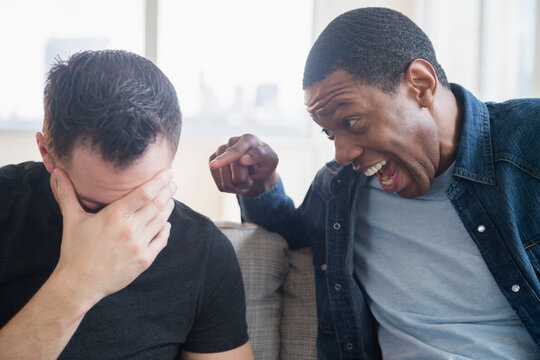
Tips to Help You Deal with Bad Behavior
Fortunately, we can hone certain skills to deal with bad behavior when we need to. Here are some proven and practical tips:
1. Find a short, clear way to express concern or disapproval
This advice will help you avoid getting into trouble or insulting the other person, as it briefly states your disapproval of the offending comment or action. An explicit expression of disapproval makes it clear what is unacceptable. It is an essential first step in creating new social norms.
2. Assume the comment is sarcastic and act according to that
Sometimes, you can get the speaker's attention by assuming they're just joking. For example, you can respond to an inappropriate comment about the dangers of voting for a woman by saying, "I know you're joking, but some people really think women are too emotional to be bosses." This reply shows that you don't agree with the comment, but it doesn't make the person who made it look stupid or bad.
3. Show that you are annoyed with the comment:
One way to do this is to reveal something personal to explain your reaction to an insensitive comment. For example, you can say, "A close friend of mine suffered from racism in high school, so I don't feel comfortable hearing jokes about it." This will reduce the likelihood of making the person feel bad or get defensive, and it will also clearly indicate that their comment or behavior was wrong.
4. Practice different techniques for confronting offensive comments or problematic behavior
Learning different techniques to confront prejudice or unethical behavior can make a big difference, but it is not enough to just learn skills and strategies. It is necessary to practice them, as it helps to gain courage and speak fearlessly. It also makes the response sound more natural and increases our confidence in our ability to intervene in realistic situations.
Therefore, the most effective programs to help people speak—in schools, universities, and the workplace—provide training in how to handle difficult situations. They also give people opportunities to practice these skills by acting out different scenarios.

5. Find a friend who shares your concerns
Doug McAdam, a sociologist at Stanford University, has found that the best predictor when challenging social norms—even at great personal risk—is not having to do it alone. The downfall of Theranos, the company that made fraudulent claims about blood tests, began when two employees spoke up together about their concerns, even though they knew they would face lasting personal and professional consequences. For those who are not naturally brave, finding a friend who stands by them is essential.
6. Put yourself in someone else's shoes
In 1999, Katherine Bolkovac, a former police officer, was working as a human rights investigator with the United Nations Interpol in Bosnia and Herzegovina. She found out that some of her fellow officers were engaging in immoral conduct, even with young girls. When she reported these crimes, they demoted her and then fired her. In 2002, she won her lawsuit for wrongful termination.
What prompted Katherine to speak out was that, despite being a mother of three, she felt for these girls who had been abused. She told NPR, “I would be lying if I said there were no moments when I thought of my daughters.” It would be much easier to speak up and risk consequences if you could see the world from someone else’s perspective.
Some people might automatically empathize with others, but we can all learn to be more empathetic by channeling time and energy into fostering empathy. After all, if you experience bullying or other abusive behavior, you will wish someone was there to help you.
We can all learn to deal with bad behavior. We can shift the culture away from one of inaction and silence toward one of courage and action if enough people do it. Sometimes all it takes is one voice, especially when that voice inspires others to speak up as well.




Add comment