



In life and learning, many people keep using the same key, assuming that every lock must be identical.
This is where the idea of this article begins—an invitation to rethink intelligence not as a single fixed tool, but as a flexible capacity to adapt, explore, and uncover new pathways to learning and understanding. This article offers a fresh lens on the human mind—how it can break free from rigid molds and tap into its deeper potential.
The Wrong Lock: The Myth of “Fixed Intelligence”
“Success is not the result of innate intelligence, but of a growth mindset that makes people persist and learn from mistakes.” — Carol Dweck.
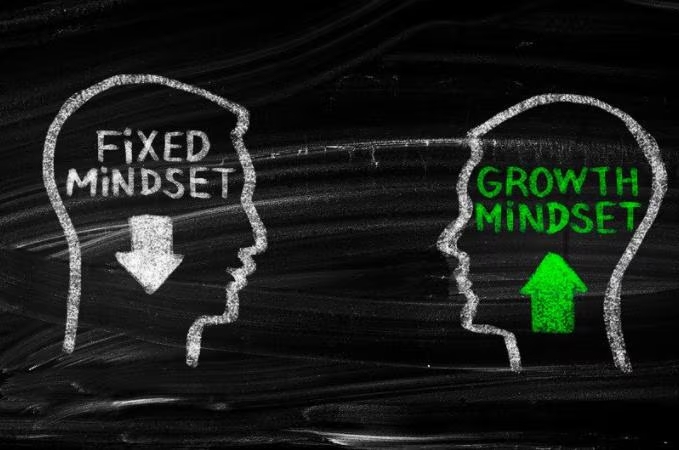
The belief that intelligence has an upper limit is shaped by countless experiences and messages accumulated since childhood—forming what psychologists call a fixed mindset.
Identifying the Real Problem
The problem is rarely your current level of intelligence; it’s the silent assumption that this level defines your ceiling. Once that belief takes root, every struggle with math, physics, or any demanding subject—and every comparison to a high-achieving peer—feels like proof that you simply lack ability.
In reality, the limitation lies not in your potential, but in how you perceive it.
Where This Belief Begins
Certain parenting and educational patterns reinforce the idea that intelligence is static—undermining perseverance and the value of gradual progress. The most common include:
1. The Praise Trap
When parents or teachers praise identity rather than effort (“You’re so smart” instead of “You worked hard on this”), they tie self-worth to outcomes. When failure strikes, it feels like the collapse of one’s very identity as a “smart person,” discouraging further effort and experimentation.
2. Grades Over Growth
Many education systems reward the final score while ignoring the process—the effort, curiosity, and mistakes that drive mastery. Learning becomes a race for grades, not a pursuit of understanding.
3. The Comparison Cycle
Students are pressured to match the “smartest” peers to secure prestigious careers. Educators face parallel pressures through performance metrics and student outcomes. The result? Chronic stress that erodes motivation and joy in learning or teaching.

The Real-World Cost of a Fixed Mindset
The fixed mindset produces visible consequences that hinder personal and academic growth—what educational psychologists call pain points in learning.
Carol Dweck’s landmark research (2006) revealed that individuals who view intelligence as static tend to avoid challenges and fear failure, thereby stunting their long-term development. These effects manifest in several ways:
1. Avoidance of Challenging Fields
To avoid exposing “low intelligence,” many students steer clear of STEM disciplines, closing doors to valuable academic and career opportunities.
2. Fear of Failure and Procrastination
Studies by Andrew Elliot and Todd Thrash (2004) found that fear of failure strongly correlates with anxiety and chronic procrastination. When failure becomes a threat to one’s self-image, avoidance replaces action.
3. Surface Learning
Under pressure to perform, students shift from comprehension to memorization—focusing on tests rather than knowledge. As John Biggs’ work on “surface learning” shows, this pattern thrives in systems that prioritize results over the learning process.
4. Teacher Burnout
Educators, overwhelmed by rising demands and dwindling resources, experience burnout—recognized by the World Health Organization (WHO, 2019) as a genuine occupational phenomenon. Over time, they feel their work no longer makes a difference, eroding both confidence and passion.
From Darkness to Light: The Key Was Never Lost
Intelligence is not a static trait—it’s a dynamic set of skills that can be cultivated. Research consistently shows that adopting a growth mindset—the belief that abilities can be developed through effort, strategy, and persistence—has a measurable impact on performance and well-being.
According to data from the OECD’s Programme for International Student Assessment (PISA–OECD, 2018), students with a growth mindset scored significantly higher in reading (+31 points), science (+27), and mathematics (+23), even after adjusting for socioeconomic differences.
Across 73 of 77 countries, these students reported less fear of failure and greater confidence in their ability to improve. This evidence shows that the true difference lies not in genetics but in mindset—and in the learning tools we choose. The real key is sustained strategy and effort, not “innate intelligence.”
4 Practical Keys: A Self-Compass and Applicable Tools
“The ability to begin again is what distinguishes a strong mind from a weak one.” — William James.
To help students overcome distraction, anxiety, and ineffective study habits—and to support teachers managing large classes and heavy workloads—here are four practical keys that translate theory into measurable progress.
Each key offers a concise, three-step approach designed to foster calm, clarity, and tangible improvement in learning environments.
1. The Anxiety Map: Color Your Course to Turn the Unknown into Tasks
Uncertainty about academic majors and performance pressure are among the top drivers of student anxiety—often intensified by a sense that everything is vague or overwhelming. Yet with a few emotional intelligence tools, what seems daunting can become clear and actionable.
Start by breaking down the material into small, specific units or subchapters, then color-code each by difficulty level:
- Red for difficult units.
- Yellow for moderate ones.
- Green for mastered material.
Begin with the yellow sections to build confidence, then progress to the red.
This simple visual method replaces ambiguity with structure, reducing anxiety and reinforcing motivation. As topics move from red → yellow → green, students experience visible progress—and with it, renewed focus and confidence.
2. The Learning Compass: The Power of Spaced Retrieval
Cramming creates the illusion of learning, but true mastery comes from retrieval practice—actively recalling information after time has passed. This proven technique strengthens memory and promotes deeper understanding through three simple actions:
- Spaced retrieval: After 24–48 hours, close your notes and test yourself with brief questions about what you studied. Active recall forces your brain to reconstruct knowledge, strengthening long-term memory.
- Direct practice: Apply your learning using old exam questions, real-world problems, or guided templates. For teachers, structured templates streamline assessment and enhance fairness.
- Explain aloud: Teach the concept to someone else—or to yourself in front of a mirror. If you can’t explain it simply, it’s not fully clear yet.
These practices build a durable understanding, expose weak points quickly, and boost confidence through measurable progress with each retrieval cycle.

3. The Language of Effort: Replacing the “Intelligence Identity” with Tools for Growth
Moving from a fixed mindset to a growth mindset begins with transforming the language we use, both internally and externally. The words we choose shape how we interpret challenges, effort, and results. 3 intentional shifts can change everything:
- Personal reframing: Replace negative self-talk with statements that emphasize strategy and effort.
- Rewriting absolutes: Turn rigid judgments (“I can’t do this”) into small, actionable steps (“I haven’t mastered this yet”).
- Reinterpreting outcomes: View mistakes as data, not verdicts—opportunities to understand what didn’t work and why.
These linguistic shifts strengthen intrinsic motivation, convert temporary failure into growth, and help teachers and mentors track meaningful progress. By separating errors from identity, learning becomes a continuous, empowering process.
4. The 20-Minute Daily Agreement: Cumulative Progress Without Burnout
Academic stress and professional burnout often arise from the pressure to “do everything now.” The antidote is consistency over intensity—a method that dismantles resistance through small, repeatable wins.
The 20-Minute Agreement rests on 3 simple actions:
- Commit to just 20 minutes daily on a single subject or task.
- Divide the time: 10 minutes for recall (self-quizzing on past material) and 10 minutes for application (solving one problem or drafting a paragraph).
- Track completion visually—marking each day reinforces accountability and satisfaction.
This approach lowers resistance by making the time so short it’s hard to postpone, while steadily building knowledge or progress without fatigue. It also provides a visible indicator of growth that reinforces a sense of competence and accomplishment for both students and educators.\
Intelligence isn’t a single lock; it’s a toolkit of evolving skills. Every challenge can be reframed, decoded, and ultimately conquered through strategy, persistence, and deliberate effort—not solely innate talent.
Every lock has its key—and every consistent effort brings you closer to unlocking it.
So, change the key, and the lock will open.



Add comment