



Children may refuse to go to school because of their fear of leaving home, learning difficulties, social problems, or other reasons. The best way to return children to school is to work as a team with school staff. In this article, we will highlight the most important points related to this problem and give you a lot of advice and practical ideas you can use at home to encourage your child to go to school.
What does children's refusal to go to school mean?
A refusal to go to school occurs when children are troubled with the idea of going to school and often miss school, either partially or completely. If children's refusal to go to school is related to problems such as anxiety or depression, children may need to see a mental health provider.
It is fine for children to acknowledge and express their feelings about school freely, but tell them that you expect them to return to school. A refusal to go to school means that children have difficulty going to school or difficulty leaving the house; they may not go to school at all, and children who refuse to go to school usually spend the day at home with their parents, even though their parents are trying hard Urge them to go.
Are children refusing to go to school limited to a certain age?
Refusal to go to school can be a problem for elementary and even secondary school children.
Is refusing to go to school a mental illness?
Children's refusal to go to school is not a diagnosed mental illness like other illnesses; It is the name of an emotional and/or behavioral problem.
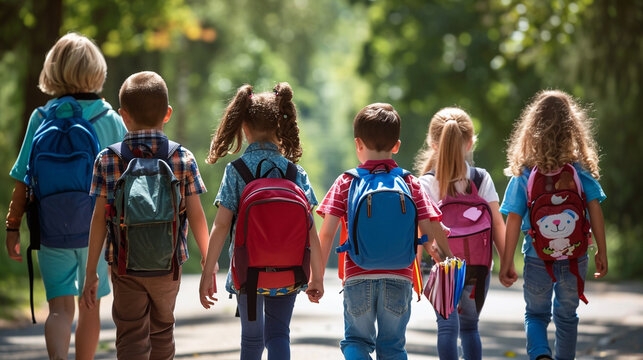
What are the signs of a child's refusal to go to school?
If your child refuses to go to school, the night before school and the morning may feel like a battle of wills. Your child may:
- Crying, tantrums, screaming.
- Hide in his room.
- Refuse to move.
- Praying not to go.
- Complaining about aches, pains, and illness before going to school, which generally improves if you leave him at home.
- High levels of anxiety.
- Finding it difficult to sleep.
- Threatening to harm himself.
What are the reasons for the child's refusal to go to school?
Rarely is there a single reason for refusing to go to school. It may be related to social anxiety, anxiety leaving home, phobias, learning difficulties, social problems at school, or even depression.
Refusal from school may begin gradually or suddenly and occur simultaneously with:
- Stressful events at home, school, or with peers.
- Family and peer conflict.
- Start or change schools.
- Moving to a new house.
- Bullying or harassment.
- Problems with the teacher.
- Bad school results.
What does the child gain from not going to school?
- Avoid scary things, for example, exams, some teachers, etc.
- Avoid social situations with peers or teachers.
- Observe what is happening in the house, for example, if a family member or pet is sick.
How can you find out why your child refuses to go to school?
- The first step to working on your child's refusal to go to school is to try to understand the problem from his or her point of view.
- Talk to your child about school and why he doesn't want to go there.
- Try to find out if your child is having problems with classmates or teachers or if he is trying to avoid something. For example, say, “If you could change one thing at school, what would it be?”
- If your child finds it difficult to talk about the problem, ask him or her to rate each part of the school day, e.g., bus rides, classes, specialized classes, teacher, peers, breaks, and lunch breaks.
- Young children may find it easier to tell you how they feel by pointing to symbols such as sad faces or smiling faces.
- Think about whether anything at home is making it difficult for your child to go to school.
- Has your family had a death or a recent move to a new home? Is your child worried about someone in the house? Or is your dog not feeling well?
What are the possible solutions to the problem of your child's refusal to go to school?
- Help your child solve the problem and overcome any obstacles related to leaving home or going to school.
- Define the problem clearly, then propose ideas and possible solutions.
- Choose the solution that has the best possible result.
- Tell your child that you will work with his school to help him go to school.
- Talk to your child about seeing a psychiatrist if he feels he can't control his worries about school.
- Tell your child to go to school while receiving help with the problem that caused the school refusal.
- Help your child go to school, as this builds his self-confidence and his ability to adapt and acclimate.
- Don't keep your child away from school for too long. It's often easier for kids to return to school if they haven't been away for a long time.
How can you cooperate with the school administration to solve your child's problem?
The best way to get your child back to school is to work as a team with the school, and it's a good idea to start by talking with your child's class teacher.
Here are some tips and ideas you can do:
- After knowing the reason, explain to the school staff what is happening to your child and why your child refuses to go to school, for example, bullying, learning difficulties, etc.
- If your child is experiencing bullying, talk to the school principal about how this affects him. You can also ask the school administration about its strategies to prevent bullying.
- Ask if other support staff, such as a student care coordinator, school psychologist, or counselor, can help your child.
- Ask if you can learn about your child's progress and needs during the support period.
- Make sure if your child has a learning difficulty, this makes it difficult for him to enjoy learning, and ask what support the school can provide in this regard.
- Talk to the school about your child's gradual return to school. For example, your child may be able to start with a shorter school day or with his or her favorite subjects.
How do you deal with your child when he refuses to go to school?
- Don't let your child see that you are anxious, stressed, or frustrated, as this may worsen his anxiety.
- Plan a quiet start to your day by following a routine in the morning and evening, for example, have uniforms, lunches, and school bags ready the night before, and have your child shower in the evening and sleep at regular times.
- Make your home “boring” on the day your child does not go to school so as not to reward your child for not going to school. That is, you should allow him little or no video games, and you can consider not allowing your child to use a mobile phone during school hours.
- Have your child do the homework that the school asks of him to do while he is at home, this will help make sure that he does not lag behind his peers in class.
- Introduce some punishments that reduce the amount of attention your child gets from not going to school, for example, early bedtime or limited time playing.
How do you deal with your child's return to school again?
Ask someone else to drive your child to school. Children often deal better with separation at home than at the school gate. Praise and reward your child for going to school, for example, if your child goes to school regularly, they can get extra time to play ball, have a special parent-friendly outing to their favorite garden, or make their favorite meal for dinner.
In conclusion
Remember that your child needs your love and support to go back to school; So focus on any efforts your child is making to come back, be patient as he progresses, and try to keep any frustrations you feel between you and yourself, as this will help him build the confidence he needs to return to school regularly.



Add comment