



In that moment, they are not only entering a room of books and lessons; they are stepping into their first structured social world. Almost instinctively, they begin decoding how authority works: who speaks and who listens, what is welcomed and what is risky, where they stand within the hierarchy, and what it may cost to step beyond it.
On the surface, school is an organized place for instruction. Yet at a deeper level, it functions as a daily training ground where a child’s relationship to decision-making, error, initiative, and the invisible boundaries of what is “acceptable” or “costly” quietly takes shape.
Compliance in school rarely emerges from detention slips or strict rules alone. It grows quietly through the steady accumulation of small, repeated practices and micro-habits: who is given the floor and who is not, who gets the gold star, which behaviors earn approval, how mistakes are treated, and what happens when a student dares to step beyond the expected path.
Over time, these subtle signals teach students not only how to behave, but what is safe to attempt and what is better left unsaid. Children gradually develop a "survival instinct”, an internal risk radar that steers them toward what feels safest within the system. The real question, then, is not whether schools teach compliance; they do, but rather: “What kind of initiative are we truly making room for, and at what cost?”
Compliance Is a Trained Behavior, Not a Personal Virtue
In traditional education, compliance – or obedience - is often framed as a moral ideal, a proof of respect, discipline, and good character. Yet for a child, it is rarely experienced as a value they consciously embrace. Instead, it is learned the way routines are learned: through repetition. They discover when to raise a hand, when to stay silent, and how to shape an answer so it sounds “right,” even when it does not fully reflect what they are truly thinking.
No one explicitly forbids independent thought. However, students quickly learn that the thinking which earns approval is the kind that stays on track, keeps the lesson moving, and does not force the system to adjust or pivot. Through this steady feedback loop, compliance becomes less a moral stance and more a survival strategy; not a deliberate compromise of integrity, but a rational calculation: stay within the lines, or absorb the cost of stepping beyond them.
Educational theorist Gert Biesta points out in The Beautiful Risk of Education that schools mold learners through their daily routines as much as through textbooks. The most powerful lessons in school are rarely spoken aloud. They emerge from daily practice and repeated signals: what students quietly absorb about their place in the hierarchy, the real limits of their agency, and the boundaries they learn not to test if they want to remain “safe” within the institution (Biesta, 2011; 2020).
The Real Source of Compliance: System Design, Not Student Character
It is tempting to explain a compliant child by pointing to personality or upbringing. Yet this lens misses the structural forces at play. The school design can exert a stronger influence than individual intentions.
In many schools, authority is centralized, decisions flow from the top down, and the curriculum follows a fixed track. Within such systems, students quickly decode the message: the safest path is to comply, not to explore.
In environments shaped by rigid hierarchies, obedience does not need to be enforced; it becomes the most rational response. Questions may be permitted but rarely encouraged. Mistakes may not result in formal punishment, yet they carry subtle emotional or social costs. Over time, students internalize the lesson that initiative is not explicitly forbidden, but is quite risky.
Self-Determination Theory sheds light on this dynamic (Deci & Ryan, 2000), as it demonstrates that highly controlled environments erode intrinsic motivation, the very foundation of independence and initiative. When learning is governed by surveillance and punitive evaluation, compliance ceases to be a matter of virtue; it becomes a strategy for survival within the system.
The Illusion of Choice: When Initiative Is Safe, Predictable, and Contained
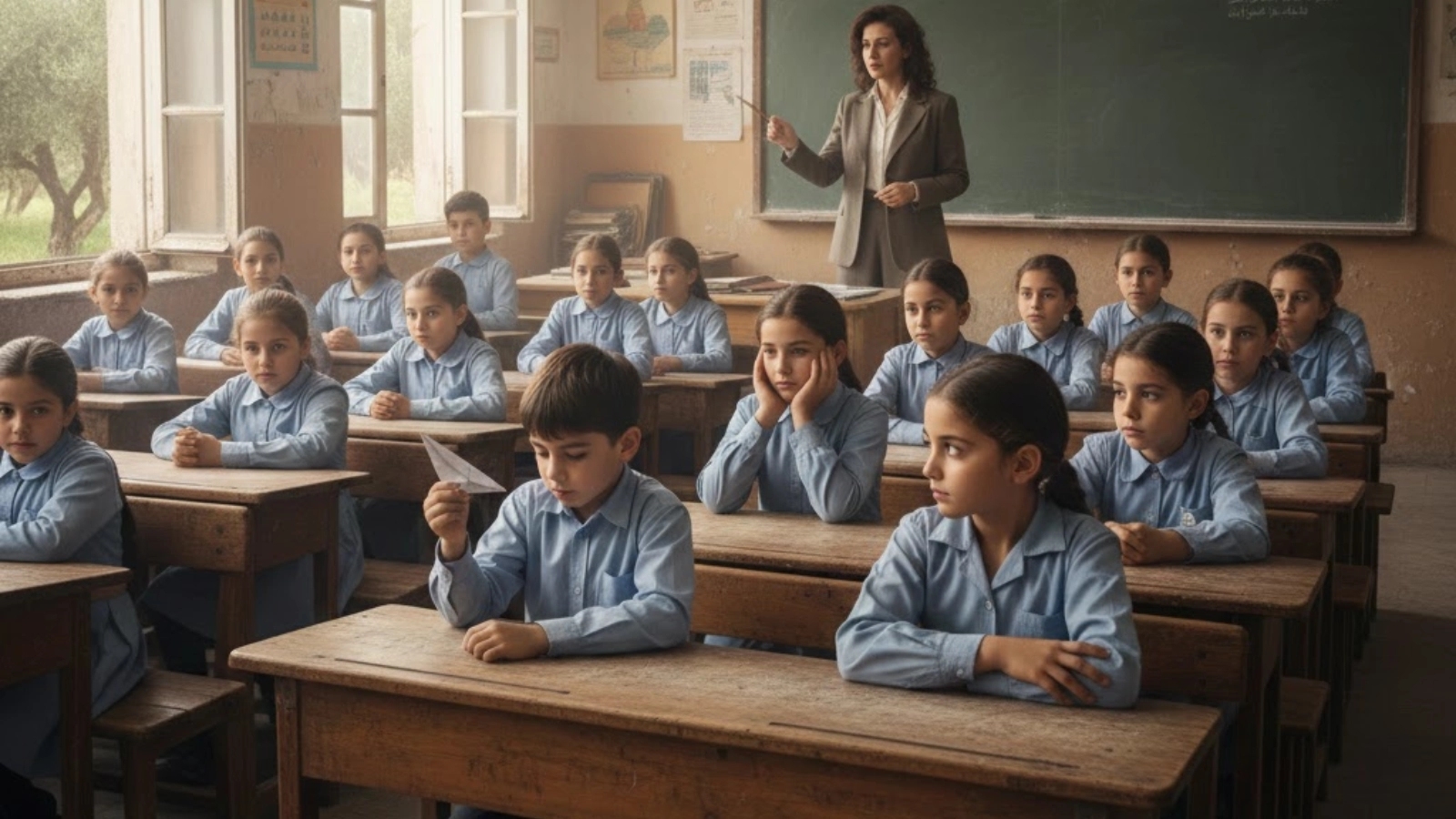
The problem is not always a lack of initiative. Often, initiative has simply been domesticated. We see it in projects where students “choose” a topic but must follow identical steps dictated by a rigid rubric; in discussions where opinions are welcome so long as they circle back to the expected conclusion; in suggestion boxes open only to ideas that leave the structure untouched.
Students quickly grasp the unwritten rule: take initiative only when the risk is minimal, the outcome predictable, and authority remains undisturbed. However, this is not an initiative in any meaningful sense. It is compliance with a creative twist. The deeper risk is psychological. Students begin to perceive themselves as agents while operating within tightly controlled boundaries—hands on the wheel, yet driving along a pre-mapped route.
Research on the future of education warns against this illusion. Genuine student agency requires authentic decision-making and real consequences, not pre-packaged choices that simulate autonomy (OECD, 2019).
What Students Quietly Learn About Authority?
Every school day sends subtle signals: in routines, tone of voice, reward systems, and disciplinary gestures. Students quickly decipher where the real decision-making power resides and what it takes to be recognized as the “ideal student”: anticipate expectations, align with them, and avoid disrupting the flow. In doing so, they learn that authority sits elsewhere—and that success lies in reading and responding to it.
Within this climate, mistakes no longer feel like data for learning and growth. They begin to feel like a threat to approval, grades, or even belonging. Initiative, too, becomes a wager with uncertain returns.
None of this appears in the syllabus. Yet these are among the most enduring lessons students carry. Scholars call this "The Hidden Curriculum", the unwritten system of messages that shapes how students understand their voice, their role, and the limits of their influence (Giroux, 2011).
With repetition, a quiet conviction settles in: authority is something to follow, not question; safety comes from blending in, not standing out. As Gert Biesta argues, these patterns extend beyond the classroom, shaping how individuals later engage in workplaces, communities, and civic life (Biesta, 2011). Long after the textbooks fade, the power dynamics remain.
When the Capacity for Initiative Begins to Erode
The consequences of sustained compliance rarely appear on report cards or in classroom behavior. They accumulate quietly over time. Year after year, students grow more cautious in their decision-making. They hesitate to take ownership and instinctively look for permission before taking action. This caution is not a sign of limited ability; it is a rational adaptation to an environment that consistently signals that safety lies in following directions.
Gradually, adaptation turns into a habit. Students internalize the idea that independence carries risk and that experimentation may invite criticism, rejection, or exclusion. Even when they recognize better alternatives, many opt for compliance, not because they lack ideas, but because they have learned that acting independently can come at a cost.
Albert Bandura’s research underscores that human agency, which is the power to originate actions, is like a muscle. It develops through experience, by making decisions and facing their consequences. When young people are denied these opportunities, their capacity for initiative weakens (Bandura, 2006). In such educational contexts, agency does not disappear abruptly; it slowly atrophies as students are trained to wait rather than to act.
The Comfort of Compliance: Who Really Benefits?
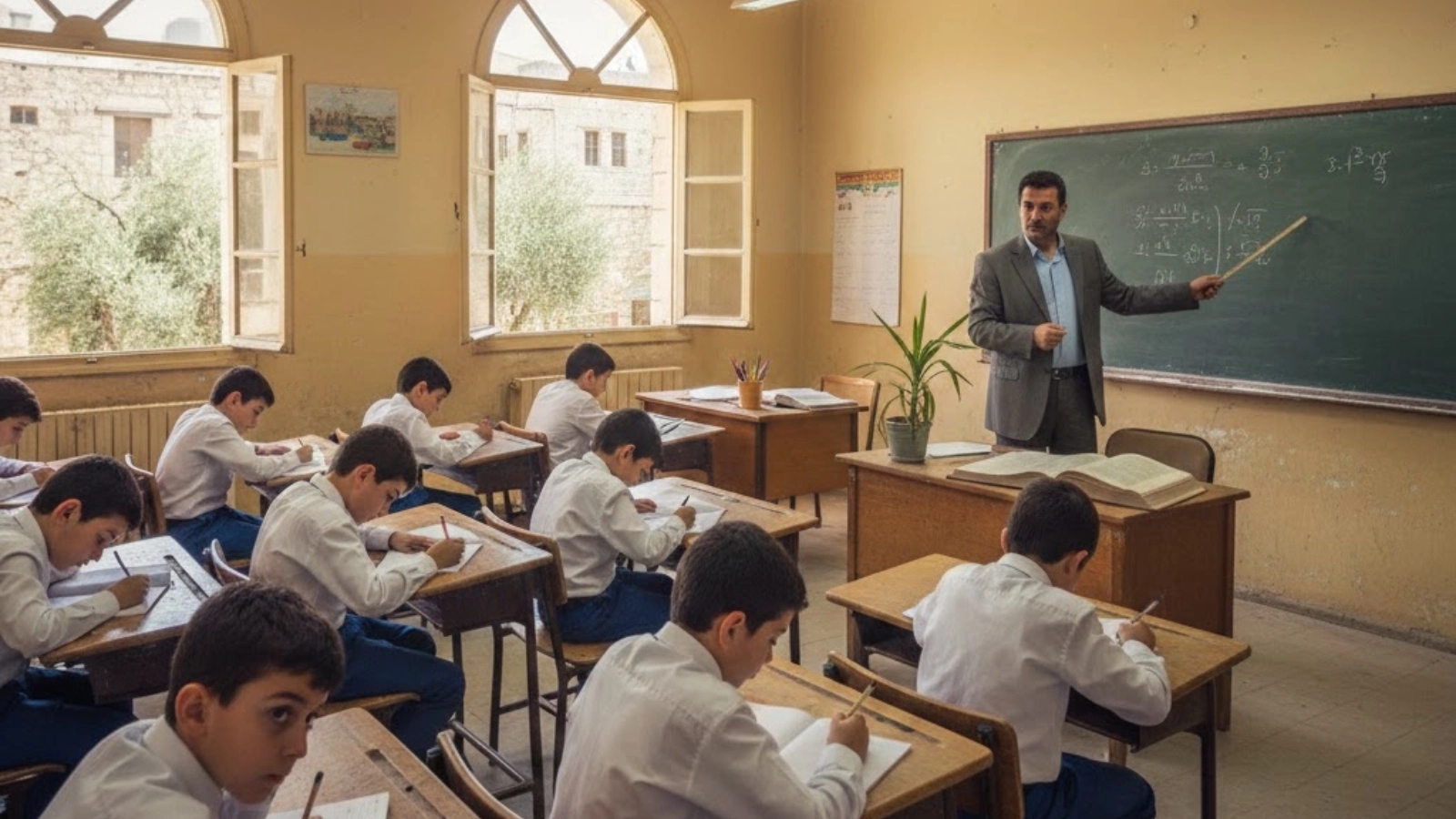
There’s no denying that compliant classrooms are easier to manage. They are orderly, predictable, and efficient. In systems burdened by crowded curricula and high-stakes exams, tight control feels practical and measurable. It reduces uncertainty, keeps lessons on schedule, and makes outcomes easier to measure and standardize (OECD, 2019). From an operational standpoint, compliance appears to be good management.
Yet this efficiency comes at a significant cost. When obedience is consistently rewarded, initiative gradually contracts. Students grow less inclined to question assumptions, challenge ideas, or think beyond what is required. Their role shifts from active contributors to passive recipients awaiting direction. A child who learns that the safest strategy is to wait for direction rather than decide forms behavioral habits that keep them within predefined limits; even when real life demands creativity and independent problem-solving, the internal script stays the same: Don’t move until someone tells you how.
Viewed more broadly, this pattern carries societal consequences. “Comfortable obedience” pattern becomes a mechanism for reproducing citizens who wait for decisions instead of shaping them. While institutions may gain short-term order, society risks losing independent thinkers and proactive problem-solvers.
As Henry Giroux argues in On Critical Pedagogy, education centered on compliance reinforces institutional control at the expense of critical thought (Giroux, 2011). Similarly, UNESCO’s Rethinking Education report (2021) echoes this concern, cautioning that systems grounded in submission may secure temporary stability but ultimately restrict innovation and weaken preparedness for active citizenship.
Conclusion: The Real Question for Schools
School is the first structured system children encounter—their first experience navigating rules, hierarchy, and authority larger than themselves. However, education is about more than discipline or rule-following. The deeper question is not whether students can follow directions. It is whether they are being prepared to make decisions when guidance is absent. Do schools cultivate the understanding that initiative is a right, not a risk? Do they normalize questioning? Do they treat mistakes as the engine of learning rather than a threat to performance?
An initiative that never alters the course of a lesson, never influences a decision, and never carries real responsibility is not initiative at all. It is obedience dressed in more appealing language.
Schools that prioritize order above all else may succeed in maintaining calm classrooms. Yet in doing so, they risk shaping minds accustomed to dependence; graduates who wait for authority to define the path instead of learning to forge one themselves.
This is the defining challenge of contemporary education: Are we willing to redesign schools so that students practice making choices, bear the consequences, and develop the confidence to act? Because once they leave the classroom, there are no answer keys and no one handing out permission; only a complex, shifting world shaped by those who step forward and take initiative.
Frequently Asked Questions
1. Why do many schools in Lebanon and across the Arab region emphasize compliance more than initiative?
Schools in Lebanon and much of the Arab region operate within environments shaped by political volatility, economic strain, and social uncertainty. When the broader context feels unstable, education systems tend to lean toward what appears dependable: order, discipline, and predictability. In such conditions, compliance becomes more than a preference; it becomes a strategy for managing risk. What can be tightly controlled and quickly measured often takes precedence over what requires time, trust, and experimentation, such as student autonomy and initiative.
Research suggests that this pattern is not unique to the region. Education systems functioning under instability or high-performance pressure frequently adopt low-risk instructional models designed to preserve order, even when those models restrict student agency (World Bank, 2020; OECD, 2019).
2. Is the issue cultural, or is it rooted in school design?
This is not an either-or question. Culture and school design operate in a continuous feedback loop. Schools reflect the societies they serve, particularly in contexts where respect for authority and caution around risk are deeply embedded values. But the influence does not flow in one direction.
Through daily practices - how decisions are centralized, how classrooms are managed, and how performance is assessed - schools do more than mirror cultural norms; they reinforce and legitimize them. Research in critical pedagogy suggests that tightly controlled routines and rigid evaluation systems tend to cultivate compliance, even when the stated educational aim is to foster initiative (Biesta, 2011). Culture may shape the initial inclination, but school design transforms it into a durable structure.
3. How do high-stakes national exams shape a culture of compliance?
When a single exam becomes the decisive gateway to academic advancement or social mobility, classroom priorities inevitably shift. Exploration gives way to precision, and curiosity yields to the pressure of getting it right. The focus turns to producing the answer that secures the score, not the one that reflects independent reasoning.
Comparative research shows that systems built around high-stakes testing tend to narrow the space for experimentation, implicitly penalize mistakes, and reward alignment with model answers. Over time, this dynamic weakens initiative not only among students but also among teachers, who must align their instruction with what will be measured (OECD, 2019; Darling-Hammond, 2010).
4. What are the long-term regional effects of this educational pattern on youth and the labor market?
The consequences of this model do not surface immediately. Many students graduate with solid academic knowledge and strong theoretical foundations. The gap becomes visible later. Across the region, employers frequently report that graduates struggle with decision-making, risk tolerance, problem-solving, and independent initiative. Labor market analyses point to a persistent disconnect between academic preparation and the modern economy’s demand for leadership, adaptability, collaboration, and innovation (World Economic Forum, 2020).
The ripple effects extend beyond employment statistics. Higher youth unemployment, limited entrepreneurial activity, and weaker civic participation are all linked, at least in part, to this educational pattern. What begins in the classroom ultimately shapes economic vitality and social engagement. This is not solely an educational concern; it is an economic and societal one as well.
5. What’s the one realistic, zero-cost change schools can make?
Meaningful change does not have to begin with sweeping reforms. It can start inside the classroom by sharing decision-making. Small shifts can have a measurable impact: inviting students to co-create class rules rather than merely enforcing them, offering genuine choices in how they approach tasks or demonstrate learning, and reframing mistakes as opportunities for reflection rather than markers of failure.
Research suggests that these micro-level adjustments are among the most effective ways to strengthen student agency without compromising structure, discipline, or curricular goals (UNESCO, 2021; OECD, 2019). Sometimes the most powerful reform is not a new policy, but a genuine redistribution of voice within everyday learning.
+ Sources
- Bandura, A. (2006). Toward a Psychology of Human Agency. Perspectives on Psychological Science, 1(2), 164–180.
- Biesta, G. J. J. (2011). Learning Democracy in School and Society: Education, Lifelong Learning, and the Politics of Citizenship
- Biesta, G. J. J. (2014). The Beautiful Risk of Education. Routledge Publishers.
- Biesta, G. J. J. (2020). Educational Research: An Unorthodox Introduction. Bloomsbury Academic.
- Deci, E. L., & Ryan, R. M. (2000). “The ‘What’ and ‘Why’ of Goal Pursuits: Human Needs and the Self-Determination of Behavior.”


Add comment