



It's a fact that even happy couples in stable relationships occasionally fight and argue badly. You won't always be able to handle conflict in a relationship well, despite all the work you put into keeping your relationship strong, the hours you spend working on yourself, and without a doubt, despite your best and most loving intentions.
What should you do when you intentionally harm someone with words? We all make mistakes occasionally, some of them stupid and unintentional, and other times we launch focused attacks on our partner's flaws and damage our relationship.
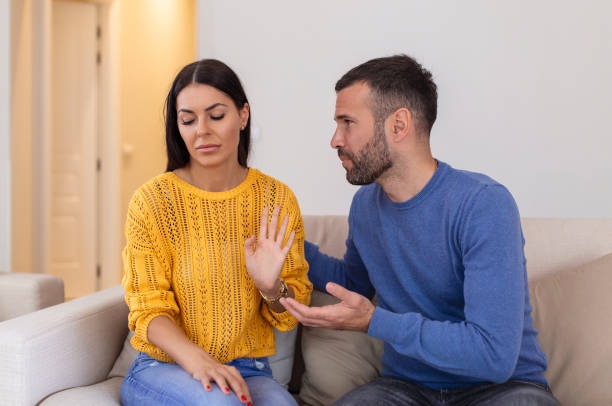
If you make a mistake, own up to it and apologize. We learn the most from our mistakes, but if you don't solve and handle problems, they can mount up and become a barrier between you. We have a fresh start with every misplaced deed or misspoken word, so give yourself another chance to make up for your failed attempts at love so that it will also be to your benefit.
Skilled couples are able to work out issues and restart after they arise, as when faced with challenges, they seek out solutions and use what they've learned to improve their performance moving forward.
It takes skill to apologize and be apologized to, as two parties are required for a good apology: a giver and a recipient. It is necessary to apologize and accept it. The healing apology is founded on kindness, generosity, and compassion, such as when someone apologizes by saying, “I'm sorry for hurting you; I am aware that I did so. I try to restore the intimacy that brings us back together by apologizing with a good heart, a clear voice, and sincere words. But I can't do anything about that just by myself.”
Without the recipient's gracious acceptance and forgiveness, the apology is incomplete. They might say, for instance, “Because I see you suffer when you wrong me and because I love you, I hear your apology with a loving heart, open ears, and a clear mind. Therefore, I forgive you, as without my forgiveness, our wound cannot mend.”
Therefore, it is equally the responsibility of the two parties to put back together what was torn apart. Since we are lovers, we each share full responsibility for our union. My unhappiness is brought on by my thoughts, not by you, so even when you say something harsh, I can choose what is in my mind and disregard what you said in order to see beyond that temporary confusion of fear and vanity and the hidden love story that is behind it. So I forgive you for your humanity, for your flaws and mistakes, and I ask that you do the same for me when I fail.

Mindful Apology is About Fixing, Forgiving, and Then Starting Over
1. Fixing
There is a manual for resolving issues; saying "I'm sorry" after upsetting your partner is a good place to start, but an apology that will help you reestablish intimacy has three characteristics. If you say something unfairly, you must first accept responsibility for your mistake, then repair the damage, and finally make an improvement commitment.
Practice apologizing by admitting the mistake and fixing it, and then trying to improve things, so you say: I made a mistake (admitting), I am sorry (fixing), and I will work to solve it (improvement).
For instance: “Honey, I want to admit that it was so mean of me to say that I see sports as a waste of time and I hate to see you play baseball (admit the mistake). Sometimes I put myself and my needs first, and it's not fair to you, so I'm sorry I said that (fix the mistake), and the next time you ask me to come to a match, I'll accept (improvement).” Additionally, you can use humor to increase your chances, such as saying, “But let's face it, you married an artist who can't throw a ball. What do you expect from me? I love you.”
2. Forgiving
Are you able to forget and forgive? forgiveness is a choice that you may need to make repeatedly; even if you are hurt, you can forgive even if you do not completely forget. When your anxious mind clings to something your partner said or did that hurt you that you had forgotten in the present moment, you are reliving and rethinking something that is no longer there and causing yourself new suffering based on a previous story. You can't deal with your partner in the present if you can't decide to forgive them because you are doomed by what happened in the past.
But if you want to be a generous lover, you must follow these three steps: first, appreciate your partner's interest in you and your relationship; second, admit that your partner made a mistake and is making an effort to fix it; and third, accept the apology.
Practice saying "I forgive you" out loud to express gratitude, admit, and accept. I appreciate you admitting what you said (gratitude), thank you for what you said (admitting), and accept your apology for what you said (acceptance). The phrase might sound something like, "Thank you for saying that (gratitude); it bothered me when you were mean to me about my love of baseball and made me feel like you weren't interested in my sport."
So it takes courage to admit you were mean (admit), but “I accept your apology, and I would love it if you came to the game on Wednesday (accept).” And you can add some humor here too for a satisfying conclusion: “Hey, maybe we can go get coffee afterward at your favorite quirky art café."
In Conclusion
Starting Over: Unfinished business builds up, so avoid ignoring both small and big issues to prevent this from accumulating, and apologize to one another frequently. Love means apologizing, forgiving, and then starting over, and at this very moment, as generous friends and lovers, you are a more passionate human being than a stuffed toy.




Add comment