


What is the concept of science fiction?
Many definitions have clarified the concept of science fiction; some of the most important of these definitions are:
1. Kingsley Amis definition
"Science fiction is that layer of treating the prose narrative as being applied to a situation that cannot arise in the world we know but rather is assumed on the base of some innovation in science, technology, or pseudo-technology, whether human or extraterrestrial in origin."
2. Isaac Asimov's definition
"Modern science fiction is the only form of literature that constantly looks at the nature of the changes that face us, the potential consequences and possible solutions, and this section of literature is concerned with the impact of scientific progress on humans."
3. Ray Bradbury's definition
"Science fiction is in fact social studies of the future, which are things that the author thinks will happen by putting two or two together."
4. John Boyd's definition
Science fiction is storytelling, which is usually creative, as a distinction from realistic fiction, that posits the effects of current or inferred scientific discoveries, or a single discovery, on the behavior of individuals and society.
Mainstream fiction gives the fictional reality of potential events within the framework of the historical past or present, whereas science fiction gives reality to the usually possible events in the future, which is derived from current scientific knowledge or existing cultural and social trends.
5. John Brunner's definition
Science fiction, at its best, is the medium in which the miserable certainty of tomorrow we imagine can be, in ways we cannot predict, and it can transform into a sense of excitement and anticipation, and it sometimes develops into a feeling of dread if it is embedded between intransigent skepticism and non-critical argument. It is the privilege of an open-minded literature in an open mind.
6. Terry Carr's definition
"Science fiction is literature about the future that tells stories about marvels we wish to see or wish our grandchildren to see tomorrow, in the next century, or in an indefinite period."
7. Edmund Crispin's definition
"Science fiction is a story that assumes a technology of some kind, the impact of technology, or a disturbance of the natural system, such as humanity, which, as of this writing, we have never witnessed in reality."
8. Northrop Frye definition
"Science fiction often tries to imagine what life would be like on a plane above us, where we are above savagery, and the setting is often of a kind that seems like a technological miracle. In other words, science fiction is a romantic style with a strong tendency toward myth."
9. Amit Goswami's definition
"Science fiction is that kind of fantasy that contains currents of change in science and society; as It is concerned with criticizing, expanding, reviewing, and conspiring on the revolution, all of which are directed against established scientific models, and it aims to stimulate a shift to a new point of view that is more responsive and genuine to nature. "
10. James E. Gunn definition
"Science fiction is a branch of literature that deals with the effects of change on people in the real world, according to what was predicted in the past or future, or in any distant places, and is often about scientific or technological change, usually in the 1980s, involving more important matters than the individual and society."
What are the types of science fiction?
Among the types of science fiction, we mention the following:
1. Cyberpunk
This kind of science fiction emerged in the early 1980s and includes computer-based future societies. Where the time frame of this fantasy is the future, some of the most famous topics it contains are:
- Artificial intelligence.
- Controlling post-democratic societies.
- Prosthetic surgery.
Among the most distinctive aspects of this kind of science fiction
- are the doctrines of nihilism and postmodernism.
- The stream of tragic movies.
Among the most famous science fiction writers of the "cyberpunk" genre, we mention:
- Neil Stephenson.
- William Gibson
- Pat Cadigan.
- Bruce Sterling.
- Alfred Bester.
2. Hard science fiction
This type of science fiction has the following features:
- Accurate depiction of worlds that technology can make more sophisticated.
- Interest in the smallest details of quantitative sciences, such as chemistry, physics, and astrophysics.
Among the most prominent hard science fiction writers, we mention to you:
- Robert Sawyer
- Larry Niven.
- Stephen Baxter.
3. Science fiction that expresses the apocalypse
The idea of this kind of science fiction is based on the end of civilization for certain reasons, such as the spread of epidemics, nuclear wars or other public disasters. This kind of fantasy may describe certain civilizations or the world after such disasters. as it focuses on the disaster itself or its direct effects. Among the most famous science fiction writers who express the end of the world are:
- Bart Frank.
- George Stewart
4. Space opera
This type of science fiction focuses on romantic adventures that are usually melodramatic. This type of fantasy often depends on the conflicts between a small group of adventurers and enemies who have effective and powerful abilities. The main events in this type of fantasy take place in space. Alastair Runlands is one of the most famous writers of Space Opera, and one of the most widespread branches of this kind of imagination is “The West's Invasion of Space.”
5. Superpowers in Science Fiction
It is the imagination that deals with describing people who possess extraordinary abilities, which may be either due to the nature in which they live or to an intentional increase in those abilities. This type of fiction focuses on describing the suffering experienced by such people, like social isolation, in addition to society's reaction towards them. Among the most famous authors of this type of fiction, we can mention:
- Olaf Stapledon.
- Van Vogt
6. Alternate history
This type of science fiction is based on the assumption that historical events can change and be turned upside down by:
- Writing and creating a story that takes place in a world completely different from our world and reality in which we live.
- Creating stories based on time travel to change the past.
It is worth mentioning that one of the most prominent and famous writers of this kind of science fiction is Harry Turtledove, nicknamed the "Pioneer of Alternative History Art."
7. Time travel
This type of science fiction appeared in the eighteenth and nineteenth centuries, and one of the most famous novels that included this type of fantasy was "The Time Machine" by Herbert George Wells.
8. Military science fiction
Military science fiction includes many details of historical events, procedures and rituals, and military technology. Where these science fiction stories revolve around the national armed forces, or armed forces from other planets and stars, and the main characters in these stories are soldiers, among the most famous authors of military science fiction, we mention:
- Joe Haldeman.
- Robert Heinlein.
- Jordan Dixon.
9. Easy social science fiction
This type of science fiction is based on the social sciences, such as sociology, economics, politics, anthropology, and psychology. Among the most famous authors of easy science fiction for the social sciences, we can mention:
- Philip K.
- Osola Lee Jane.
- Ray Bradbury.
- George Orwell
- Aldous Huxley
What are the benefits of science fiction?
There are many benefits to science fiction; among the most important of these benefits, we mention the following:
- Stimulate many scientific and technological achievements and discoveries in different field areas. the second half of the twentieth century witnessed the achievements of many of these works due to the late nineteenth century's science fiction, such as:
- Developing the atomic bomb.
- Artificial intelligence and robot industry.
- Laser Beams.
- The invasion of outer space.
- Genetic engineering, gene therapy, IVF, and cloning.
- Nanotechnologies.
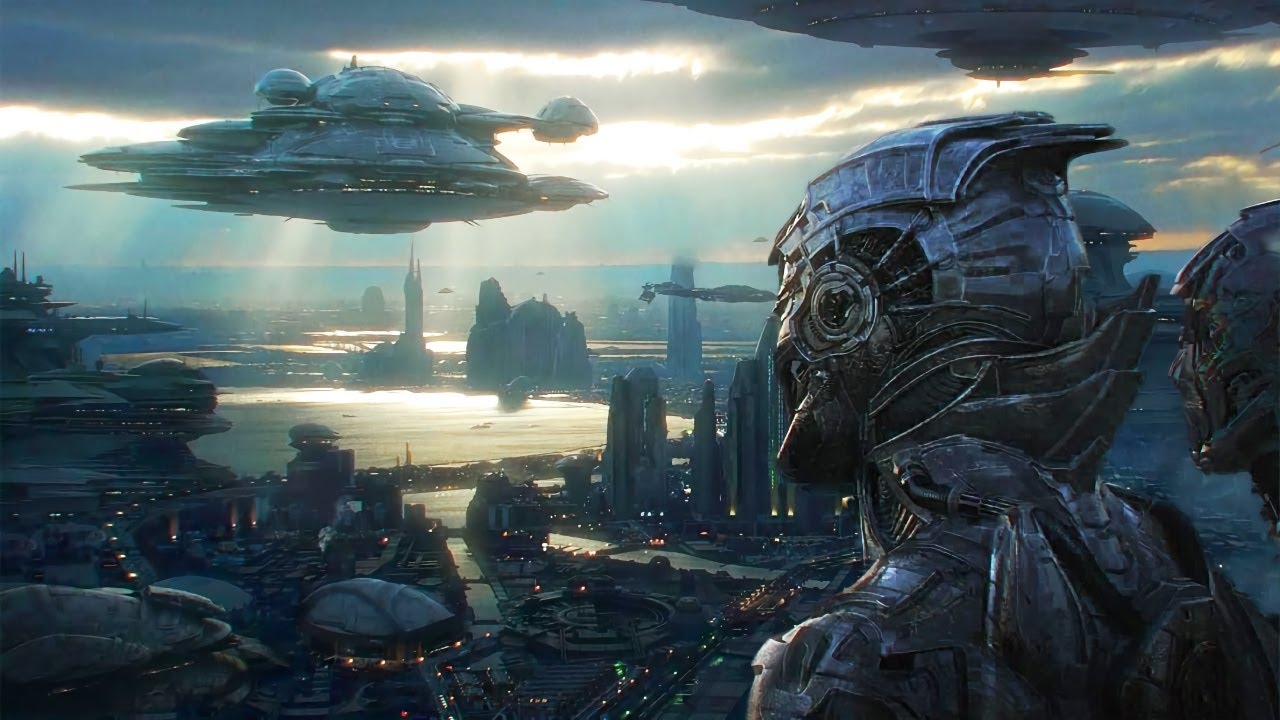
- Developing scientific thinking skills: recent studies have shown the importance of science fiction in teaching scientific subjects to students. These studies also found that teaching and reading science fiction stories and films is an urgent necessity. that is because it allows students to understand and comprehend scientific concepts and facts, as well as motivate them to love science and study different sciences.
The most famous science fiction movies
- Interstellar
- Gravity
- The Martian
- Life
- A Space Odyssey: 2001
- Contact
- Passengers
- Apollo 13
- Sunshine
- Moon
- The Island.
Thus, dear readers, through our exciting talk about science fiction `s types and benefits. we have offered you with a demonstration of the concept of science fiction,




Add comment