



She takes snacks and water because “the kids might get bored." She packs a box of colors, coloring books, some stories, and their favorite music CD. “Somebody might feel the heat or get dizzy,” so she takes the medicines they may need.
On the other hand, the father is thinking of running out of fuel. He fills up the tank just in case and takes a spare wheel with him in case of a puncture. The parents continue to assume problems and take precautions to solve them in order to ensure that the trip goes as smoothly as planned.
Do you assume the occurrence of problems and find proactive solutions to them in your life? Did you know that this type of thinking is called “reverse brainstorming”? Do you want to know more about reverse brainstorming and its uses? Then, tune in with us.
Definition of Brainstorming
Before entering into the definition of reverse brainstorming, we will define brainstorming in general, and here we will use the following example:
If I ask you, What are the ten things that make you the happiest? You will answer immediately with two or three answers that your mind gives you quickly and intuitively, but it will take you more time to think and arrive at something else within the tangles of your mind that makes you happy.
Brainstorming is often used to solve problems. When you fall into one, your mind begins to provide intuitive solutions to it, but they are often inappropriate, so you start brainstorming more ideas that soon start flowing into your mind to test the quality and effectiveness of each of them and settle on the best idea.
Companies often follow this method of solving their own problems in a creative way, so they gather their employees, put the problem in front of them, and start the collective brainstorming process. As each one of them presents their intuitive solutions, the depth of ideas increases, and they are discussed collectively to choose the idea that provides the best solution to the problem.
This is the definition of brainstorming in a simplified and realistic manner. Academically, brainstorming can be defined as the process of evoking a large number of ideas from the inner part of the brain (which needs time to be remembered) to the superficial part of it (which is usually accessible to memory) within an organized process with clear foundations.
Brainstorming makes the mind open to many possibilities and ideas and unleashes it into different worlds of ideas without any restrictions or controls. It then presents these ideas to the brain on a logical table, where it may start executing them and selecting the best ones.
If a problem occurs, like needing an amount of money to finance the expansion of your project, you will start thinking about solutions to your problem, which is securing additional financing for the project. You think about borrowing, doubling your working hours, entering into a partnership, or applying for a competition that gives the winner a financing opportunity for his project. You follow the flow of ideas in your mind and your refutation of each idea until you find the best source of funding.
What is Reverse Brainstorming?
Reverse brainstorming can be defined as anticipating the occurrence of a problem in order to create solutions for it before it occurs. Returning to the previous example in which you needed additional funding to expand your project, reverse brainstorming dictates that you, for example, allocate part of the profits to finance project expansions. Then, You will be financially ready to start any new step whenever you want to.
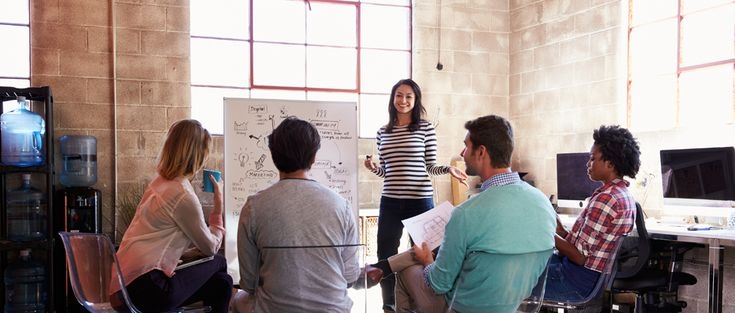
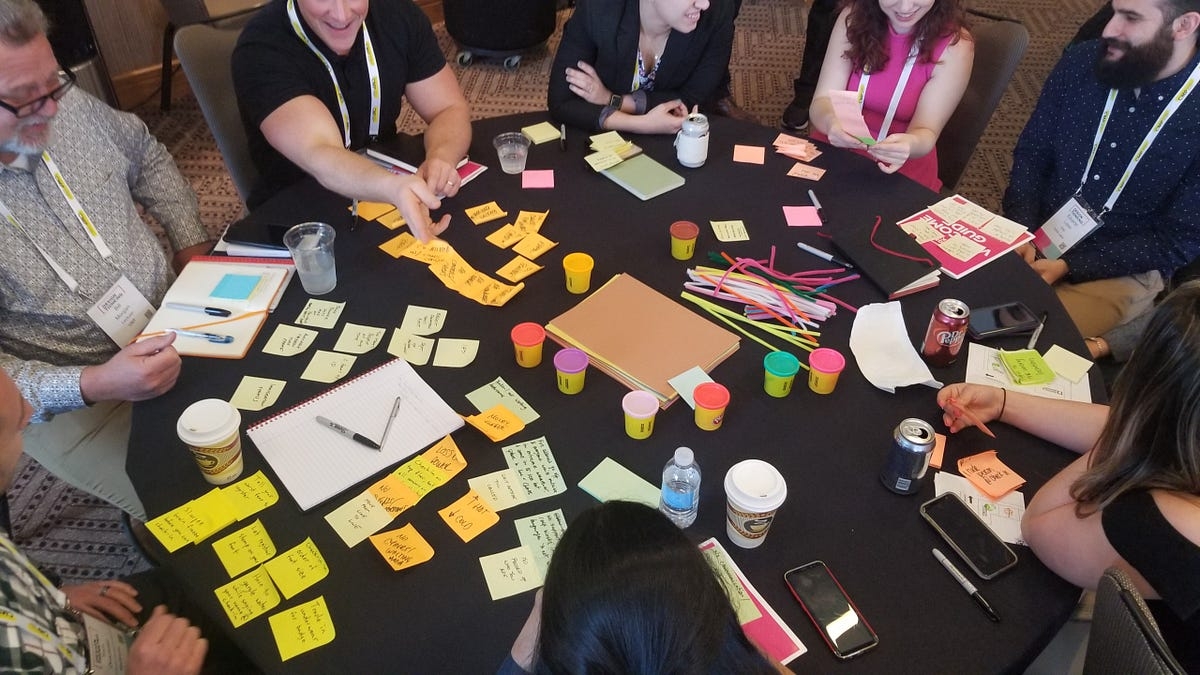
Reverse brainstorming is usually collective. As a meeting takes place for the members of the team responsible for the implementation of a task, they are asked to anticipate the problems that may encounter the project. Here, the first solutions will be as intuitive as any brainstorming, but the following ones will be more in-depth, and then it will take care of the problem in all its dimensions and create proactive solutions for many problems if they occur.
So, reverse brainstorming, by definition, is a technique through which problems are created before solutions; therefore, when proposing a new plan, the work team is asked to enumerate the reasons that could lead to its failure in order to see the gaps and flaws in work from different perspectives, instead of the team enumerating the success factors.
This process has positive effects on the workflow and anticipates any emergency or defect that would impede it. Therefore, we find that many companies adopt the concept of reverse brainstorming in order to anticipate the reasons for the failure of the task and the problems that are likely to be encountered, take precautions for these problems, and avoid the failure of the plan.
Uses of Reverse Brainstorming
The uses of reverse brainstorming are evident in its use in the following areas:
- Creating hypothetical problems in the work environment that are likely to be encountered in the future, with the aim of finding solutions to them if they occur. For example, when a company launches a new product, it can ask its employees to enumerate the ways that make this product undesirable to consumers, so the employees start with reverse brainstorming, mentioning defects that must be put in the product to alienate people from it, and then they begin to develop plans to avoid falling into these defects.
- Exploring the experiences of trainees and job applicants by asking them questions that show their understanding of the work environment and the obstacles it faces.
- Creating ideas for new projects and developing existing projects by injecting new ideas into them.
- The use of reverse brainstorming makes it possible to predict the occurrence of a problem while solving another problem; for example, if the reverse brainstorming is under the title "How do I make an employee late for work?" One of the ideas could be not to secure a bus dedicated to transporting employees, and this opens the way for many other problems related to the bus itself, such as running out of fuel or being constantly exposed to technical problems.
- One of the most important uses of reverse brainstorming is in the field of learning. This type of thinking contributes greatly to the development of innovation and creativity skills and enhances their decision-making skills.
- In cases of crisis management and disaster prevention, the use of reverse brainstorming is at its peak. Without anticipating earthquakes, shelters would not have been built, and without fire precautions, alarm and extinguishing systems would not have been designed.
- Enhancing the efficiency of employees in the company by activating their minds with ideas of reverse brainstorming, which reflects positively on the development of the company's structure.
- Improving the mental abilities and skills of individuals more than in the case of using traditional brainstorming because reverse brainstorming and fabricating the problem is better than being able to solve an existing problem.
- The uses of reverse brainstorming contribute to generating a large amount of creative ideas and decisions that are stored in the near memory, making them on demand and ready to appear when needed.
- The continuous use of reverse brainstorming increases the ability to face emergency and urgent situations in an effective and correct manner, away from confusion caused by lack of time or the horror of shock.
- Contributes to breaking the bureaucratic routine and hierarchy in the way of dealing with problems.
- Developing individuals' views of problems and opening new horizons for them to see, which stimulates them to create creative solutions.

Stages of Reverse Brainstorming
The stages of reverse brainstorming are a set of gradations between creating a problem and finding a solution to it. We will explain these stages with a practical example:
1. Identify the cause of the problem
At this stage, the element or group of elements that could cause the problem is indicated. For example, if a company wants to launch a new product (let it be some cleaning material) in the market and wants to brainstorm how to make it stale, ideas like “Cheating on product specifications, not advertising the product, exorbitantly pricing the product” are sufficient to indicate weaknesses that could be the cause of the problem, which is product depression.
2. The cause of the problem
You will believe here one of the prophecies we made, and let's say that the product is blocked because of its high price, which is not suitable for the purchasing power of the target segment.
3. How to solve the problem
We now have large quantities of washing powder piled up in warehouses due to its high price, so what shall we do? Are we making the packaging smaller and lowering the price? Do we make offers for other items that the customer gets just for buying the product?
4. Test each solution
Here, we measure the quality of each solution offered. Is repackaging the product in smaller packages to reduce its price really a viable solution? Wouldn't this incur additional packaging costs in terms of time and money for the company to get rid of all the old packaging and fill in the new ones? Do profits cover this process, or is it a 100% loss? Thus, all the solutions presented are reviewed in order to choose the best among them for adoption in the event that the problem actually occurs.
5. Try to prevent the problem from occurring
Here, we will not pack the product in bulky, expensive packages; rather, we will create a size that fits with the customer's budget, and thus we have used reverse brainstorming to avoid a problem by assuming it will occur and imagining a survival scenario.
In conclusion
Reverse brainstorming is an innovative way of thinking based on putting sticks in the wheels by generating ideas for problems that may face the work environment in order to devise creative solutions to them in case they occur, which makes rescue plans ready and present in the intuition in the event of something happening that was feared.



Add comment