



According to two recent studies, attempting to make others feel better encourages them and trains us to improve our emotional skills, which may help us solve our problems. Although negative feelings may lead us to isolate and withdraw from ourselves, the best way to deal with our feelings may be through communication with others.
The two studies also highlighted one skill that seems to benefit others and ourselves: taking perspectives, which means that part of empathy involves understanding the other person's point of view.
How does helping others help you?
In the first study, 166 participants spent three weeks interacting on a social network created by the researchers to express and respond to distress by filling out surveys that measured various aspects of their emotional life and well-being before and after the experience.
In this social network, participants can post and comment on other people's posts, and the platform has trained them to leave three types of comments, representing different types of emotional regulation:
- Authentication: This confirms what one was feeling, such as saying: “This sounds very frustrating. Sometimes, you feel that the pressures are accumulating on top of each other.”
- Re-evaluation: This provides a different interpretation of the event, such as saying: "I think there is something else to consider, which is..."
- Indicate errors in the way of thinking: Such as, limited thinking or the belief that you can read what others are thinking.

The control team can only publish their experiences and not see the experiences of others, such as writing a diary online.
Ultimately, the researchers found that the more comments participants posted about other people's problems - regardless of the type of comment - the happier the participants were, the better their mood, and the less depressive and ruminating symptoms they had throughout the experiment. On the other hand, the more active members of the control team did not achieve the same benefits.
These positive changes resulted in part from participants often practicing re-evaluation in their daily lives. Their response - helping others regulate their emotions - seemed to train people to enhance the skill of emotion regulation perse, and it didn't seem essential for participants to help each other validate, re-evaluate, or point out errors in the way of thinking, as it was the interaction itself that was most important.
"Helping others regulate their emotional reactions to stressful situations may be a particularly effective way to practice and hone regulation skills, which then can be applied to improve our emotional well-being," the researchers write.
What distinguishes these results is that people provided emotional support to other strangers through text-only chat, anonymously, with little or no likelihood of developing a personal relationship with them face-to-face or online.
What are the benefits of helping others?
A second study suggested that helping others regulate their emotions may not only be beneficial to you. Still, it may also be more beneficial to them in dealing with their feelings than doing it alone. In this experiment, 45 couples entered the lab and were divided into two groups: the “Target” group and the “Organizer.”
People in the Target group will see a series of disturbing images, such as spiders or pictures of crying children, while people in the Organizer group briefly view the photos. One of the groups then decides on a strategy to regulate emotional use.
So, they either re-evaluate - reinterpret the image more positively - or distracted - think about something else. The people in the Target group applied that strategy and then reported how distressed they felt.
Ultimately, the strategies of the people who were in the Organizer group worked better than the people who were in the Objective group. The people in the Target group who were shown the disturbing images felt less distressed when using the strategies of the people who were in the Organizer group than their strategies, suggesting that amid negative emotions, our partners might know what's best for us.
“These findings are consistent with other studies, which emphasize the benefits of external views in reducing stress and improving emotion regulation,” the researchers wrote.
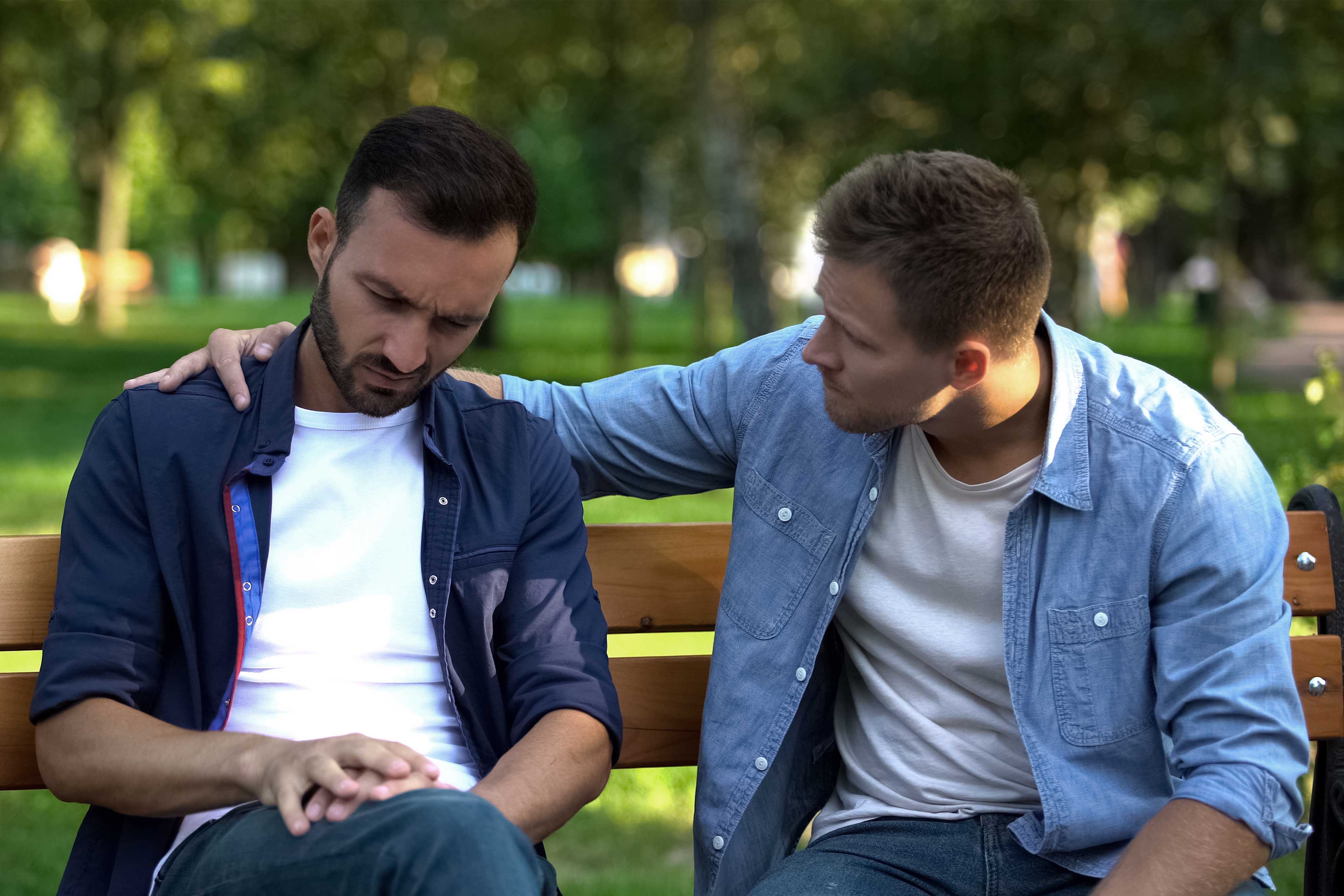
What skills do we need?
So, we seem to be good at helping our partners deal with negative emotions - perhaps better than we think - and this may train us to deal with our pain, but what kinds of skills underlie this process?
The same conclusion can be drawn from both studies: point-of-view skill, or the capacity to imagine ourselves in another person's position. In the second study, participants who were in the "organizer" group had higher scores on a perspective-taking questionnaire, which indicated that the strategies they chose were more successful. In other words, they were better at alleviating the distress of their partners.
In the first study, the researchers measured the point of view through a variable measurement, which is how often the participants used the pronouns of the addressee - such as “you” or “your” - in their statements. The more views were adopted in their comments, the more the recipients rated the comments as more helpful, and the more they were grateful, such as saying: “Thank you, this message made me feel better.”
In addition, participants who used more point-of-view skills saw greater gains in their re-evaluation skills over the three weeks. When we practice understanding someone's point of view to help them solve their problems, we learn to become less attached to our perspective, which may help us later, when being separated from someone or fired from our job seems like the end of the world.
All of this suggests that the experience of putting ourselves in the shoes of others - empathy - is good for everyone involved, and when we feel alone in our suffering, we can turn to others for our benefit and theirs.




Add comment