


All existing educational practices have been reviewed and re-planned in line with the requirements of the current era and its development.
Accordingly, the perception of the roles of both the teacher and the learner in the educational process has changed, so that the teacher has become the carrier of knowledge and directs it only, while the learner has become the focus of this process in light of this change and the emergence of the need to move away from the well-known traditional methods of education and to resort to technological knowledge and its applications and use in solving educational process problems.
Despite the importance of live educational trips in achieving the goals of education, they face many difficulties that impede their success and establishment, and among these obstacles are the elements of safety and security.
No one in our Arab society today loses sight of the amount of risk that besets the individual as a result of the security conditions that the Arabic countries are going through nowadays, not to mention that these trips need financial support that is often not available, in addition to the difficulty of accessing some places or their presence in other countries that cannot be visited.
Therefore, it was necessary to search for an ideal alternative to traditional educational trips through which we could achieve the benefit of the scientific material in the curricula and avoid the disadvantages of traditional trips.
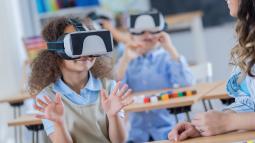
An alternative solution emerged using educational virtual trips. Today, educational institutions are trying to invest in the Internet environment and its various tools in education to create a more active interactive environment that contributes to moving away from indoctrination and developing students' logical thinking skills.
The concept of virtual educational trips
The virtual learning environment is defined as “a software package provided through computers and networks that represents an integrated electronic learning environment for creating and managing educational content, managing the learner, learning processes, events, activities, interactions, and evaluation processes.
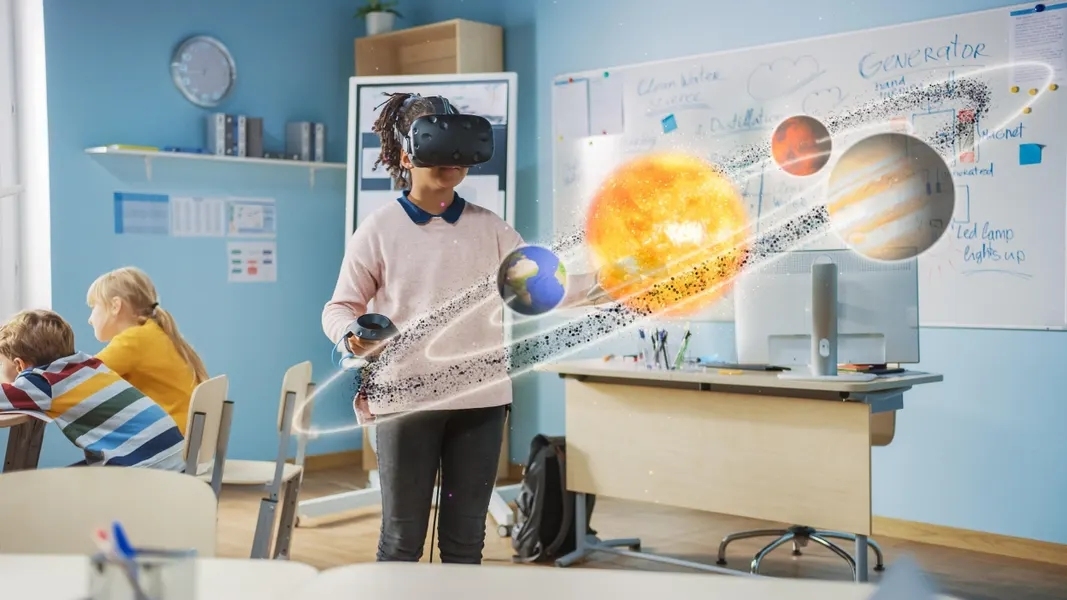
It helps learners create, deliver, and manage educational content; it enables learners and educators to communicate, interact, and share synchronously or asynchronously; and it provides instructional and technical guidance and support.”
Virtual trips, or, as some people call them, cognitive trips via the Internet, are known as educational activities that depend on searching for information by using predetermined sources on the Internet with the least effort and time possible.
The idea of cognitive journeys using the Internet began in 1995 at the University of San Diego in California, in the United States of America, and since then it has spread to the rest of the world little by little as a modern strategy in teaching based on the Internet Using logical thinking skills such as analysis, synthesis, and evaluation in exploring and deducing information aims to search for solutions to real, non-artificial questions or problems and to deal with real sources of information, not secondary sources.
So, virtual trips contain knowledge material related to the curriculum and depend entirely or partially on pre-selected electronic resources on the web. It focuses on the research and development of students' mental abilities and the achievement of meaningful learning. Through it, the student can visit all places and countries around the world within an interesting, fun, and safe environment, in a way that ensures the achievement of the goals of the educational process.
Components of the educational virtual trip
Virtual educational trips are divided into two types: short-term educational trips and long-term educational trips. The virtual educational trip consists of:
1. Introduction
The teacher prepares for the lesson and gives the learner an idea of the lesson's content and main topic. The main objective of this step is to attract the learner's attention and focus it.
2. Tasks
The teacher explains the tasks required of the learners and the activities that they must accomplish through the virtual educational journey.
3. Sources
Here, the teacher presents a variety of online learning resources that the student must visit in order to complete the tasks assigned to them.
4. Activity
Detailed steps and strategies are described, as are assessment methods.
5. Evaluation
Each learner is assessed for their work in terms of their method of research, the collaboration of colleagues, and the evaluation of their opinions.
6. Results
It includes the targeted educational goals of the educational journey that the learner is expected to achieve at the end of the educational journey.
7. Conclusion
It means providing a general summary of the course of the virtual educational journey and the lessons learned from it.
The advantages of using virtual trips
1. Less material costs compared to traditional educational trips
Traditional trips require material costs and expenses that are somewhat exorbitant, and schools often cannot afford these expenses because they are consuming and financially unproductive institutions, unlike the virtual trip, which is considered low-cost.
2. Getting to places that are actually hard to reach
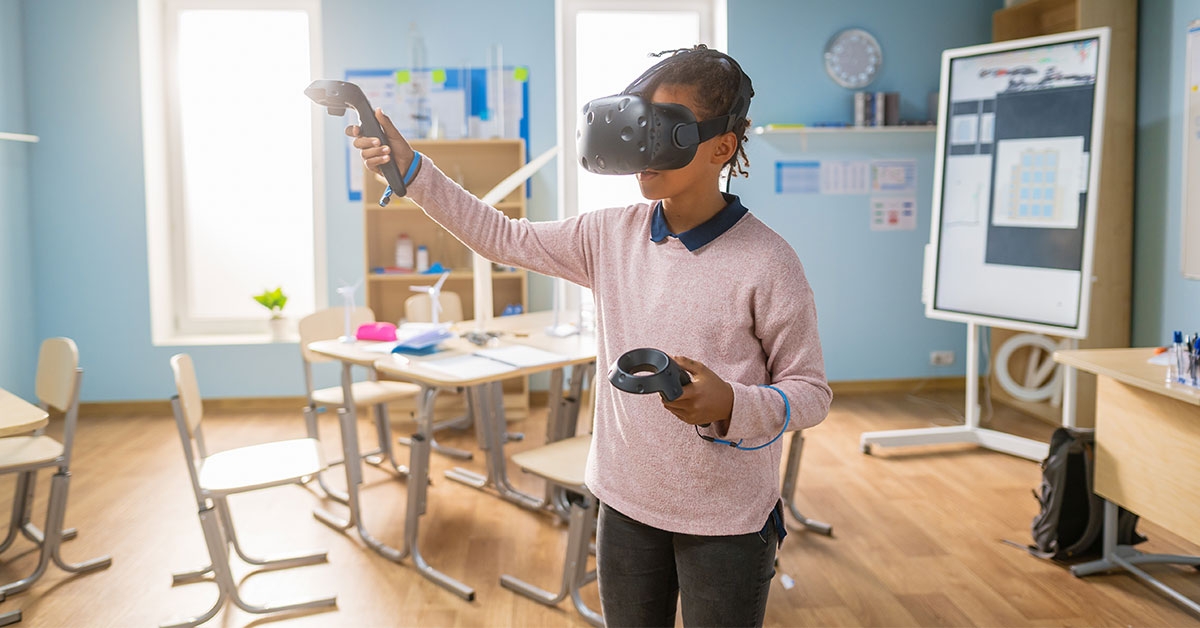
It is difficult to reach places that are located in other countries or areas that contain risks, such as the presence of volcanoes or high mountains, and other places that are difficult to take students to, such as space, for example.
3. The virtual flight environment is safe
In fact, even if the school has the success factors for conducting a traditional educational trip, including time and costs, there remains the problem of safety and security that the school cannot guarantee.
Therefore, we find that many parents refuse to send their children on these trips for fear of their safety. The virtual trip is a good option because it is free from these risks and, at the same time, can provide the student with targeted experience and knowledge.
4. The joy of learning
Through the virtual journey, the student will be able to see the live clips of the places and see them as they really are, in a clear way, away from the pictures in the books, which are often unclear and fragmented and do not give a complete idea of reality.
5. Entertainment for students with special needs
Students with special needs cannot take traditional educational trips, even if they are available. This is due to their health status; Therefore, the virtual trip is a suitable solution for them, in addition to achieving an element of pleasure for them. It provides them with the opportunity to see what they cannot see alone.
6. Provide an equal learning environment for all students
The opportunity to learn through the virtual trip is available to everyone on an equal footing, unlike the traditional trip that not all students may be able to go to, and then there will be a disparity in experiences and skills among students.
7. Developing research spirit and encouraging scientific thinking
These trips stimulate the student's thinking and push them to use their mind in order to discover unknown facts or prove and confirm a known one.
8. The use of virtual trips contributes to overcoming the problem of lack of time
It saves a lot of time that the teacher used to spend trying to explain the required information, which is often invisible, and the teacher tries to portray it in the imagination of the students during the lesson.
9. Considering Individual Differences
It is known that one class contains different levels of students. There is the distinguished one who gets the information the first time it is mentioned in front of them, and there are the average and the weak who need it more than once to comprehend what is required.
Therefore, the virtual journey can achieve the principle of equal opportunities in education as it enables each student to learn at their own pace.
10. Supports Teamwork
All students can view the content of the trip and then discuss the notes taken, exchange opinions, ask questions about them, have them answered by the teacher, and evaluate the students' answers.
Among the advantages of using virtual trips, we also mention:
- Giving education a global character and getting out of the local framework.
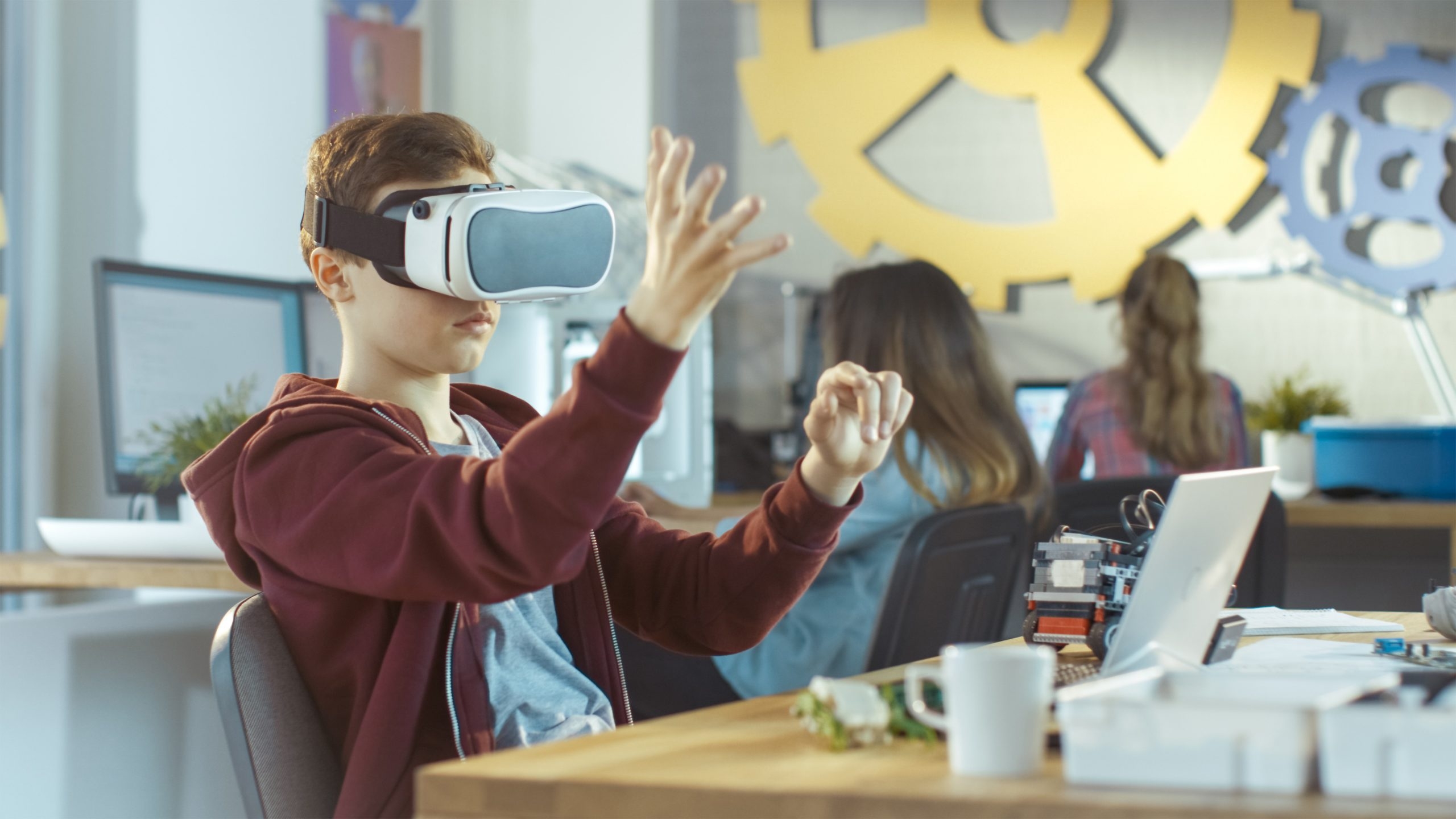
- Virtual trips push the learner to use all their senses in learning, as they get involved in learning as if they were in the real environment.
- Repeating the journey more than once to make sure that the learners have absorbed the information they want. Time and speed can be controlled, and the learner can record their observations accurately.
- The possibility of covering all course information, especially social science subjects such as geography and history, with interactive trips, which is difficult to achieve without this type of trip.
- Provides secure educational channels for students that they can reliably rely on and turn to when they need information.
In conclusion
Technology has contributed to the fading of temporal and spatial boundaries and has also changed the way people think and live. It has become imperative for educational curricula to keep pace with this progress and update their content and teaching methods in line with these changes.
Hence, the use of e-learning in education is a necessary and irreplaceable requirement in light of this progress in the world today and because of its advantages such as improving the scientific level, shortening time, reducing costs and reducing effort, not to mention providing an interesting and likable learning environment for students that keeps them away from boredom and makes them feel fun. In addition, the effects of learned information and knowledge remain longer in memory.



Add comment