



For a number of reasons, this job assumes a tenfold greater significance in third-world nations, the most significant of which is the existence of a significant disconnect between the educational systems and the realities of the students. This makes it imperative for the teacher to make every effort to bridge this gap and redress what can be fixed to achieve the educational goals.
The drastic differences between today's generation and earlier generations in many areas, the most significant of which are cognition, interests, goals, and motivations, as well as the perception of the educational process itself, are evidence of this additional weight.
We believe that our children are capable of great things and that they just need someone to support, understand, and point them in the right direction. This belief is supported by the notion that education is extremely important and that teachers play a crucial role in ensuring its success, particularly in light of the rapid advancements taking place in all spheres of human endeavor.
The challenges teachers face today
| Today's teacher is expected to raise the standard of education and achieve educational goals amidst significant challenges. |
In the past, education was the teacher's main responsibility. In other words, passing on knowledge and experiences to students. However, as educational systems have advanced significantly through time, teachers now have new responsibilities that, while related to their core duties, are nonetheless just as vital.
Contrary to expectations, today's significant technological development has not had a positive impact on the education sector. The so-called crisis of contemporary education, especially in developing countries, has emerged.
Instead of increasing the pace, progress, and level of learning as science and technology progress and develop, schools have exhibited a kind of deficit that has prevented them from catching up with these growing and accelerating advancements. This is due to a large number of reasons that we are not currently in the process of mentioning.
In short, however, the primary cause of this deficit are officials in the educational sector who have not provided appropriate tools and have not been able to devise appropriate methods, techniques, and approaches that help them keep pace.
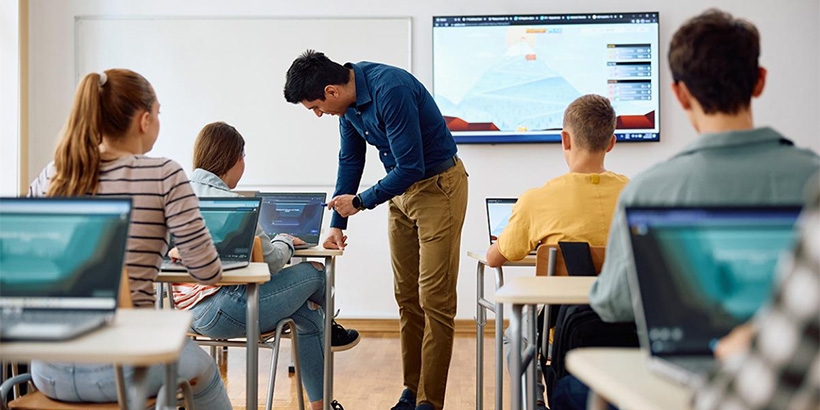
Returning to the teacher, we see them today under strain from social norms, financial demands, and even a lack of preparation and training prior to working in the field of education. They must, though, increase the bar for education and fulfill educational objectives. Indeed, this is one of the biggest obstacles they must overcome if they want to succeed as teachers.
Therefore, before talking about the students themselves and the traits they exhibit today that are entirely different from those they did in the past, which force teachers to make radical changes to their methods and tools, we will first cover some fundamentals that every teacher needs in order to succeed:
- The teacher must be able to reprocess and adapt the information they have to convey to students in a manner consistent with the students' level of understanding, abilities, and individual differences. This requires them to have a great understanding of the subject they teach.
- Rousseau says, addressing his words to teachers, “Begin to know your children.” You will never succeed as a teacher if you cannot delve into the characteristics and nature of each stage of children’s development. This necessarily requires relying on the teacher's readings in psychology in general and pedagogical psychology in particular. By doing so, you will be able to overcome any difficulties or obstacles you may encounter during your career.
- As a teacher, it is your responsibility to make the material attractive and interesting for the students. This requires a lot of research on teaching methods to choose the most appropriate for your educational material; otherwise, it will be repulsive, dry, and incomprehensible.
- The primary objective of your teaching must be the students' understanding of your material. This is because understanding is the best way to make students confident and better able to recall information in the future.
- Knowing everything related to the subject you teach and well preparing the lesson beforehand.
What Characteristics Describe Today's Students?
| The problems of today's students are not related to their mental abilities; rather, they are related to the differences in their nature and interests. |
As a matter of fact, today's students differ from those of previous generations. Research has shown that standards and methods previously used to measure and assess students' mental abilities are no longer applicable today. They have far richer and more complicated mental capacities than they did.
Contrary to what has been said in social and educational circles about how difficult it is to deal with this generation because of the decline in their mental abilities, studies have shown that issues with today's students have nothing to do with their cognitive and mental capacities.
The root of the issue is the lack of schools, curricula, and teachers who can keep up with developments in this generation instead of trying to force them permanently into the characteristics and interests of previous generations. They are different in nature, interests, and things that interest them.
This is contemporary life, and a vast amount of information is being transmitted to our children from a variety of sources. No matter how basic, everything can open the door to learning, which is no longer restricted to the classroom and what the teacher imparts to the students. As a result, this approach has been entirely discredited.
So in sum, students nowadays are cognitively different from those in the past, and they are more eager to learn about everything around them and to ask questions about it rather than simply accepting and believing what they are told. This transition must be considered by both the teacher and the school of today as a whole.
The educational process is centered on the student, and the teacher's traditional role is no longer useful. The teacher now only serves as a guide and must give the proper explanations for educational issues in order to help students acquire logical judgments and sound thinking processes that go beyond simple memorizing without understanding.
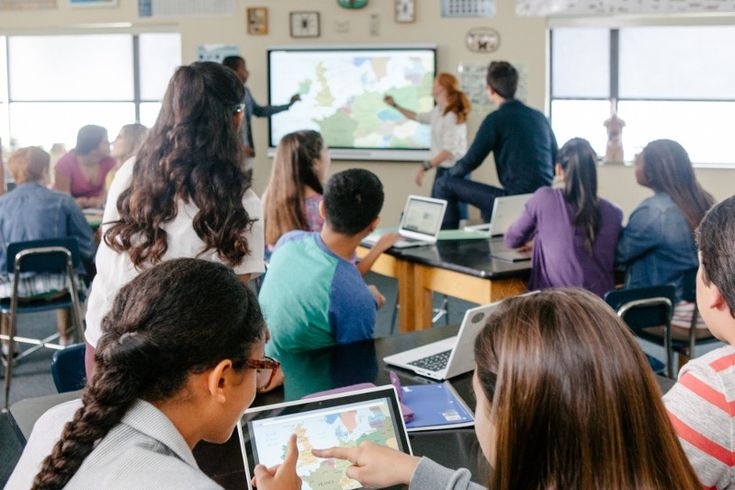
How to Properly Approach Students in the Digital Age
Teachers today must take a multitude of factors into account. They also need to foster many qualities and develop experiences and abilities to be able to succeed under contemporary conditions that have led to a clear decline in the student’s motivation for learning.
In the following, we will present a set of methods to help you, as a teacher, deal correctly with your students in a way that motivates and encourages them to learn:
1. School failure is not only a cognitive issue
Every teacher has to realize this perfectly. Psychological crises are among the reasons that hinder students' success.
The nature of today's life and the many psychological pressures that students are exposed to because of their great openness to the world always lead them to compare their lives to those of others, which affects their ability to understand and absorb information, and hence their attainment declines.
Goleman says we have two minds working together—one that thinks and one that feels—and without their cooperation, it will not go well. Therefore, teachers should make their students’ mental well-being their priority, and of course, this role is only a complement to that of parents.
2. A teacher's high degree of mental health is very important
As a teacher, you must have the great ability to keep your private life at home, separate from your problems in class, because it can directly affect your students and how they receive information.
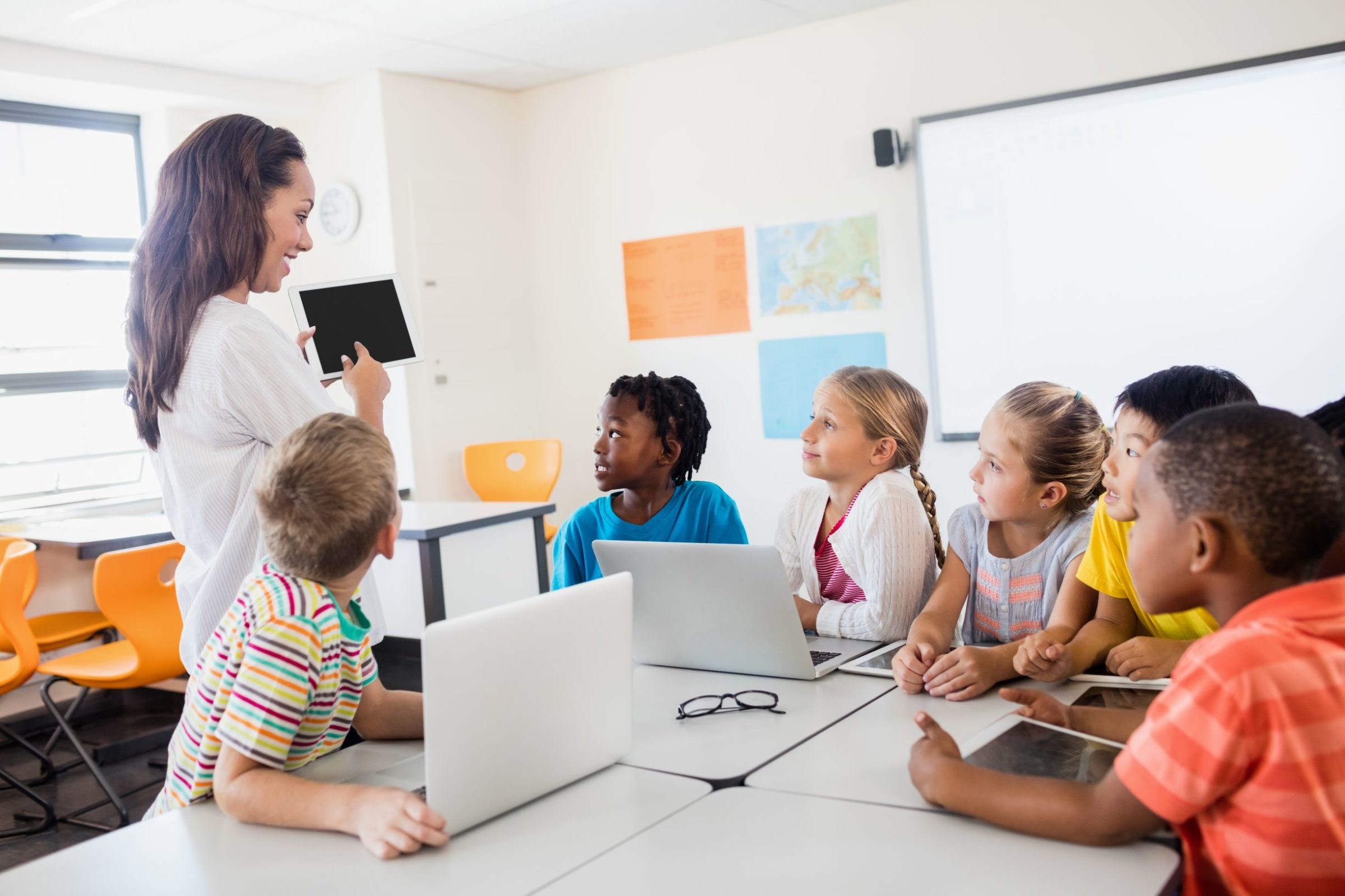
3. We can never talk about a successful teacher without talking about their ability to establish an excellent relationship with their students
It is never enough to approach the minds of students without first approaching their hearts. The foregoing applies to us. How often have we said that the teacher made the material interesting to us? Despite being neglected by many teachers, this feature was one of the key factors in the failure of the teacher to achieve their educational objectives and the students' flight from class.
4. You should never stop learning and never stop seeking out new information
even after finishing your academic studies. The technical advancements that rule the world today must also be kept up with, especially as they affect kids and teenagers. You will never be able to relate to your students if you fail to understand the world in which they live.
Then, you won't be able to employ the right methods and instruments to draw them to the valuable material you offer. It is crucial to connect education and technology, and developed countries have done just that.
In terms of their educational institutions, curricula, and resources, third-world nations are still unable to keep up with this development. The teacher has been under a lot of stress as a result of having to provide new resources and develop new tools.
5. The ability to link the educational material to the student's life
The teacher must also have the ability to link the educational material to the student's environment and life, which makes it easier for them to understand and assimilate it.
6. taking into account students' individual differences
Being a successful teacher also means taking into account students' individual differences. There is undoubtedly a unique quality to each student that you must identify because no two students are same in their skills.
In Conclusion
Being a teacher is never an easy task. Working with children requires extraordinary precision and skill. It calls for the teacher to be extremely attentive to every little detail. Sometimes, a single word can undo years of hard work and negatively impact a student's mental health and interest in the learning material. As a result, as a teacher, you should always strive to achieve balance in the classroom and rely on flexibility as an essential skill.
Being strict or lenient all the time does not provide the desired results. You must always keep in mind that education is one of the greatest professions; therefore, do everything you can to retain its integrity. Each issue must be handled differently based on its uniqueness and circumstances.



Add comment