



Note: This article is based on the blog post by Ivar Fahsing, in which he tells us how to think like an investigator.
Detectives are responsible and empowered in the name of the law to pass judgments that could radically change the lives of the people involved; Where there is no room for error.
The detective is usually portrayed as a loathsome mastermind, who appears to possess superhuman abilities that the average person dreams of possessing. I'm sorry to disappoint you, but that's not entirely true.
Not all detectives have masterminds, and you don't have to be a detective to think like them. There are some methods and tools that can boost the detective who lies within you and help to discover the facts, and the knowledge to perfectly understand the relationship between them.
Whereas most of us, whether we are highly academically educated or not, we have not learned how to think and make judgments under pressure. However, good thinking is important for every aspect of life.
Learning to think like an expert investigator helps enhance your capabilities and creative side, makes you a less judge and a better listener, and honing your detective thinking skills can help you solve everyday problems in your life, such as planning the perfect vacation or choosing the best candidate for a job.
I am a college academic and a true detective; I worked on the worst crimes in Norway for 30 years. These days, I spend most of my time teaching police and other detectives to make the right decisions in the most complex situations, and I'm going to share some of the principles with you in this guide.
In my early days as Chief of Police, none of my fellow detectives was able or interested in teaching me practical ways to think like a detective. Instead, they talked about style, talent and experience. On the whole they prefered to talk about issues they solved. Not about the issues they failed to solve or the next challenge.
The most important tool for any detective - is a sharp thinking skills - is not mentioned either. We were all keen to model the mental profile of criminals, yet it was strange to categorize a detective as an effective detective, and it seemed as if the ability to think like an expert detective was taken for granted.
In fact, what may seem at first glance more like a supernatural talent is more often than not a metacognitive skill; It means the ability to think about thinking.
Imagine what happens when you meet someone new, it usually takes less than a second to form an impression of a complete stranger. Immediately, we decide whether he is kind and gentle, or dominant and aggressive, and whether we like him or not. Furthermore, we do all this based on gut feeling and imperfect information such as facial features, the way they dress, and the way they speak.
When we make our daily decisions, our mind often takes raw information into account first, no matter what quality or quantity it is. The only thing it tries to do with the information is crafting an integrated story. The story does not have to be accurate, complete, or reliable; It has to be whole in our mind just to feel confident in our judgment.
Making decisions in this way is easy, convenient and intuitive, but unfortunately it fuels the feelings of overconfidence and exaggerated competence. Regardless of our social class, we all naturally have a tendency to solve problems in a superficial and effortless manner rather than in more sophisticated and laborious ways. If this confidence is not dealt with deliberately, the gap between initial ideas and reality can lead even the most authoritative experts astray.
As a homicide detective, I started to notice how different my more skilled colleagues are. It wasn't clear at first, they didn't speak loudly, they didn't disapprove of the clarity of things, they didn't express their opinion more than others and they didn't give quick conclusions. Instead, they watched, asked questions, and quietly continued their search. This ability to search further is the main characteristic that distinguishes expert detectives from the rest.
Hence, not making a decision is the best decision a good detective can make. For some of us, it will be difficult, and it may take a bit of practice. It seems inconsequential when you walk away from a problem you want to solve. Forcing your mind to retreat is not easy.
However, when you get used to this way of thinking, you will find it useful in many everyday situations and problems, big or small. For example, it helps you to be less judgmental in social settings, have the patience to get more information, and end up understanding and reading people better.
Thinking as a detective will encourage you to continually analyze any problem until the time is right to start solving it. When done right, over time, your patience will give you credibility and integrity.
In fact, I would go so far as to say that when making any important decisions in life; Where it would be dangerous to draw quick conclusions. For example, when buying a new home, hiring a new employee or planning a career move, it would be wise to adopt the same patient approach as expert dtectives.
Keep in mind that your brain will always try to convince you that your first impression is correct. Therefore, to activate your inner detective, you will have to make a conscious effort to delve into all the available information and attempt a more systematic and thorough analysis of the strengths and weaknesses of the various conclusions before making your decision. In the next section, I will show you the practical steps involved in applying the detective process to any issue in your life.
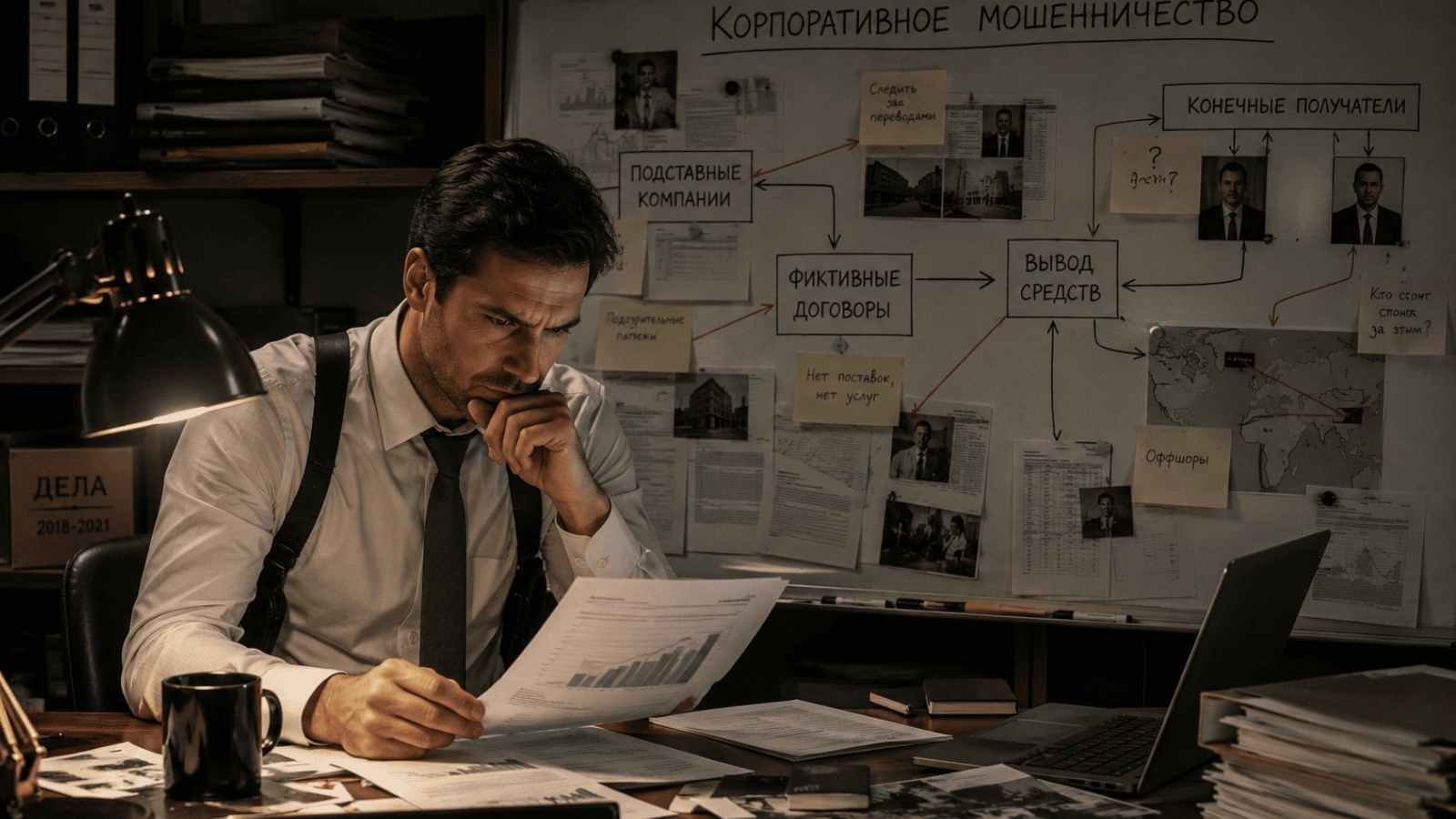
What should you do?
1. Assume nothing, find out what you really know
To think like an expert detective, you have to adopt what is called a detective mindset. The terms "may" and "could" should be your passwords as they are in every real-life detection at every crime scene.
In detection manuals, this is called the "ABC" principles. It is an abbreviation in the English language whose letters are collected at the beginning of the following sentences:
- Assume nothing.
- Believe nothing.
- Challenge and check everything.
Nothing should be taken for granted. Detectives take a skeptical approach to any information or evidence. All stories are possible, until proven not to be so. Always ask yourself, "What do I know?" and "What don't I know?"
Doing this can be very difficult at times, but even just trying to slow your mind down instead of coming to quick conclusions will help. Keep reminding yourself: Correlation does not imply causation. Hence, the safest way to test any theory is to try to disprove it. Suppose you think your house or car keys have been lost or stolen. In this case, it's a good idea to recheck and remove all other options before you decide to change your locks.

2. Select all possible explanations
Holmes' favorite logical approach in the Sherlock Holmes series is not deduction, which is deduction on the basis of known facts; Rather, it is based on what is known as the logic of induction, which is the cognitive process of determining the best possible explanation for a given set of observations.
Inductive logic is widely recognized as a powerful mechanism for hypothetical reasoning in the absence of perfect knowledge. It is generally understood as inference from effects to causes.
A familiar and typical application of inductive reasoning is when a doctor makes a medical diagnosis: given a set of symptoms, what is the best diagnosis to explain most of them? As a general rule - and because of our inference brains - there will always be more alternative explanations than I first realized. A wise doctor will not make the first diagnosis that comes to mind, but will consider several alternatives to see which matches the givens.
Likewise, criminal detections are inductive rather than deductive. In most cases, the police do not find a completely clear and indisputable picture of the suspect in the act of committing a crime. We usually have a gray, blurry image of a person leaving or entering a dark alley just before or after a crime is committed.
Our initial explanation of the image would tell us that this likely culprit is a relatively tall man in his forties wearing a dark cropped jacket and black or blue jeans. The description could fit, in essence, half the city's population.
Hence, to identify a suspect, you have to come up with all possible explanations, and then check your blurred photo with a number of other sources of information such as witness statements, motives, fingerprints or mobile phone activity, to find the suspect and rule out other possible candidates.
Likewise, you should always create a brief outline of all possible alternative explanations that you can think of for the situation you are trying to solve. Based on your alternatives, your next important step is to develop a plan for the information you need to test the different explanations, including how you got the information needed. This will be your detection plan.
3. Check out the alternative explanations and narrow the circle of detection
Now is the time to start the real investigation. Eliminate as many explanations as possible. Just like in science, theories can only be truly tested through refutation. To be able to keep track of all alternative explanations and information needs, you will need to follow a systematic approach; Without it, there is a great risk that you will stick to your first and best idea.
My colleagues and I designed a template to help. It's by no means perfect, but it's probably a lot better than having no model at all.
- Gather available information and verify facts. - Link information together.
- Discover what you don't know.
- Develop all possible solutions and hypotheses.
- Determine what information you need most to test your remaining hypotheses.
- Before implementing your plan, always consult with someone you trust, to help narrow your detection by repeating this process from step one.
Let's apply this to a fictional example based on the world of the animated movie Zootopia: Officer Judy is called to the town hall after Mayor Lionheart is found dead on the floor with a deep wound in his head, and next to him a large candlestick covered in blood with fingerprints on it.
Officer Judy takes the pictures and takes the candlestick, only to discover soon after that the blood is from Leonhart, and that the fingerprints belonged to Assistant Mayor Dawn Bellwether. Bellweather is called in for questioning, but he denies any knowledge of the accident or involvement in it.
Now, imagine that you are helping Officer Judy with this case: What are your first thoughts or suspicions? write that down. You might suspect Bellweather of deliberately attacking or even trying to kill Mayor Leonhart by hitting him over the head with a heavy candlestick. To think like a detective, the important thing at this point is not to come to conclusions quickly. Instead start searching.
This is the first step; Don't assume anything, but ask yourself what you don't know? What other sources of information are there? What alternative explanations might fit the evidence?
First, assuming that the fingerprints are related to the event, Bellweather may have hit the mayor by mistake. Second, it may have been Leonhart who attacked Bellweather, striking him in a legitimate act of self-defense (these alternatives should certainly be investigated). Third, Bellweather may have found the mayor on the ground after someone else had attacked him and touched and moved the bloody candlestick.
This hypothesis should also be added to your detection plan. Fourth, as unlikely as it may seem, Bellweather and Lionheart may have been involved in an earlier incident. The mayor cut himself, while cooking or decorating, and Bellweather afterwards moved the candlestick in his blood.
Furthermore, we cannot rule out that someone might try to implicate Bellweather by tampering with the crime scene. So could he have any enemies? If the answer is yes, then you have another hypothesis that needs to be addressed. Since our detection is based solely on the fingerprint expert's conclusion, we must also double-check whether another independent expert would have reached the same conclusion.
Unfortunately, in real life, there are plenty of examples of failed forensic evidence leading to wrongful convictions. Finally, we have to check if Bellweather did hit Mayor Leonhart; But somehow he wasn't fully aware while he was doing it, and didn't remember the accident afterward.
As you can see, there are more alternative options than you might have initially thought. To help ourselves, we need practical methods and information processing tools to track our detections. This will help your brain be more precise, and reduce the risk of drawing premature conclusions. So you should track your detection using a matrix or "mind map" that lists the sources for more information against all the alternative explanations for the crime scene.
This will also create transparency. This allows for a second opinion on your thoughts and judgments, and you will gradually see if information from different sources narrows your detection.
When a new amount of information is obtained, identify what it means for each of the different possible explanations or hypotheses. Your detection should document all relevant hypotheses identified in the case, and the detection should seek to refute each of them.
The last remaining hypothesis is probably the strongest theory, but as a true detective you should leave it to others to make the final judgment.
All this close examination is what "deep research" looks like. A quick glance at the number and scope of the hypotheses will tell you whether you have searched wide enough to uncover the real potential solution, and your investigative procedures will tell you whether you have searched deep enough to find the facts to prove or refute the various hypotheses; In other words, you need to consider the breadth and depth of your inquiry.
As a general rule, in any detection there will always be something you forgot or didn't know everything about, this is why an extroverted and critical friend is indispensable. His role is not to solve the case; Rather, to be skeptical and point out things that you may have overlooked or misunderstood.
Remember that clues, new perspectives, or insights can be found in places you least expect. This is why all expert detectives must show empathy and humility, ask questions, and develop their listening skills. Detection sessions are conducted by gently retracting your opinion, asking open-ended questions, and using silent and active listening techniques such as nodding and humming.



Add comment