How to Improve Your Visual-Spatial Skills?
Visual-spatial skills remind me of an aptitude test I took in high school, where I had to analyse different shapes and figure out what they would appear if turned in different directions.
Note: This article is based on the work of Clay Drinko, who tells us about his experience in "improving visual and spatial skills."
I didn’t give it much more thought then, but visual-spatial skills are increasingly important today.
Howard Gardner’s Theory of Multiple Intelligences
Visual-spatial intelligence is one of Howard Gardner’s multiple intelligences. Gardner's theory broadens our understanding of intelligence. Gardner’s multiple intelligences also allow people to excel in areas other than academic intelligence or book smarts.
Gardner’s multiple intelligences include musical, verbal-linguistic, logical-mathematical, bodily-kinesthetic, interpersonal, naturalistic, intrapersonal, existential, and visual-spatial intelligence.
Visual-Spatial Intelligence
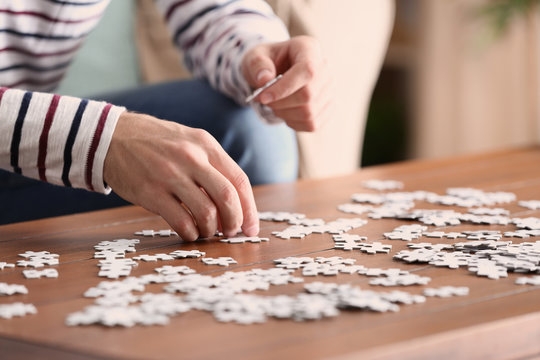
Visual-spatial intelligence is the ability to visualise objects’ positions, shapes, movements, and their relationships to other objects.
For me to grasp visual-spatial intelligence, I consider two things:
- The aptitude test I took in high school. I had to mentally flip objects around and move them to analyse them and answer questions correctly.
- Ikea Furniture - a furniture retailer selling consumer-assembled furniture. The company's main work involves designing, manufacturing, and selling furniture. Nothing like assembling Ikea furniture to make me consider my visual-spatial intelligence—or lack thereof.
Once, as my wife was building an armoire, I went downstairs and saw that one of the shelves needed to be rotated and flipped in to fit the frame correctly. That is visual intelligence, the capacity to mentally visualise how objects will appear and interact with one another when they are moved.
How to Improve Your Visual-Spatial Skills?
You may assume that visual-spatial intelligence is an innate ability you possess from birth or not, but that is untrue.
I find Carol Dweck's mindset theory to be very insightful and useful when considering visual-spatial skills. A growth mindset is the belief that your abilities and skills are flexible and that you can improve over time with practice and commitment.
Conversely, the fixed mindset entails believing that skills and abilities, such as visual-spatial intelligence, are completely fixed - meaning you have them inherently and can never acquire them. Therefore, having a growth mindset is crucial for visual-spatial skills.
You can enhance your ability to visualise objects and their relationship to their surroundings and their positions in space by engaging in daily exercises and activities. Here are some helpful tips:
1. Move Your Body
One way to improve your visual-spatial skills is to be one of those moving objects; simply move your body.
Visual-spatial intelligence involves visualising your body’s relationship to other objects in space. Therefore, engaging in physical activities that call for this kind of bodily intelligence can improve your visual-spatial skills.
You can consider practising dance and martial arts. For example, planning each step you take while dancing can improve your visual-spatial abilities and strengthen your body.
Also, you can pay attention to objects’ shapes, sizes, and relationships to other objects while you’re outside taking a walk. What’s in the background? What’s in the foreground? How far is that tree away from that creek? Examine the objects in the scene and their relative positions to one another.
2. Paint a Pretty Little Painting
Visual arts can help improve your visual-spatial abilities. I vividly remember watching a painter named Bob Ross paint his pretty little trees when I was a kid. I would watch for hours because I was fascinated by how he could create such depth and dimensions in his paintings.
Everything seemed flat to me when I was drawing. Still, Ross's paintings had objects that had distinct relationships to one another, such as mountains in the background, trees in front of the mountains, and birds flying back and forth between the mountains and trees, both in the foreground and background. There's nothing better than taking a paintbrush and learning to draw your happy little trees to enhance your human capabilities further.
3. Turn Off GPS
It might be best to turn GPS off when driving or walking somewhere while you are working on your visual-spatial skills.
GPS does us no favours in terms of visual-spatial skills. We don’t have to pay any attention to our location and how to reach our designated destination when we use it. So, turn off your mobile and draw your own map.
Draw your map and mentally navigate the area to get from point A to point B before starting your next journey. Studying maps is a good way to enhance visual-spatial abilities.
4. Play Video Games
Video games are another way to improve your visual-spatial skills. It may seem like I am nostalgic, but these games are a great way to visualise objects’ shapes, sizes, and relationships to other objects.
Additionally, they are a great way to visualise how objects will affect one another as they move through space.
5. Try 3D Puzzles
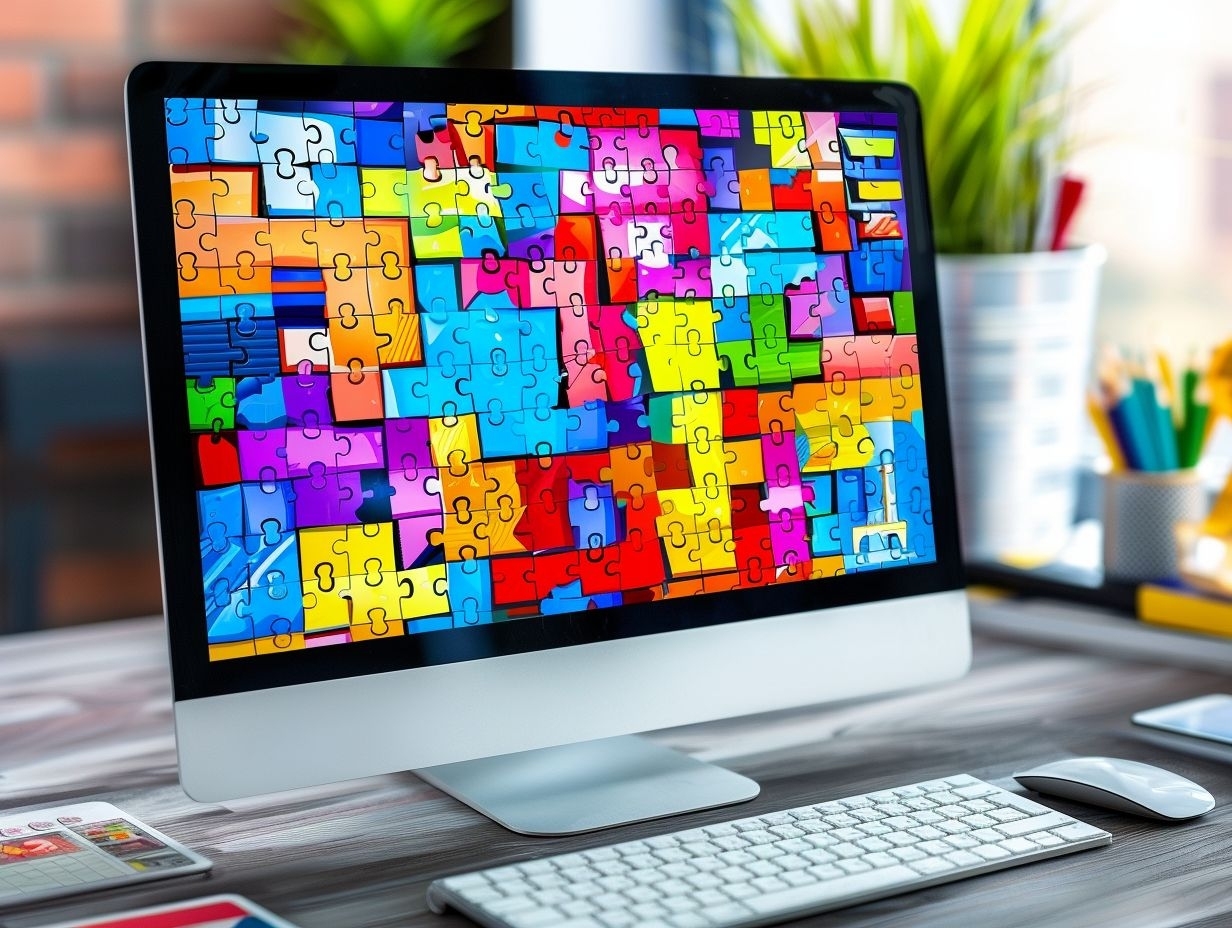
You can try a variety of 3D puzzles. There are countless options, and even standard puzzles help improve your visual-spatial skills. You have to visualise how the pieces will appear if they are turned or flipped. So, seek out a puzzle, relax, and improve your visual-spatial skills.
6. Practice Some Brain Teasers
Also, you can find brain teasers that remind me of the aptitude test I took in high school. These are just visual questions about which shape comes next to make a pattern or what this shape would look like if inverted or rotated. These games provide real fun for children and adults alike.
7. Build Things
Suppose you've done the brainteasers and puzzles, but you still want to enhance your visual-spatial skills more.
As a kid, I once participated in a creative challenge where we had to construct a wooden structure. The structure needed to be super strong to support weights and collisions. Therefore, intense visual-spatial skills and problem-solving were needed to design and construct this lightweight yet sturdy structure.
You don't have to build a wooden structure to improve your visual-spatial skills. You can build a strange tool to protect a raw egg from a high fall, build a chicken coop, or even build Ikea furniture. It's up to you, you should just build something if you truly want to improve your skills.
8. Play
Reading can help you develop your visual-spatial skills. Any book that involves objects, including people, will do this.
It's a more effective method than watching a movie because it requires you to visualise the scene, which is the essence of visual-spatial skills. Just visualise the scene, and your abilities will undoubtedly increase.
9. Play a Musical Instrument
Additionally, studies have demonstrated that playing musical instruments sharpens visual-spatial skills. Once more, this relates to imagination and visualisation, as you must visualise how to move your hands and fingers to play an instrument.
The next time you try to play the piano, you can tell yourself that you're improving your visual-spatial skills even though you're not the best player.
Why Visual-Spatial Skills Matter?
Many jobs require visual-spatial skills. These skills were limited to designers and architects, but a growing number of jobs in programming, computing, and technology now require the ability to manipulate objects in space mentally. Visual-spatial abilities are necessary for abstract thought and for comprehending how small details fit together to form the larger picture.
So, the results are the same whether you’re painting, playing, building, or navigating. Improve your visual-spatial skills to understand the world better, strengthen your position in it, and finally, be able to put together that armoire by yourself.