How To Take Care of Yourself?
We have overcome the most extended year of the twenty-first century, and it is time to make new decisions for this year.
This is the time to enhance your self-care, especially with the services provided by industries that care about this area, but self-care that seems a fun and effective idea at first glance has a negative aspect; it harms the weak and less able to access the appropriate resources.
Many of us have learned to rely on ourselves during 2020, especially after the social media interruption and the consequent confusion and despair. Still, we have found ways to live with that. Although it wasn’t easy at first , we were able to face the repercussions of the pandemic with enthusiasm by employing the new skills we gained during the quarantine period, such as pastry bread or enhancing our fitness.
The year 2020 reminded us of the need to strengthen self-care, but it has also exposed weaknesses in our culture. Not everyone can flexibly cope with the pandemic's challenges or take good care of themselves. The question is: What will happen to the sick, the unemployed, or those who suffer from loneliness?
Author and mental health activist Shubhra ta Prakash has a story about self-care that has nothing to do with the pandemic; she recounts suffering depression four years ago when she often wanted to end her life to get rid of the pain.
Prakash recalls that she used to take a lot of psychiatric medications that not only helped her feel better but also caused her to tremble, which is one of the side effects of taking psychiatric drugs. Despite telling her psychiatrist about her desire to switch medications, the latter refused, so Prakash had to realize the need to look after herself, act in a way that was good for her body's health, and reduce the amount of medications she took.
She initially experienced severe withdrawal symptoms from the medications, but one day she felt like she was returning to normal; she stuck with this and assumed responsibility for taking care of herself by starting to do yoga, exercise, write in her diary, and meditate.
Within a few months, Prakash felt like someone else, as if she had rearranged her thoughts.
Prakash stressed that she doesn’t propose to refrain from taking psychotropic drugs, especially as this is contrary to what experts advise, but she emphasizes that abandoning drugs was the strongest expression of her self-care.
Returning today to the story of Prakash's recovery from a disease that can take a life, it seems an inspiring story that calls for the need to maintain mental health and promote self-care, especially in light of the outbreak of the pandemic, which revealed to us the painful fact that everything we believed in its ability to protect us was later found to be unable to do so , so we had to focus on taking care of ourselves and maintaining our own well-being, of course, the idea of taking care of ourselves isn’t new, but the current circumstances revealed that this couldn’t be ignored.
The French philosopher Michel Foucault explains in his book The Care of the Self that, according to the Greeks, man is destined to take care of themselves, and self-care is only a task that gives its owner a privilege that distinguishes them from other creatures.

4 Problems Caused by Improper Self-Care
Thousands of years after the civilization of the ancient Greeks, the prevailing idea today is that self-care is a magic cure for all our existential problems, but although self-care is an effective tool, it has led to the emergence of four serious problems.
1. Self-care has become such a cliché that it has lost its value
What are the components of self-care? The "Instagram" and "Twitter" apps can be used to find the answer to this query. On these platforms, a quick search for self-care reveals the confusing range of its application among users. Using the hashtags #self-care# or #self-love# to find self-care methods to improve self-care may result in strange results that have nothing to do with self-care. In contrast, one recent estimate cited shows that revenues for global industries that care about self-care doubled to $11 billion.
Marie Kondo, a Japanese ranking expert known for teaching a simple way of living, was able to attract a lot of media attention when she announced the launch of an e-commerce site. She will sell, among other things, a tuning fork that can be used to hit a crystal (also available on the site) to determine the kind of energy circulating you.
Giant companies in various fields, such as Ikea and Google, seek to invest in the idea of self-care to amplify their revenues by using their promotional methods. An advert by Toymaker Lego shows a well-dressed café worker finding joy in making a Lego ship, which the company describes as a "Meditate like a brick".
To avoid misunderstanding, it is natural for businesses to seek strategies to help them succeed. Still, the ancient Greeks wouldn’t have approved of using the concept of self-care as a persuasive tool for commercial marketing products, especially because some companies have created applications based on meditation and self-care to grab consumers' attention and encourage them to purchase their goods.
It gets more confusing, especially with mentors appearing on Instagram to help you figure out if you're taking care of yourself properly by asking a bunch of questions like, “How much money are you spending on that product?” “Can this provide you with self-care in the future?”.

2. The burden often falls on the individual alone
One of the definitions of self-care issued by health service centers in the United Kingdom explains the problems that stand in the way of achieving them. They include the following: what people do to maintain their agility and promote their psychological and physical health, in addition to meeting their social and psychological needs, avoiding getting sick or having accidents, as well as attention to treating the simplest diseases and adapting to continuous conditions in the long term, and finally maintaining health and wellness after recovering from an acute illness or leaving the hospital.
Given this definition, can maintaining good mental and physical health, meeting psychosocial needs, and avoiding illness or accidents be a responsibility that an individual can bear alone? So what happens when people think it's possible?
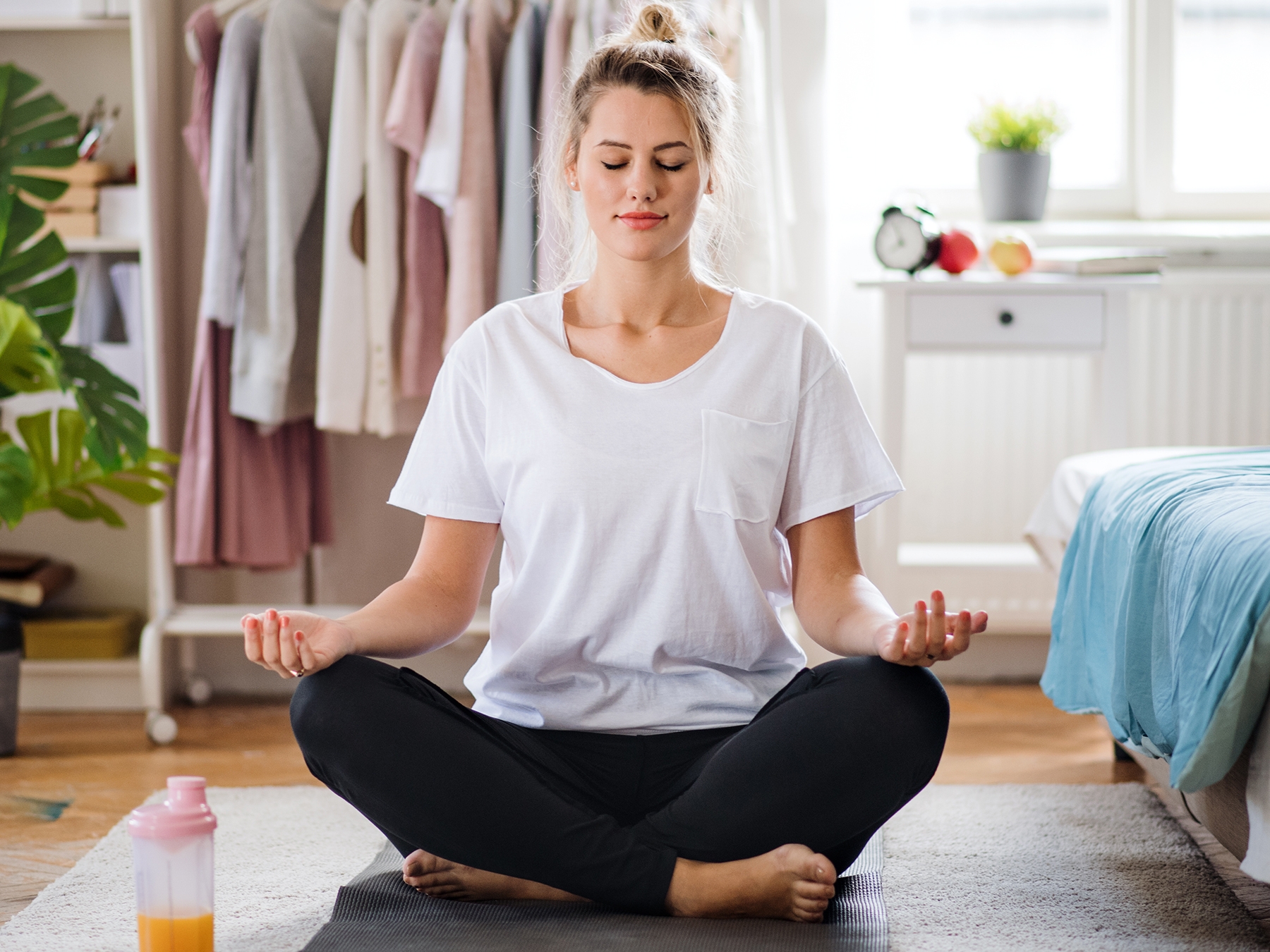
Aparna Mittal, founder and CEO of Patients Engage, an online platform in India that supports patients and caregivers and manages chronic diseases, believes that people are still unaware that meditation isn’t as easy as it sounds. It's hard to breathe properly when stressed or anxious, and you can use running or drawing. Still, you can only be sure of the effectiveness of these activities by experimenting and making mistakes. Practicing yoga may be useful for relieving anxiety and stress that you experience, but you will need a coach, and most people don't want to try a lot of activities.
Mittal also explained that she is concerned about the “well-meaning” advice that healthcare providers are constantly receiving and that the reality of their working conditions isn’t properly considered when providing them with self-care guidance: “Someone sent me a three-minute WhatsApp video of seven things they can do for self-care, including getting enough sleep, taking special time to practice what you love and more; but can we advise someone who has the responsibility to take care of a patient with Alzheimer's or Parkinson's disease to receive art therapy, will they really have the time or freedom of choice to do so?”.
3. Self-care that is associated with performance enhancement causes burnout
For those who are sick of hearing tips and advice on properly taking care of oneself. Here is the practical framework for self-care for chronic illness created by Barbara Riegel and Tiny Jaarsma, executive directors of the International Center for Self-Care Research, who have divided self-care into three stages: care, control, and management.
According to this framework, taking care of oneself is a continuum that is necessary in cases of health or illness. So, going to the emergency room at midnight after years of neglecting your panic attacks is incompatible with taking care of yourself because you have passed the stages of care and control and moved directly to the management stage.
The International Self-Care Research Center website indicates that individuals spend only ten hours out of 8,760 hours a year, equivalent to 0.001% accompanied by healthcare professionals. Other healthcare activities are the care, control and management of individuals and their families as a means of self-care. Therefore, self-care activities are necessary to promote wellness, reduce morbidity and mortality rates, and reduce healthcare costs.
Although performance-enhancing self-care can lead to fatigue, and the performance of self-care activities is undoubtedly beneficial to the individual, this phrase requires us to take a moment and think carefully, and in a recent article published in The New York Times by Pooja Lakshmin, an assistant professor in the Department of Psychiatry at the George Washington University School of Medicine, Lakshmin focuses on the category that receives the most advice on self-care, namely new mothers.
The image we have been given about self-care is through apps that help meditate and motivate. Mothers who rely on electronic applications, or exercise outside the home to care for themselves, always feel that if they feel exhausted, they should ignore it and not take care of themselves, leading to more fatigue and remorse. Lakshmin says: "I see more mothers living under tremendous pressure not only to meet what is expected of them as mothers but also to meet the obligations of self-care associated with performance enhancement".
Prakash, a mother of two, noted that the mothers' sense of pangs of remorse that they aren't doing their housework properly isn't limited to the West; it has also become widespread in India.
Prakash says, “When I started practicing my daily self-care routine, I promised myself that I wouldn't feel guilty about doing it, and I was convinced that sometimes it was okay to wake up unwilling to do something, and if I just wanted to sleep, then that's what I would do ”.
Prakash said, “Shayonee Dasgupta, who I follow on Twitter for her valuable guidance on dealing with mental health challenges, told me that the stress of being committed to self-care practices sometimes makes her feel overwhelmed. She also stressed that self-care associated with performance enhancement could lead to burnout leading to an inability to continue self-care”.
4. Self-care is a weapon against the disadvantaged
For American poet and civil rights activist Audre Lorde, taking care of herself wasn't easy; she explains that self-preservation was a form of war; in other words, taking care of oneself wasn't just another form of shopping therapy.
If you have a mental illness, maintaining yourself can be a revolutionary act to get rid of your suffering without relying on psychiatrists, which is supposed to suit everyone, but the revolution of self-care seems to be not going as intended.
The British theorist Mark Fisher, who ended his life after a long struggle with depression, explained that the loss of people's capacity for self-care is a logical outcome of capitalism, which resulted in each person bearing the entire burden of their well-being. After all, didn't the free market allow you the freedom to acquire anything at any time? So if you can't feel better, the problem must be in you.
According to Fisher, people who have mental illnesses are crushed under the weight of the capitalist system. For a very long time, the discussion of the causes of depression was overly preoccupied with the patient's brain's inadequate levels of serotonin secretion. It doesn't address The social causes of unhappiness, such as individual competitiveness and inequality among individuals.
Fisher wrote, “It's only natural that prescribing a drug as a treatment for depression is much easier than fundamentally changing how society is organized, and today many entrepreneurs are trying to do what brings happiness to individuals in a few simple steps”. Only those unable to purchase products that help them take care of themselves will feel the dangers of this framing.
According to the World Health Organization (WHO), low-income countries still lag behind the rest of the world, especially regarding public health spending. In India, government defense spending is five times higher than health spending, while spending on mental health care is less than 1% of that, which is very bad compared to the huge number of people in need of care.
Institutions worldwide can learn from New Zealand's experience as Prime Minister Jacinda Ardern announces an unprecedented campaign to tackle mental illness, domestic violence and child poverty.
As a result, the self needs more than manuals and instructions on taking care of it to make you feel in control. Mittal says: "Even when you advise someone to do something as simple as eating food that is good for health, there is a complex set of tasks and activities behind those words, and the self itself must have self-care methods, but before that, you have to empower yourself".