Smartphone Use's Impact on Productivity
You are not friends with the smartphone you are using to read this article.
Note: This article is adapted from the work of writer Darius Foroux, in which he discusses the impact of smartphone usage on productivity.
One thing I want to ask you, even if you're reading this on your computer or laptop, is how significant is your smartphone to you? When I recently read a strange statistic, I was astounded. 37.4% of participants in a study by the Universities of Würzburg and Nottingham Trent rated the importance of their phones as being greater than or equal to that of their close friends.
Furthermore, am I right to assume that 29.4% of these respondents believe their smartphones to be at least as important as their parents? Have I evolved into a weirdo who spends his days reading books and only values a select group of close friends and family members? Smartphones are dangerous—I'm not kidding—but not because they can make you stressed, anxious, or even depressed.
Instead, they alter your behavior. The reason we seem to be unable to concentrate for longer than five seconds is that we are constantly being distracted by them. This is not because people are calling us; but rather, it is because you are receiving notifications about things that don't interest you.
The way you use your smartphone should change
The same study I mentioned earlier also discovered something else: "The researchers asked participants to take a concentration test in four different circumstances: with their smartphone in their pocket, on their desk, in a desk drawer, and completely outside the room."
Furthermore, the outcomes were noticeably different. Focus test performance decreased when the smartphone was on the desk but increased with the number of barriers placed between participants and their smartphones.
Overall, focus test results improved by 26% when phones were removed from the environment. You don't have to believe everything you read, and this is just a study, but I can personally attest to it. I've changed how I use my smartphone over the past two years. following:
- I disabled all alerts other than text messages and phone calls.
- Aside from one group with my close friends, I removed myself from all WhatsApp groups.
- I uninstalled all news apps; if anything significant occurs, those around you will let you know.
- I consume music, paid journalism, works by particular authors I follow, podcasts, and YouTube videos primarily for educational purposes, but also for entertainment because I'm a human.
- I made calls, texted, made notes, and snapped pictures and videos using my phone.
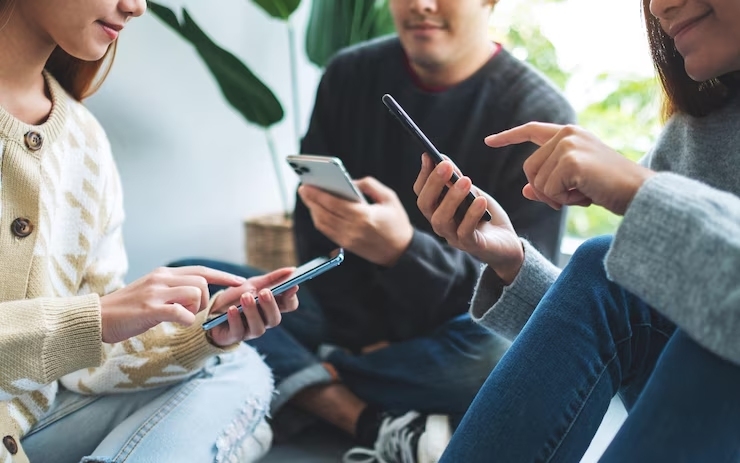
I've also stopped responding to notifications, but this doesn't mean I don't value other people's efforts to get in touch with me. It simply means that I don't want to be a slave to my phone because I have control over it.
For the majority of us, the opposite is true. Facebook, Instagram, Google, and other apps used to control my mind, and they still do to some extent, because the only way to get away from them is to throw away your phone and run away into the woods, which is not realistic.
I like my phone, but I don't need it
The results have been great since I started using my smartphone in the way mentioned above. In the past two years, I have achieved more than I ever did. Every day, I exercise, go for a walk with my friends, and have dinner with my family. We both have 24 hours at our disposal, but the difference is how we spend them.
Sincerity dictates that I need to increase my productivity. Nobody reaches peak productivity. Being the world's most productive person is also not important. You can choose how to spend your time, but don't try to tell me you don't want to be 26% more productive by changing just one small aspect of your life—the way you use your smartphone.
You should be aware that they are attempting to extort money from you by using your phone if you're wondering why more people aren't pleading with you to get rid of this item. Social media users who advertise that their smartphones are the core of their businesses want you to access their content on your phone. Apple won't tell us, "Don't buy the new iPhone because it will ruin your productivity." They're trying to convince you otherwise, so of course not.
In Conclusion
Without a doubt, smartphones do indeed enhance productivity—after all, you are reading this very article on your phone, just as I read a great many articles and books on mine.
However, I use the device as a tool for learning—something that is always a positive endeavor. The people who design these phones and apps are smarter than we are, and their sole objective is to make you addicted to their products.
I believe it is beneficial to recognize this fact; that is why I constantly remind myself not to become overly reliant on my smartphone—because my attention matters more than mere productivity. It is time to reclaim your attention—and, in doing so, reclaim your life.