Optical Illusions: Concept, Development, Foundations, and Types
Optical illusions have been defined accurately, specifically. According to Cambridge Dictionary, it is an object or something that deceives the eye and makes it see a picture, thing, or drawing that does not exist in reality or on the ground, but the person who looks is suspicious.
They think that what they see is real and indulge in it. They are illusions, circumstances, and myths that are never real and unrealistic.
It should be noted here that this pattern of optical illusion does not depend just on sight and eye deception; it is based on the illusion of the mind, the mechanism of vision, the shaping of ideas, and the mechanism of impression; hence, the deception extends to constitute the deception of visual sensation, cognition, and feeling.
What is the Definition of Optical Illusions?
Optical illusions are defined as a kind of perceptions or fantasies that you see, define, and distinguish with a specific image in itself, and then draw, print, and visualize it so that a total impression is imprinted on the mind on the basis that this image is an image of reality or a real matter. However, the truth is other than that. This image is a physiological illusion in the form of images, as it has been described in another way, as a spectrum of fantasies, perceptions, impressions, and reflections preserved and imprinted in the subconscious mind.
Optical illusions can be defined in another form and a simpler and more reasonable manner as a misleading that the beholder is exposed to as a result of the formation of an image in their imagination on the retina resulting from a non-existent set of information in practical life. This information was broadcast by that wrong image and sent to the mind as a signal. Here the mind plays the role of the recipient or receiver. We have no secret that the eye has a helpful role in that man's eye gathered and disseminates this complex and illogical information on the surface of the brain and between its convolutions.
It should be noted that all people are subject to optical illusions or the formation of the wrong mental image of things. There are no exceptions or very few people who do not have this defect, optical illusions cannot be controlled automatically or manually by the human beholder, but this requires resorting to the use of the so-called visual engines, which we will talk about later.
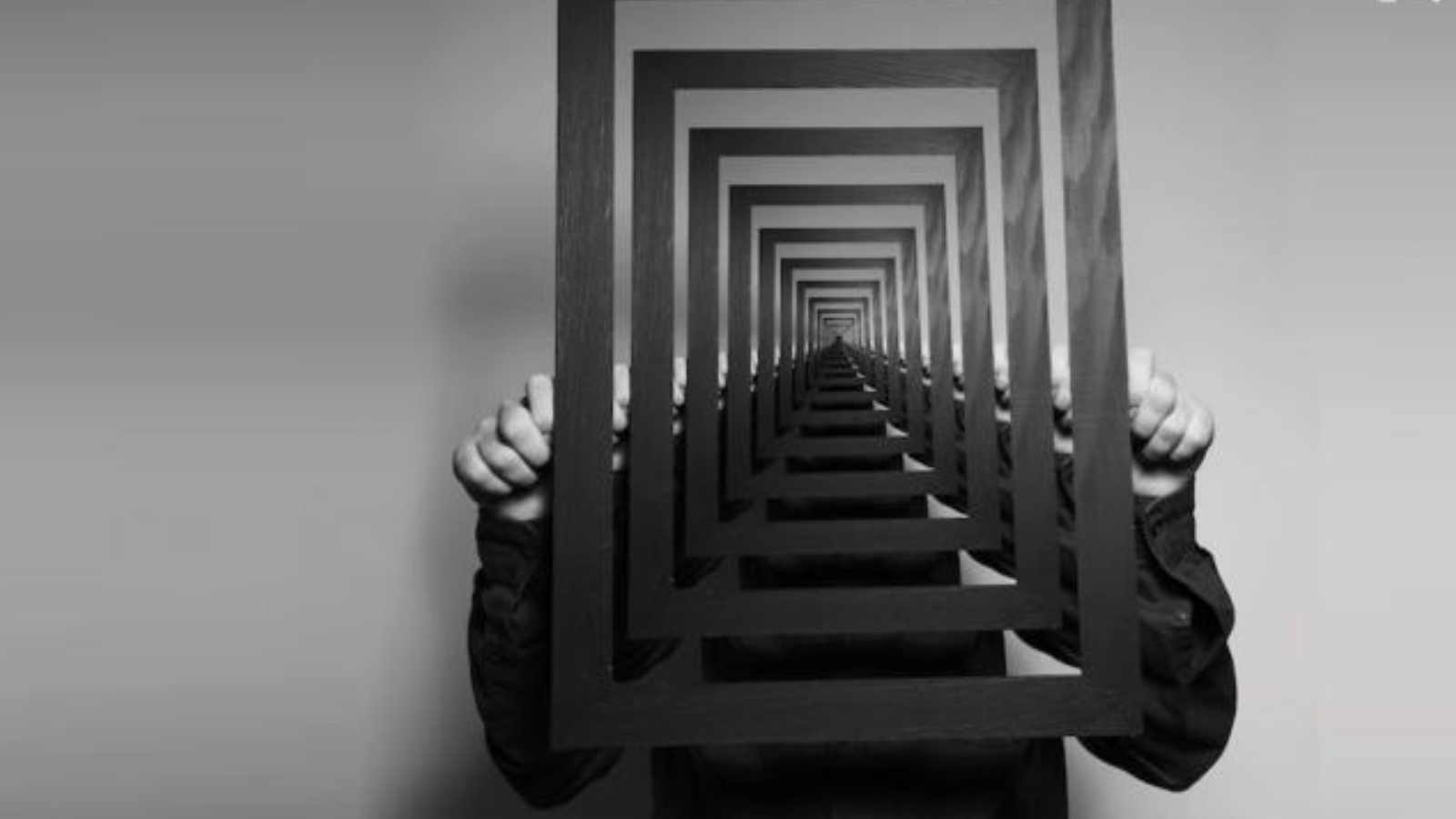
What is the Story of the Discovery of Optical Illusions?
The story of the invention or discovery of the so-called optical illusions goes back to the well-known German scientist Herman Ebbinghaus. He has the first credit for discovering this strange phenomenon that is inherent to all human beings without exception, regardless of their different shapes, colors, races, and natures.
This famous scientist came to the discovery of this great theory, which was later called optical illusion, by making the distance between two circles of average size, shape, area, perimeter, and length smaller, and then surrounding these circles with other circles that are smaller o less in size.
How Did Optical Illusions Arise and Crystallize Over Time?
In fact, by going back to the history of the emergence of optical illusions, it is clear to us that it went through many stages in which it developed to reach the peak stage or the final stage in which it turned into an artistic, historical, and global icon that cannot be erased from memory. It was called in that era of time the art of visual deception.
This art relied mainly on drawing and engineering three-dimensional features and details in most drawings and geometric shapes, fashion clothing, decoration design, home, and palace architecture, galleries and show festivals, and other places that resort to the art of optical illusions as an icon of immortal art, and independent art in itself and has its origins, characteristics, rules, and methods different from any other art.
This is called the art of mathematical deception, which is especially common in cinemas and showrooms, interior design, and fashion. It relies primarily and mainly on the so-called cognitive deception design, which makes the eye fade and become incapable of distinguishing, identifying, and understanding the meanings, images, colors, shapes, lines, curves, circles, and shadows flowing from the painting, photograph, sculpture and other pieces of art.
Let's go back and answer a fundamental question that simulates the mind, reality, and life: When and how the art of visual deception arose, specifically in what historical period? The art of visual deception dates back to the mid-twenties of the twentieth century. It appeared clearly and developed significantly at the hands of specialized and qualified people working in German architecture schools, and this school was called Bauhaus.
Architects in Germany relied particularly on the blending mechanism and resorted to a state of identification and harmony between the silent or speaking nature and between the images, shapes, lines, and drawings in the painting. These German architects were distinguished by the fact that they relied in their work on special and fundamental reliance on the so-called optical laws, in addition to their great interest in the angles of light and how the rays fall, advent, reflect, and refract in the images. This complex process has led to innovation and confusion in the viewer's or beholder's vision process.
What are the Foundations of the Art of Optical Illusions?
In general, the process or phenomenon of visual deception is based on artistic foundations and modern and contemporary scientific techniques that make optical illusions a strange art beyond description.
It is considered one of the strangest phenomena related to humans, and it is impossible to avoid falling into it or being exposed to it. Optical deception is based on mathematical foundations and rules that must be possessed. Among these foundations, we mention:
- When we talk about the foundations on which the art of optical illusions is based, we have an urgent need to mention the so-called "Penrose Triangle" of optical illusions.
- The " Penrose Triangle" optical illusion is based on a geometrically arranged shape drawn on white or yellow paper or cardboard. It is in the form of two dimensions or two sides organized and drawn in an engineering manner. Therefore, the “Penrose Triangle" of optical illusions can only be embodied by drawing the features of three-dimensional spatial. The first scientist to draw the structure and sides of the " Penrose Triangle" for optical illusions is the scientist, "Roger Penrose."
- The idea of this triangle is based on the trick of making the eye switch between two opposite colors, such as bright white and dark black. If we have black squares and other white squares, and in the middle of each of these squares are round white dots and round black dots, and we want to count the number of black dots in the corners inside the black squares and the white squares, and within the corners, we find ourselves in great confusion because it is almost impossible.

What are the Types of Optical Illusions?
- Optical illusions based on the principle of color manipulation.
- Geometric optical illusions based on the manipulation of geometric shapes, called "Roger Penrose Triangle," about the scientist with the same name who drew for the first time the "Penrose Triangle" with its three geometric dimensions.
- Optical illusions are based on manipulating the volumes, lengths, size of shapes, capacity, weight, and other different amounts of measurement. This type of optical illusion is called "Millar Layer Tricks."
- Optical illusions depend mainly on the principle of visual animation, and this is what we see in three-dimensional optical illusions, just as it happens in moving pictures or what is called animation.
- Optical illusion of another new, more complex, contemporary, and modern type, in keeping with technology, modern techniques, and contemporary science, and is mainly based on deception of the mind. This happens in fashion design and everything related to festivals and presentations, decoration engineering, and the organization of homes and places.
In conclusion
Optical illusion has been defined by a researcher as a form of visual deception that deceives the eye, mind, and senses alike, leaving the viewer or person lost in a sea of illusions.
In classical Arabic, the word “deception” is used to describe trickery, which sometimes carries the meaning of cunning, robbery, and lying.
This trick or deception makes you see images, lines, shapes, and colors that are different from and contrary to the real image on the ground. This is done through the use of rules and methods called visual art, given that it is based on various visual characteristics.