How to Benefit from Steve Jobs' Experience and Passion for Calligraphy?
In 1972, Steve Jobs took a calligraphy course at the University of Reed, where he saw posters advertised on campus after leaving school.
The fonts used on the posters were artistic enough to catch his attention, and he signed up for the course, even though he knew the class would not earn him grades to earn him a degree.
Today, designers and marketers alike use many types of fonts and creative user interfaces for digital devices in a world dominated by technology, and we all owe Jobs a debt of gratitude for bringing creativity to this world.
Jobs was certainly fond of creativity in calligraphy, but there were additional creative staples that the course instilled in him, which many business owners could use to develop their brands and compete at a higher level.
Creativity as a muscle that can be trained
All humans are born creative and can train and develop their creative muscles. We encourage our children to experiment, express, and explore creatively. Drawing outside the lines is not objectionable until you study architecture.
However, when we begin our journey of reading, writing, and arithmetic, the outlets for creativity are diminished. Without constantly expressing ourselves, our creative muscles lose strength, and muscles are atrophied without exercise.
Jobs intuitively knew that he was stretching his creative muscles when he invested his time in a calligraphy course at Reed. In his 2005 inaugural speech at Stanford, he spoke about this particular course, saying, "I learned about the Seriff and Saint-Cyph lines, about changing the amount of space between the different sets of letters, and what makes typography great. These fonts were beautiful and precise in a way that science can't describe, and I found it fascinating."
Taking training courses that focus on creativity can automatically boost your creativity in your field.
Learning from alternative industries
We learn by sight above all else, our minds are visually connected to tens of millions of images that compete for our attention, but we can process only a small percentage of them.
Perhaps, you have had an experience where you intend to buy a car and choose a specific model that you have not noticed before, and then you are surprised to see it everywhere the next day. This is the filtration process conducted by the brain through the network activation system.
Unfortunately, we can only learn from leaders in our field. I'm sure Jobs had no intention of working as a calligrapher preparing wedding invitations, but when he immersed himself in calligraphy, it boosted his creativity in other areas.
Steve Jobs famously said, "Many people in our field did not have very varied experiences, so they did not have enough experience to work. Therefore, they ended up applying very superficial solutions without a broader perspective of the problem. The better our understanding of the human experience, the better our designs."
If you work in the services field, study best practices; they can even be applied to sectors within your industry, and if your business is in marketing, learn the economy or history.
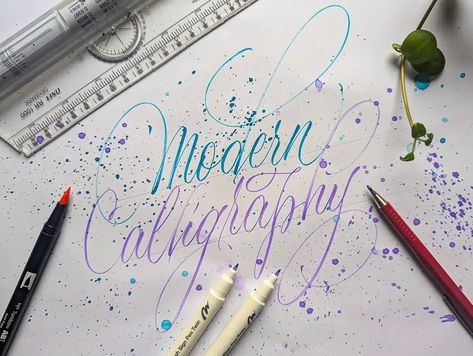
Stop typing with computers
Even though handwriting is very different from the world of computers, there is a hidden creative and muscle memory component that is frequently disregarded: handwriting.
A recent study by John Hopkins University showed the power of experiential learning, especially using handwriting. While handwriting has almost been replaced by typing on a computer keyboard, this study found that we should not rush to eliminate handwriting.
In a study of 42 adults learning Arabic, handwriting helped participants study the language much faster and better than typing or watching videos. Also, handwriting proved to boost creativity in our minds and work.
Eliminate the things that distract you from creativity
Creativity cannot be refined in one training session, just as you cannot lose weight after an hour of exercise. Moreover, anyone who comes up with great ideas during the shower knows that removing distractions enhances your creativity.
There is considerable value in emptying your mind, meditating, or going on a walk-in nature. Undoubtedly, we can draw inspiration from works of art or other business models, but modifying an idea is not the same as creating it. There is a clear difference between development and revolution. The essential achievements in business and society do not come from developing an idea but through revolutionizing and finding new ways of looking at the world.
Eliminating distractions and working in a new environment provides a space to train your creative muscles. Creativity, alertness, and curiosity can show you the hidden values of your brand. It wasn't Steve Jobs' handwriting skill that made him successful; It was his creative thinking and ability to give a unique touch to his surroundings.