Physics: Definition, Specialties, Fields, and Most Famous Scientists
Over time, physics has always been one of the funniest and most attractive sciences, so when we see physics-related information on social media, we are amazed by the supernatural ability of physics to discover the tunnels of the unknown.
Our curiosity attracts us to the physical inventions that change our beliefs about nature and all we realize in this world.
However, when we experiment with transferring stupor from mere outside knowledge to real discoveries of physics knowledge, we are immediately shocked to think that we are up against the most complex science that can ever be learned.
Physics Definition
Physics is the science that specializes in the knowledge of physical objects, and the interactions between their main components. It is also the science that is concerned with the study of energy, matter, and movement. The word physics dates back to a Greek origin, and they used to call it Vesicus. Physics is concerned with all aspects of nature, whether the things we see with the naked eye or those we see only with a microscope.
The specialty of physics includes not only the body or objects that are subjected to the influence of a specific force; it also includes everything related to nature, gravitational forces, and electric and magnetic forces. The main purpose is to install theories and laws about any natural phenomenon around us.
Physics is seen as the cornerstone of other sciences. After the advancement of science and the diversity of its fields miraculously, physics came to show its competence in physical matters different from other sciences, whether astronomy, ecology, or medicine. It is known that the sciences of astrophysics, biology, and psychology came because of the important effects of physics in any science. It must be noted that the laws of physics are very accurate because they have a strong relationship with mathematics.
Physics is a constantly changing science; it is difficult to determine the appropriate meaning for it. It is unstable and continually evolving, and it relates to the progress of scientific research in our lives.
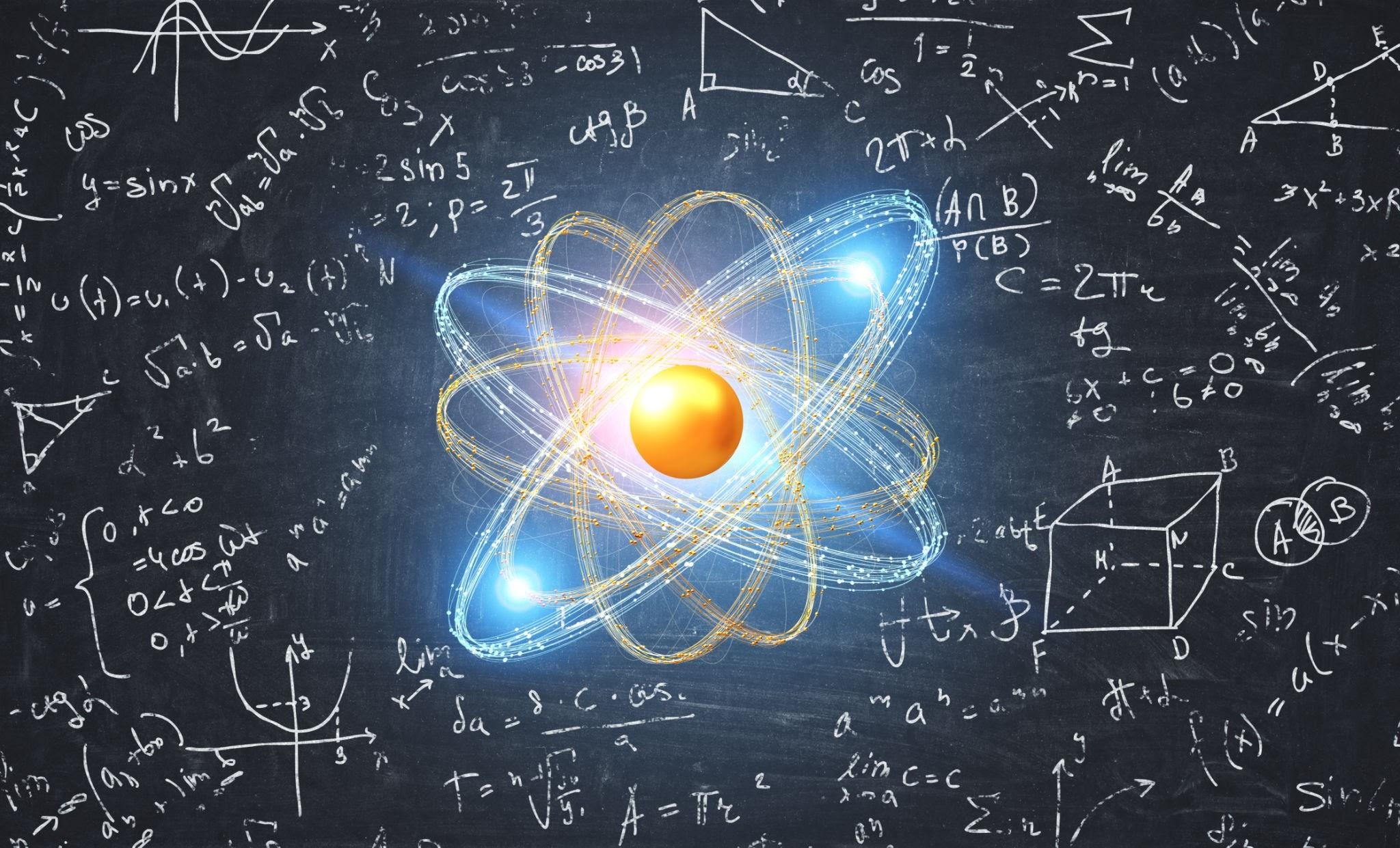
Physics in our lives
The necessity of physics in life is manifested through many applications that physics has allowed to exist in human life. These applications are now among the necessary things in our lives; we cannot live without them. Physical applications have led to a tremendous technical and scientific renaissance, through which the individual could reach a less complicated way to do a lot of work.
Energy can exist in many forms in this universe and is directly used or converted to another form of energy, such as solar, kinetic, electric, and wind energy. Different forms of energy are converted through specific physical laws. The most important examples of forms of energy:
1. Electricity
Electricity is one of the most critical physical applications in the universe and an essential energy source. Electricity is an uninterrupted stream of moving electrical charges at the source, which forms the so-called electric current. We can know the need for electricity through the state that humans go through if the electricity is cut off for a few minutes. All electrical devices become unable to work, and life becomes more difficult.
2. Solar cells
With the need to search for alternative sources of fossil fuels, solar energy devices have become an essential source of electricity. Solar energy is converted into electrical or thermal energy by solar energy devices.
3. Wind Pumps
Wind pumps send water to remote areas with low water and electricity. Although they no longer work as efficiently as today's appliances, they have become an essential water source in rural areas.
History of Physics
The oldest historical manuscripts indicate that the study of physics dates back to the era of the Pharaohs when the main interest of astronomers in Egypt was to observe natural events and compare them with physical studies, thanks to which many natural accidents have become more apparent. For example, the movement of celestial bodies and planets and what the pharaohs have done in many physical types of research are of great importance.
In 1800 BC, the Babylonians had a role in the progress of modern physics. They were interested in writing many physical equations that facilitated understanding the sequence of the year's seasons. Also, the inhabitants of Babylon contributed to the authorship of many books in physics. These books contained much information that benefited other peoples, especially the Greeks , who worked on developing Babylonian physics and helped Egyptian physics provide Greek physics.
One of the physical hypotheses that emerged in the Greek era is the hypothesis of the structure of the universe of the Greek researcher "Poseidonius", which focused on the study of the universe's origin, and this hypothesis dates back to the first century BC.
In the first century AD, Arab-Islamic physical research emerged. Muslim researchers wrote many types of research in physics, which led to the replacement of many physical principles and hypotheses, especially related to the Greek era, where Muslim physicists proved that most of the Greek research was incorrect. Arab researchers persisted in correcting errors and writing many references based on a clear and accurate scientific study that led to the progress of physics.

Evolution of Physics
Physics began to develop at the beginning of the seventeenth century, and together we will learn about this science's development stages.
1. In the seventeenth century
Galilei was one of the most prominent scientists of the seventeenth century. He conducted many experiments on dynamics and used many devices, such as a telescope, microscope, and thermometer. Then he was the first scientist who studied the forces and how they affect the planets and stars. Newton and many other scientists who benefited greatly from Galilei's experiments and Newton had an essential role in the science of dynamics and optics.
2. In the eighteenth century
Scientists showed interest in studying dynamics, mechanics, and heat. This helped in the invention of electric motors. Also, there had been a focus on static electricity.
3. In the nineteenth century
There had been a study of the electric current, the link between electricity and magnetism, as well as the relationship between work, energy, and heat was clarified. This relationship was the beginning of the emergence of the science of thermodynamics.
4. In the twentieth century
Physics developed considerably in this century, where scientists focused on radioactivity and nuclear energy.
Famous physical scientists
- Michael Faraday: A researcher and scientist in physics and chemistry. He has many achievements in the fields of electro physics and electrolysis, as well as his discovery of electromagnetic induction.
- Max Planck: A physicist who won the Nobel Prize in Physics, wrote quantum theory, and has some achievements in theoretical physics.
- Ernest Retherford: A physicist who is called the father of nuclear physics. He has many achievements in atomic physics.
- Niels Bohr: A physicist who made significant advances in quantum mechanics, where he developed essential models for the structure of the atom.
- Albert Einstein: He is a physicist with significant achievements in physics, credited with establishing the most important laws of modern physics through the theory of relativity.

Difference between Physics and Chemistry
In fact, physics and chemistry are one science that studies the behavior of matter. Still, the difference is that physics studies matter from the outside by observing the behavior of matter with external particles and its association with them. As a result, you will see that you are studying speed, acceleration, throwing in its forms, and the movement of the pendulum and the spring, and many examples that give the result the same meaning.
Chemistry studies the behavior of matter from the internal point of view and its interconnection with each other, the contents of other particles, and the connections between them. Chemistry also focuses on the components of matter, the atom, and the part, and then we move to the more complex relationships between molecules and the chemical links between them and the chemical reactions that occur within the material.
As a result, when we move to specialize in a subject, we will realize that there is a complete difference between them, with the main things that we cannot give up for each of them.
Physics majors
1. Quantum Physics
Quantum physics, also known as quantum mechanics, is a section of physics, especially modern physics, a hypothesis that focuses on studying the behavior of physical particles and light in terms of atomic and less than atomic. Quantum mechanics also explains the nature of the atom and its main contents, such as protons, neutrons, and electrons.
2. Biophysics
Biophysics can be defined as a scientific branch that applies the laws and hypotheses of physics to know how biological systems work. The importance of biophysics comes from knowing how matter molecules are formed and how multiple molecules move from the cell and work, and it explains the work of non-simple systems in our bodies, such as the brain, immune system, blood circulation, and many other systems.
Biophysics is a scientific branch full of life. Where researchers use a lot of genius, including their genius in mathematics, chemistry, physics, engineering, pharmacology, and materials science to learn and improve new methods of understanding how biological systems of various kinds work.
3. Nuclear Physics
Nuclear physics is a branch of physics that focuses on examining the nucleus of an atom and all the elementary particles, whether protons or neutrons and how they interact. It is also concerned with studying the properties of the nucleus, whether functional or structural.
The laws of physics
Scientists have been able, through experience and observation of natural phenomena, to establish laws that are appropriate to the results they have reached. The laws were a brief result of all the research that took them years, and the most important of these laws:
- The Uncertainty Principle of Heisenberg.
- General theory of relativity.
- Evolution and natural selection.
- The buoyancy principle of Archimedes.
- Hubble's law of cosmic expansion.
Other laws that facilitated the study of physics.
Fields of Physics
The fields of physics are many and overlap with each other a lot, and one of the most important areas of physics in our daily lives are the following areas:
- Astrophysics: It connects physics with astronomy and studies the physical properties of celestial bodies.
- Atomic Physics: It studies the origin of the atom, its properties, and the substances that make it up.
In this article, we see the importance of physics in our daily lives and that it is the gateway to other sciences through which we can understand the world around us.