7 Strategies for Better Time Management
Most of us have difficulties managing time effectively, and in a world where there are so many distractions, it can be so easy to waste hours or even days on activities that are neither really useful nor enjoyable.
Seven strategies for better time management
If you want to get more value for your time, here are seven strategies for better time management:
1. Visualize your daily goals
Make plans for your day and the tasks you want to complete as soon as you wake up each morning. What activities do you want to enjoy? It is important to note that daily goals do not necessarily have to be work-related. Perhaps your goal today is to spend time with your family or enjoy a day playing golf.
Then, spend some time visualizing these tasks, and how they would make you feel if you actually completed them. Your sense of accomplishment will renew your motivation to complete your tasks on this day and not postpone them any longer.
2. Avoid postponing tasks
Unfortunately, we waste more mental energy worrying about the tasks we have to do than the time we spend doing them.
When you postpone tasks, they will always remain in your subconscious mind, and it becomes difficult to enjoy free time when you are always thinking, whether you are consciously or unconsciously thinking about the work you put off.
To avoid wasting mental energy worrying about these unfinished tasks, always complete tasks as they come up.
3. Set deadlines
Nothing motivates us to get things done like setting a deadline. Some of them may be accompanied by a deadline, but this does not apply to all tasks. Setting deadlines for all of your tasks would be wonderful.
Deadlines save you from procrastination and can motivate you even when you have no desire to complete a task. However, it is important when setting deadlines for yourself that you actually stick to them. If you start ignoring your deadlines, your time management efforts will soon be in vain.
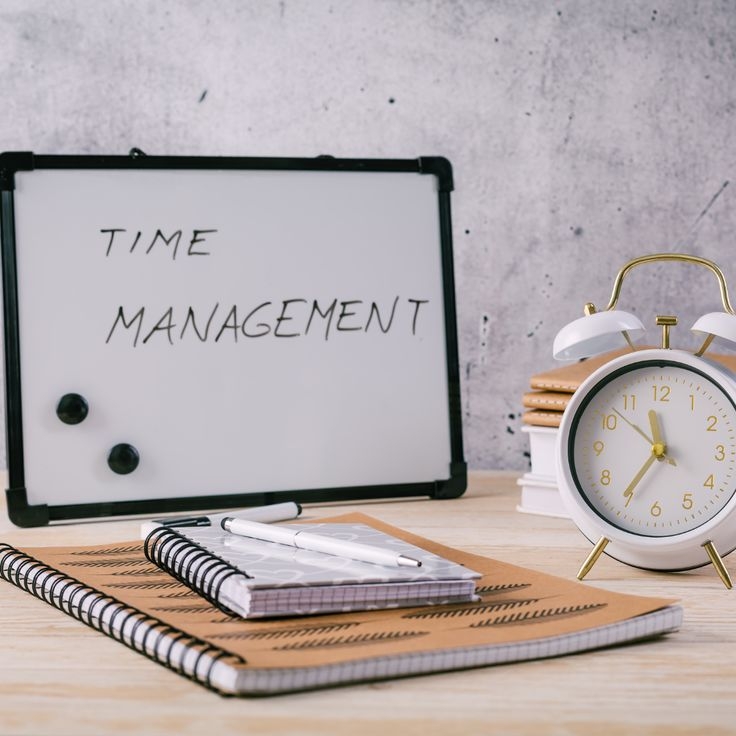
4. Create a to-do list
One of the best time management tools you can use is a to-do list. Writing the tasks you need to complete on a piece of paper makes them seem more doable.
This gives you a visual and tangible way to see how much you need to do and keep track of things you've already done. It feels good to cross things off your to-do list.
5. Stop multitasking
Many people think they are particularly adept at multitasking. But few of us are in reality. Studies have shown that when we attempt to accomplish several things at once, we are generally less productive.
You will be able to do far more by knowing how to prioritize than if you multitask. When we multitask, we are not only less productive but also run the risk of burning out because it is harder and more stressful than focusing your attention on one activity.
Instead of attempting to complete everything at once, start working on each task individually and give it your full concentration until it is finished.
6. Reward yourself
When you accomplish a task, reward yourself. This does not mean that you have to throw a huge celebration every time you check something off your to-do list. The reward for completing a task can be something simple, like going out for a walk or eating a delicious meal.
Make sure the rewards you give yourself are healthy and don't take up too much of your time. For example, it may not be a good idea to eat a box of cookies every time you finish a task or to take a break for the next two hours; however, when done right, small rewards can have a big impact.
7. Set aside time to relax
No matter how much you accomplish, you'll always have tasks to work on, and at times, that feeling of unfinished business can be overwhelming, and you may find yourself trying to compensate by working longer and harder, often to the point of burnout.
When things get this far, no matter how hard you try, the work you do will not be as good as before, the time it will take you to do it will increase, and worse, burnout is not healthy.
It is important to know when to step back and relax. For example, reward yourself with short periods of relaxation. Know that allocating this time to yourself is very important to manage time effectively; it is just as important as taking the time to complete your tasks.
In conclusion
By following these mental techniques to improve your time management, you will be able to accomplish more work faster and more easily than you thought possible.