How to Achieve Financial and Health Success After Retirement? The Book AgeProof
Ancient times were full of stories about the quest for immortality, perhaps the most famous of which was the Epic of Gilgamesh. Of course, we have never been able to prevent death completely, but we have developed a number of ways to live longer.
Modern technology has made great strides in helping to extend our lives as humans. For example, the average lifespan of an American citizen at the beginning of the twentieth century was less than 50 years. In comparison, today, it is nearly 80 years old, with an increasing number of Americans living 90 years and older.
However, some consider living longer to be more of a burden than a blessing. In the 1960s, people expected to live only a decade after retirement, but many live today three decades after retirement, leaving many older fearful that they will run out of money while they are still alive.
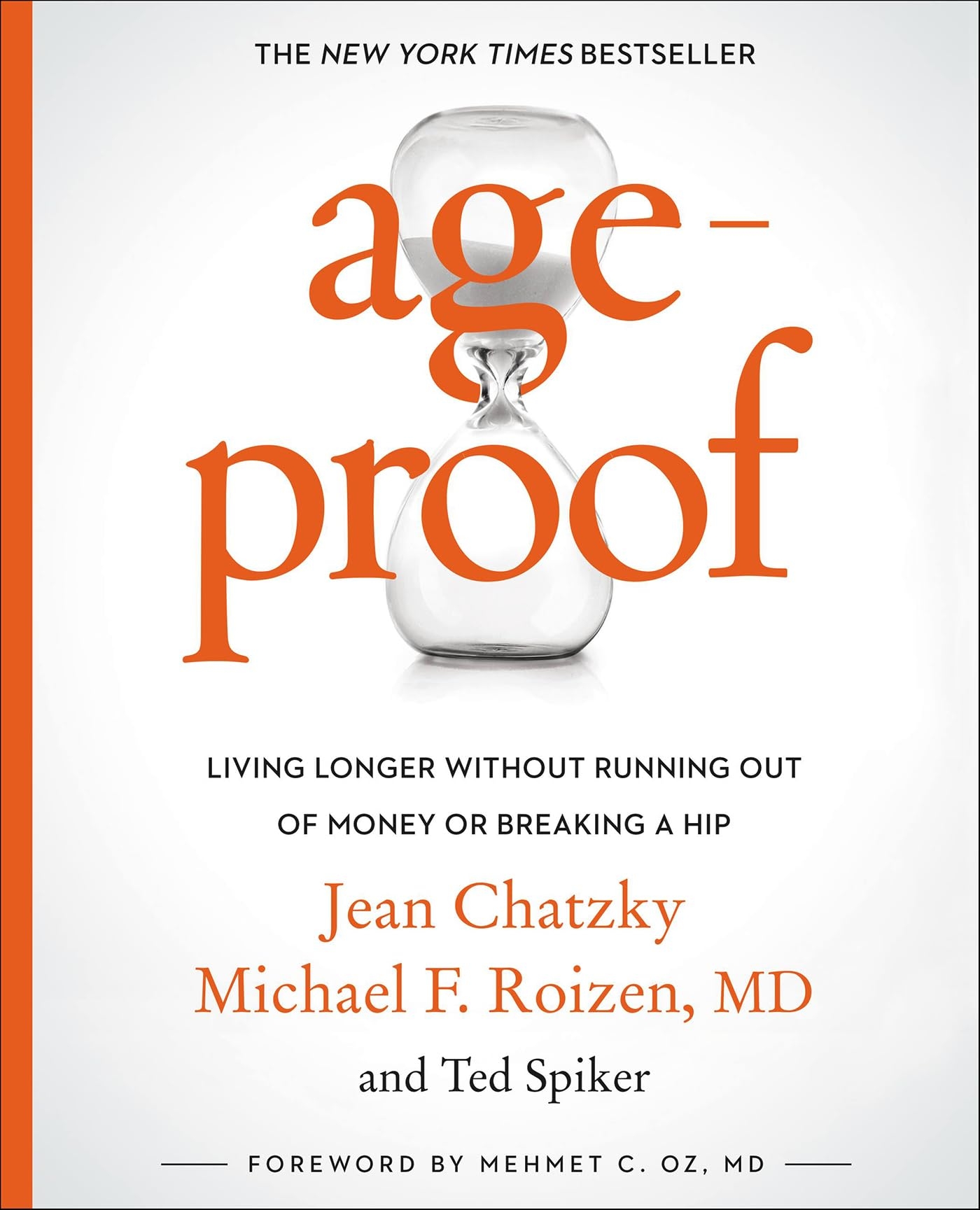
The authors of AgeProof: Living Longer Without Running Out of Money or Breaking a Hip explore the intersection of health and wealth and how to maintain both as we age. This book was written by Today Show financial expert Jean Chatzky and Michael Roizen, MD, chief wellness officer at the Cleveland Clinic. This book discusses the harsh realities of ageing while offering proven strategies to improve our health and finances.
The intersection of health and money
The area where health and money overlap most clearly is healthcare expenses. The more chronic health conditions you have to manage, the more money you spend. In addition to health insurance, your healthcare outlays quickly deplete your retirement savings, assuming you have a financial savings base to fall back on.
A 2016 report by the Insured Retirement Institute found that nearly half of American baby boomers have no retirement savings and expect to live off Social Security. Add to that several thousand dollars in credit card debt and multiple chronic health conditions. So, you have a good idea of why many seniors face financial insecurity in the future.
Despite all of the above, according to the book, it is possible to reduce the expected burdens of ageing by making simple changes to a person's lifestyle. 85% of health care expenses in the United States of America (USA) are due to chronic diseases, which are often caused by controllable factors, such as quitting smoking, following a healthy diet, exercising, and learning to deal with stress.
"There is no doubt that genetics play an important role, but lifestyle choices are much more important," says Roizen. We all know that it is important to choose a healthy diet, get enough exercise, and save money for difficult times, but we find it very difficult to implement this. According to Chatsky, the reason is that we fail to see the big picture and instead focus only on the present without paying attention to our future situation.
“Humans are not wired to make wise decisions about money and health,” she says. “One of the biggest reasons for this is that we are so immersed in the present moment and trying to get everything we want right away.” Delaying gratification may not be easy, but research shows that developing this skill is a sign of future success. The sooner you take steps to protect your health and money, the less you’ll struggle as you age.
Chatsky points to the Stanford Marshmallow Experiment, a study conducted in the 1960s and 1970s that asked children to choose between a small immediate reward (a marshmallow, a cookie, or a pretzel) and a larger reward of two of the above if they waited 15 minutes. Researchers found that children who were patient and waited for a bigger reward were more successful in the future, getting higher SAT scores, achieving higher levels of education, and maintaining a lower BMI.
We’ve long been convinced of the benefits of a “now-enjoyment” mindset, but today there are more ways than ever to satisfy our desires in a passive, immediate way. For example, we prefer eating delicious, easy-to-prepare, and cheaper fast food to eating healthy food, and we prefer to lie on the couch and watch TV instead of exercising, and we prefer to buy everything we want on a high-interest credit card instead of saving and spending money on what we need.
Of course, we all crave instant gratification from time to time, but the problem is that when it becomes our dominant way of life, it can be destructive. Statistics show that two-thirds of Americans are overweight or obese, and nearly half of them don’t pay off their credit card debt by the end of each month. According to a recent study by the Federal Reserve, the average American household has more than $15,000 in credit card debt, with an average interest rate of 15%, which translates to $2,250 in interest per year. Although we mentioned in the book that a person can avoid a lot of financial and health suffering in the future the sooner they take steps to preserve these resources, Chatsky and Roizen agree that it’s never too late to take action.
Breaking the cycle
According to a 2015 survey by the American Psychological Association, 72% of Americans reported feeling stressed about money at least some of the time in the past month, and 22% reported feeling extremely stressed. Most of these financial problems were related to health care.
According to studies, nearly 15 million Americans will end up spending their entire savings on health care, and even with health insurance, nearly 10 million Americans will face health care expenses they can’t afford. If you’re struggling with money and health, you’re probably looking for solutions. You might initially think it’s impossible to plan for the future when you’re spending all your income on your monthly needs, without having any time to prepare healthy meals or the energy to exercise. These obstacles are difficult to address, and the stress you cause can be a major factor in getting sick, leading to a cycle of illness, more expenses, and so on. Chronic stress weakens the immune system, leading to symptoms like back pain, headaches, anxiety, and depression. It can also lead to heart disease, stroke, cancer, and more. Because stress from health and money issues is a sensitive point, we’d rather avoid it than confront it.
“The main stress relievers in America are alcohol and TV shows,” says Roizen. “They work temporarily, but once the stress wears off, you’re still stressed.” Roizen adds, “When you’re stressed about money, you have to deal with the problem and let it go until the stress goes away.” “The same goes for health issues,” says Chatsky. “You can’t just relax by lying in a warm bath and expecting that to solve the problem.”
The authors stress that meditation can be a good start to addressing a stressful situation (because you make better decisions when your mind is clear), but that addressing the problem head-on is essential when it comes to your financial and health issues. The first step is to look at the facts. While this can be painful, it’s important to face reality, and the sooner you do it, the better. Calculate your income and how much you owe. Then determine whether you’re spending more than you’re making, and what debts you need to pay off to maintain your financial stability.
As for health, the book also provides simple methods to determine your level of health. For example, a waist measurement that is more than half the height is an indicator of the accumulation of a lot of fat in the abdominal area, which is dangerous to health because excess fat secretes chemicals that lead to inflammation and puts pressure on internal organs, which leads to chronic diseases.

Another measure provided by the book is testing your ability to get up from a chair without pushing yourself with your hands. If you can do this, this is an indicator of inner strength. "These methods of measurement are important for determining the aspects that you should address first," says Chatsky. Once you identify these aspects, you can determine the steps you need to take to achieve the desired results. Thinking about these facts causes stress for many of us. Stress isn't always a negative state, though, especially when it's your motivation for change. Once you objectively assess your health and finances, you'll likely be ready to make some adjustments to your habits. "Anything we can do to help us do the right thing is very valuable," Chatsky says.
Automatic Behavior: The Best Way to Succeed
The question is, once you’re ready to make a change, how can you make a sustainable lifestyle shift?
Roizen and Chatzky say the secret isn’t willpower, but rather the ability to set new habits automatically. That means choosing one habit and giving yourself a few weeks to get it right. For example, if you sign up for a savings account or health insurance plan, you won’t have to deduct a portion of your monthly salary; it will be automatically saved. Similarly, if you prepare healthy breakfasts and lunches early and take them to work, you’ll be less likely to reach for fast food when you’re hungry. “All of these things help us stick to healthier habits, and that helps us in the long run,” Chatzky says.
Most of our habits are driven by automatic behavior. Research from Duke University found that 40% of our daily behavior is driven by habits, not conscious decisions. So, instead of trying to break negative habits, the authors of “AgingProof” recommend replacing them with positive ones. This approach will reduce the difficulties you face in improving your financial and health future because it is in harmony with the mechanism of our brains.
“There is a lot of research that proves that if you are able to learn a new habit and figure out how to make it part of your daily life, you will increase your chances of success and the results will be better,” says Chatsky. Roizen says that some of his patients, for example, have swapped the couch in front of the TV for a stationary bike to exercise, and they have had greater success in recovering from type 2 diabetes, high blood pressure, or heart disease. You don’t have to change your lifestyle all at once. Roizen and Chatsky recommend doing it gradually. Choose one habit you want to change and give yourself a few weeks to get it to stick. The authors add that if you succeed in changing one habit, you’ll have the power to overcome the next hurdle to improving your health and finances.
In conclusion
The Greek philosopher Aristotle said, “Habit drives behavior,” and this quote can be understood as what drives us to do most of what we do in our daily lives. Perhaps the secret for a long time has been to turn the habits you want into automatic behaviors that replace negative habits instead of forcing yourself to follow healthy habits in vain.
Related articles
- "The Accelerated Learning Handbook": The Methodological Revolution for Faster, More Effective Training Programs
- Do You Manage Your Time or Your Life? Why Age Management Is the Ultimate Guide to Reprogram Your Life
- "Meeting Management for Leaders": The Practical Guide to Transforming "Meeting Hell" into a "Productivity Paradise"